Skip to content
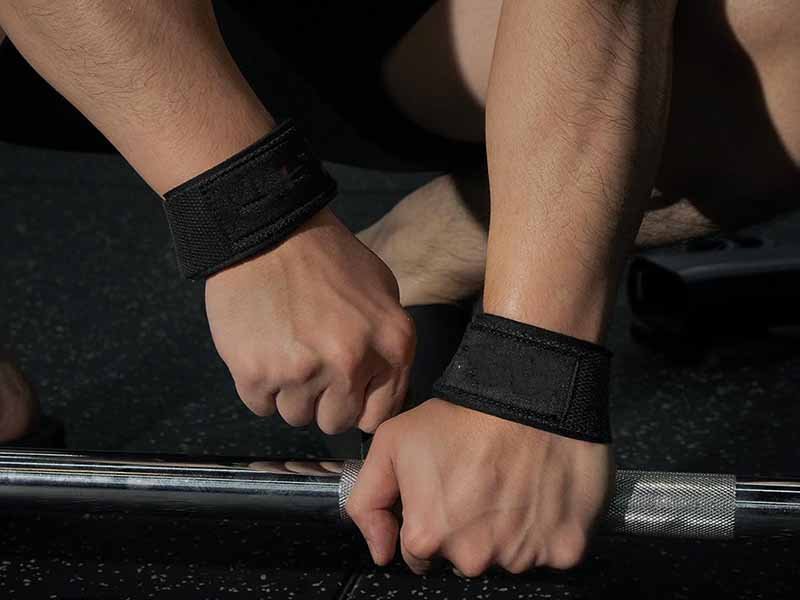
If you’ve ever hit a point in your workout where your grip gave out before your muscles did, you’re not alone. Many weightlifters, powerlifters, and CrossFit athletes face the same challenge: grip fatigue limits performance on heavy pulling movements like deadlifts, shrugs, or rows. That’s where lifting straps come in. Designed to help you hold onto the bar longer and safer, lifting straps can be a game-changer—but only if you know how to wear them correctly.
To wear lifting straps, slide your hand through the loop, wrap the strap tightly around your wrist, then wrap the free end around the barbell in the direction of your grip. Tighten by twisting the bar until the strap feels secure but not overly restrictive. Proper usage prevents grip fatigue while allowing safe, controlled lifting.
I still remember watching a beginner at the gym struggling with a 180 kg deadlift. His back was strong, his legs steady, but his grip slipped halfway up. A trainer handed him lifting straps, showed him the right way to use them, and suddenly, he completed the set with confidence. That small adjustment transformed his training—and it can transform yours too.
What Are Lifting Straps and Why Should You Use Them?
Lifting straps are durable straps made from materials like nylon, cotton, or leather that wrap around your wrists and the barbell or dumbbell to improve grip strength. They help lifters secure heavier weights, reduce grip fatigue, and focus on target muscle groups without worrying about the bar slipping.
Understanding Lifting Straps and Their Benefits
Lifting straps might look simple, but in the world of strength training, they serve a powerful purpose. Many lifters reach a point where their muscular strength outpaces their grip strength—their legs, back, or shoulders can handle more weight, but their hands give out first. This is where lifting straps become essential.
1. How Lifting Straps Work
When you loop lifting straps around the bar and your wrists, they create a secure connection that reduces the demand on your grip. Instead of relying solely on your fingers and forearms, the straps transfer some of the load to your wrists, giving you a stronger, more reliable hold on the bar.
2. Key Benefits for Lifters
- Heavier Lifts: Straps help you lift beyond your grip strength, ideal for deadlifts, shrugs, rows, and other pulling movements.
- Reduced Grip Fatigue: They delay grip exhaustion, allowing you to complete planned reps and sets.
- Focus on Target Muscles: With grip less of a limiting factor, you can better engage back, legs, or shoulders without distraction.
- Joint Protection: They can reduce forearm strain and skin irritation during high-volume training.
3. Who Should Use Lifting Straps
- Bodybuilders: For muscle growth without grip holding them back.
- Powerlifters: For accessory lifts or volume work when grip fatigue sets in.
- Recreational Lifters: To improve safety and confidence on heavy days.
| Benefit | With Lifting Straps | Without Lifting Straps |
|---|---|---|
| Grip Fatigue Management | Delayed significantly | Early onset, limits training |
| Load Capacity | Heavier weights possible | Limited by grip strength |
| Target Muscle Activation | Higher due to stable grip | Lower due to grip failure |
| Joint & Skin Protection | Reduced strain & blisters | More strain on forearms/hands |
By improving grip security, lifting straps help lifters train harder, longer, and more safely—making them a simple yet effective tool in strength training.
Which Types of Lifting Straps Are Available?
Common lifting strap types include lasso straps, figure-8 straps, and single-loop straps, each offering different levels of support and ease of use.
When choosing lifting straps, understanding different designs helps match them to your training style:
- Lasso Straps:
- Most common, featuring a loop on one end.
- Wrap around the wrist, then around the bar multiple times for adjustable tightness.
- Suitable for both beginners and advanced lifters.
- Figure-8 Straps:
- Shaped like the number 8, providing maximum security by looping twice around the wrist and bar.
- Popular for strongman training and extremely heavy lifts.
- Single-Loop Straps:
- Simplest design, fast to put on and release.
- Often used for Olympic lifting where quick bar drops are necessary.
| Strap Type | Best For | Pros | Cons |
|---|---|---|---|
| Lasso Straps | General strength training | Adjustable, versatile | Takes time to wrap/unwarp |
| Figure-8 Straps | Max weight, strongman lifts | Maximum security, heavy loads | Less freedom to release quickly |
| Single-Loop Straps | Olympic lifting, CrossFit | Fast release, minimal setup | Less support than figure-8 |
OEM manufacturers like Szoneier often customize these straps with branding, padding, or reinforced stitching for gyms and fitness brands.
How to Wear Lifting Straps Properly for Maximum Support?
To wear lifting straps correctly, slide your hand through the loop so the strap lies flat across your palm, tighten it around your wrist, then wrap the free end around the barbell 2–3 times in the direction of your grip. Secure the strap by twisting the bar until it feels snug but not overly tight. This ensures maximum support, safety, and lifting control.
Step-by-Step Guide to Wearing Lifting Straps
Many lifters buy lifting straps but never learn to wear them properly, which reduces their effectiveness and can even create safety risks. Correct setup ensures better grip, reduced fatigue, and safer heavy lifting. Here’s a complete guide:
1. Put the Strap on Your Wrist Correctly
- Take the lifting strap and find the looped end.
- Slide your hand through the loop so the strap lies flat against your wrist with the free end pointing toward your thumb when you close your hand.
- This orientation makes it easy to wrap the strap around the bar in the right direction.
2. Position the Strap on the Barbell
- Place your hand on the bar where you normally grip it.
- Take the free end of the strap and loop it under the bar first, then wrap it over and around the bar 2–3 times.
- Wrapping under first creates the right locking angle when you grip and twist.
3. Tighten the Strap for a Secure Grip
- Once wrapped, start turning the bar toward you to tighten the strap.
- Your wrist should now feel locked in, with the strap supporting your grip.
- Test by pulling lightly on the bar—there should be no slipping, but your wrist shouldn’t feel painfully compressed.
4. Maintain Safety While Using Straps
- Always leave enough room for quick release in case you need to drop the bar.
- Don’t wrap too many times; 2–3 wraps are usually enough for security and easy exit.
- Practice with light weights first before using straps on heavy sets.
5. Common Mistakes to Avoid
| Mistake | Why It’s a Problem | Fix |
|---|---|---|
| Wrapping too loosely | Bar slips during lifts | Wrap tighter before lifting |
| Wrapping too tightly | Cuts circulation, hard to release quickly | Leave enough room for hand movement |
| Using straps on all lifts | Weakens natural grip strength over time | Use straps only for heavy pulling sets |
6. When to Use Lifting Straps in Training
- Deadlifts: Heavy sets where grip fails before muscles.
- Barbell Rows & Shrugs: For higher reps and heavier loads.
- Strongman Training: Farmer’s carries, heavy pulls, etc.
By using lifting straps correctly, you protect your hands, maximize pulling strength, and ensure safe, consistent training progress.
Do Lifting Straps Improve Strength or Just Grip?
Lifting straps primarily improve grip endurance, allowing you to lift heavier weights or perform more reps without your grip failing first. While they don’t directly increase muscle strength, they help you train target muscle groups more effectively by removing grip fatigue as the limiting factor.
How Lifting Straps Affect Your Training Performance
There’s a common debate in the strength training community: Do lifting straps actually make you stronger, or do they just help you hold onto the bar longer? The truth lies somewhere in between, and understanding the difference can help you use straps strategically.
1. Lifting Straps and Grip Endurance
The primary purpose of lifting straps is to support grip strength on pulling movements like deadlifts, barbell rows, and shrugs. When grip fails before your muscles fatigue, you can’t fully train your back, hamstrings, or traps. Straps solve this problem by shifting some load from your hands to your wrists, allowing you to:
- Complete heavier sets without dropping the bar.
- Train muscle groups to their true capacity.
- Focus on form and range of motion rather than grip failure.
For example, if your grip gives out at 8 reps but your back could handle 12, straps allow you to reach those extra reps for better hypertrophy or strength gains.
2. Indirect Impact on Strength Development
While straps don’t directly strengthen your grip, they indirectly contribute to muscle strength and size by enabling progressive overload. When you can handle heavier weights for longer sets, your muscles adapt and grow stronger over time—even though your grip isn’t the limiting factor.
However, it’s important to balance this with dedicated grip training, like farmer’s carries or fat bar holds, to prevent grip weakness in the long run.
3. Pros and Cons of Using Lifting Straps for Strength Training
| Factor | With Lifting Straps | Without Lifting Straps |
|---|---|---|
| Grip Fatigue Management | Delayed significantly | Early fatigue limits training volume |
| Muscle Overload | Achievable at higher intensities | Restricted by grip endurance |
| Grip Strength Training | Reduced grip stimulus | Full grip engagement every set |
| Injury Risk | Lower risk of dropping heavy weights | Higher risk if grip slips mid-set |
4. When to Use Straps vs. When to Train Raw Grip
- Use straps for heavy compound pulling lifts, high-rep back workouts, or max-effort deadlifts when grip isn’t the goal.
- Train raw grip during warm-up sets, accessory lifts, or specific grip-focused exercises.
This balance ensures you build both maximum strength in major lifts and functional grip endurance for real-world strength applications.
Is There a Right or Wrong Time to Use Lifting Straps?
Yes. The right time to use lifting straps is during heavy pulling exercises—like deadlifts, shrugs, and barbell rows—when grip fatigue limits your performance. The wrong time is during warm-ups, grip-specific training, or competition lifts where raw grip strength needs to be developed or tested.
When to Use Lifting Straps for Maximum Benefit
Knowing when to use lifting straps is just as important as knowing how to wear them correctly. Overusing straps can make you overly reliant on them, while underusing them can prevent you from lifting heavier weights safely. Here’s how to find the right balance:
1. The Right Time to Use Lifting Straps
- Heavy Deadlifts: When grip fails before your legs or back muscles fatigue, straps allow you to keep training safely.
- Barbell or Dumbbell Rows: For high-volume back workouts, straps prevent forearm burnout while keeping focus on the lats and traps.
- Shrugs and Strongman Pulls: Straps help hold heavier weights for traps development or farmer’s carries.
- Max-Rep Sets: When training to muscular failure, straps reduce the risk of bar slippage mid-set.
By eliminating grip fatigue, straps let you train target muscles harder without grip endurance limiting your performance.
2. The Wrong Time to Use Lifting Straps
- Warm-Up Sets: Using straps too early robs you of natural grip development.
- Grip Training Days: If your goal is to improve forearm or hand strength, lifting raw without straps is essential.
- Competition Prep: Powerlifting and Olympic lifting meets often don’t allow straps, so training without them is necessary for meet conditions.
- Everyday Lifts: Over-reliance on straps can lead to weaker grip strength over time.
Think of straps as a specialized tool—use them when they help you achieve a specific training goal, not as a default for every exercise.
3. Training Strategy for Balanced Development
A common approach is alternating between raw and strapped sets:
- Perform your first 1–2 warm-up sets without straps to train grip strength.
- Add straps only for top working sets or heavy accessory lifts.
This hybrid method ensures both grip endurance and muscle overload are trained effectively.
| Training Scenario | Use Straps? | Reason |
|---|---|---|
| Warm-Up Sets | No | Build natural grip strength |
| Heavy Deadlifts / Shrugs | Yes | Reduce grip fatigue, lift heavier |
| Grip-Specific Workouts | No | Directly target forearm strength |
| High-Volume Back Training | Yes | Focus on lats/traps, not grip limits |
| Competition Prep (Powerlifting) | No | Matches meet conditions |
4. Expert Recommendations
Many strength coaches recommend a 50/50 approach:
- Half your pulling volume without straps to maintain grip health.
- Half with straps to push muscle overload and strength progress.
This ensures you don’t develop a “strap dependency” while still reaping their benefits for performance and safety.
Are Lifting Straps Safe for Beginners?
Yes, lifting straps are generally safe for beginners when used correctly. They help new lifters handle heavier weights safely by improving grip security and reducing the risk of dropping the bar. However, beginners should learn proper lifting form first and avoid relying on straps too early or for every exercise.
Using Lifting Straps Safely as a Beginner
Lifting straps can be a valuable tool for anyone starting strength training, but like any piece of equipment, they must be used intentionally and correctly. Here’s a closer look at what beginners need to know:
1. Benefits for Beginners
- Grip Assistance: Early in training, grip strength develops slower than major muscle groups. Straps bridge this gap safely.
- Confidence Building: New lifters often feel more secure holding heavier weights when using straps, reducing fear of bar slippage.
- Muscle Focus: Allows beginners to target back, traps, or hamstrings without grip fatigue ending the set prematurely.
For example, a beginner struggling to hold 80 kg on deadlifts might only be limited by grip—not back or leg strength. Straps let them train muscles fully while grip strength gradually improves through other exercises.
2. Safety Considerations for New Lifters
While straps are safe, beginners must keep these points in mind:
- Learn Form First: Before using straps, master fundamental lifts like deadlifts, rows, or shrugs with raw grip. Straps should enhance training, not cover up technique problems.
- Start Light: Practice using straps with submaximal weights to understand wrapping, tightening, and releasing safely.
- Avoid Over-Reliance: Overusing straps too soon can slow down natural grip development.
Many coaches recommend waiting until you can deadlift 1.5x your bodyweight before making straps a regular part of training.
3. Common Beginner Mistakes
| Mistake | Consequence | Fix |
|---|---|---|
| Using straps for all sets | Weakens grip strength long-term | Use only for heavy/top sets |
| Wrapping too tightly | Circulation problems or discomfort | Leave slight room for wrist movement |
| Skipping form training | Risk of injury due to bad technique | Master technique before adding straps |
4. Recommended Beginner Approach
- Step 1: Train grip raw during warm-ups and light accessory lifts.
- Step 2: Introduce straps on heavy deadlifts or high-rep back work when grip limits progress.
- Step 3: Combine grip training (farmer’s carries, hangs) with selective strap use for balanced development.
This hybrid method ensures both grip endurance and muscle overload improve together safely.
How to Choose the Best Lifting Straps for Your Training Needs?
Choose straps based on material, length, width, and activity type—nylon for durability, cotton for comfort, leather for heavy-duty lifting.
Key factors for selection:
- Material:
- Nylon: Long-lasting, minimal stretch.
- Cotton: Softer feel, good for beginners.
- Leather: Maximum durability for extreme loads.
- Length & Width:
- Longer straps wrap more for security; shorter straps release faster.
- Wider straps distribute pressure better for comfort.
- Padding & Stitching:
- Padded straps reduce wrist discomfort during heavy sessions.
- Reinforced stitching improves lifespan under frequent use.
| Material | Durability | Comfort | Typical Users |
|---|---|---|---|
| Nylon | High | Medium | Powerlifters, gyms |
| Cotton | Medium | High | Beginners, general use |
| Leather | Very High | Medium | Strongman, heavy loads |
OEM solutions from Szoneier allow branding, logo printing, and custom sizing to match different market needs.
Conclusion: Partner with Szoneier for Custom Lifting Straps
Lifting straps, when worn correctly, unlock better performance, safety, and training efficiency for athletes at all levels. Whether you’re looking for lasso straps for gyms, figure-8 straps for strongman training, or customized private label straps, Szoneier provides 18+ years of manufacturing expertise, free design support, low MOQ, and fast global delivery.
Contact Szoneier today to request samples, discuss OEM solutions, and create lifting straps tailored to your brand’s needs.