- (+86)13823134897
- info@szoneierwebbing.com
From Inquiry to Delivery
 Skip to content
 From Inquiry to Delivery
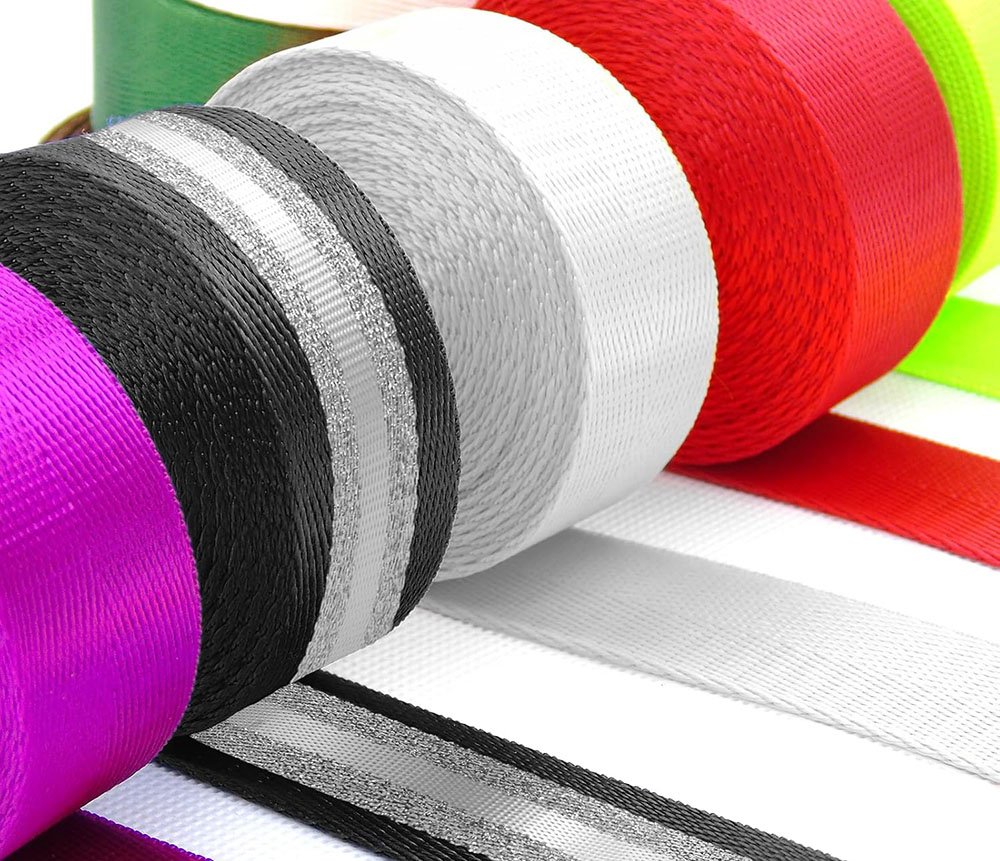
Straps might seem like a small detail, but they make or break your bag’s performance—and even your comfort on the daily. From backpacks hauling 30 lbs of gear to sleek cross‑body purses, choosing between nylon and polyester strap material is essential.
Nylon straps offer higher elasticity and tear strength (up to 9,000 lbf), making them ideal for shock‑absorbing, heavy‑load applications, whereas polyester straps excel in UV and moisture resistance with lower stretch (< 10 %) and consistent strength (up to 7,000 lbf). Your choice depends on whether you prioritize comfort under load (choose nylon) or durability in sun and rain (choose polyester).
Imagine hiking a misty ridge, your polyester‑woven strap shrugging off the spray, then swapping to a crowded train where a nylon strap flexes with your every move. Let’s unpack the science, applications, and trade‑offs—so you can pick the perfect strap for your bag and your lifestyle.
Nylon straps are woven from polyamide fibers offering high elasticity and tensile strength. Polyester straps are made from polyethylene terephthalate fibers, prized for low stretch and superior resistance to UV, moisture, and abrasion.
Nylon provides greater shock absorption and breaking strength (up to 9,000 lbf) but is more prone to UV degradation and water absorption. Polyester stretches less, resists sun and moisture better, and maintains color stability over time.
Tensile & Stretch:
UV Aging (500 hr xenon): Polyester retains ~92 % strength; nylon ~72 %.
Moisture Absorption: Nylon ~2 %; polyester < 0.5 %.
Abrasion: Wet nylon loses ~15 % cycles; polyester stable.
Color Fastness: Polyester dyes brighter, nylon may fade faster.
Cost: Polyester often 10–20 % cheaper at scale.
| Property | Nylon Straps | Polyester Straps | Winner |
|---|---|---|---|
| Breaking Strength | 2,000–9,000 lbf | 2,000–7,000 lbf | Nylon |
| Elongation at Break | 15–30 % | 5–10 % | Nylon |
| UV Resistance | Moderate | High | Polyester |
| Moisture Absorption | ~2 % | < 0.5 % | Polyester |
| Color Fastness | Moderate | High | Polyester |
| Price | Higher | Lower | Polyester |
For heavy loads and shock‑prone use, nylon’s higher elongation and tensile strength prevent sudden snapping. For long‑term exposure to sun, rain, or salt spray, polyester’s low stretch and UV/moisture resistance sustain its integrity.
Shock Loading: Nylon’s stretch absorbs impact, reducing stress on seams.
Creep Resistance: Polyester holds shape under constant tension, ideal for straps under static load.
Abrasion Testing:
Case Study: Photographers prefer nylon camera slings for shock absorption; sailors choose polyester deck bag straps for stability.
Polyester outperforms nylon in UV and moisture resistance, retaining > 90 % of its strength after prolonged sun exposure and remaining virtually unaffected by water. Nylon matches abrasion resistance but degrades faster under UV rays.
UV Data (500 hr): Polyester: 92 % residual strength; Nylon: 72 %.
Moisture Cycling: Polyester: < 1 % dimensional change; Nylon: ~3 %.
Abrasion Wet vs. Dry: Polyester ~1,200 cycles; Nylon ~1,000 cycles.
Applications:
Treatments: PU or silicone coatings boost water repellency; UV inhibitors extend nylon life.
There is no single “best”—nylon wins for shock absorption and load strength; polyester excels in environmental resistance and cost. Choose based on your application: dynamic loads (nylon) or UV/moisture exposure (polyester).
Use‑Case Matrix:
| Criterion | Nylon | Polyester | Hybrid |
|---|---|---|---|
| Shock Absorption | ✔ | – | ✔ |
| UV Resistance | – | ✔ | ✔ |
| Moisture Stability | – | ✔ | ✔ |
| Cost Efficiency | – | ✔ | – |
| Recycled Options | ✔ | ✔ | ✔ |
| Comfort & Flexibility | ✔ | – | ✔ |
Hybrid Approaches: Nylon core + polyester sheath for combined benefits.
Recycled Fibers: Econyl® nylon vs. Repreve® polyester—verify GRS certification.
Lifecycle Impact: Compare energy use, dyeing footprint, and end‑of‑life recycling options.
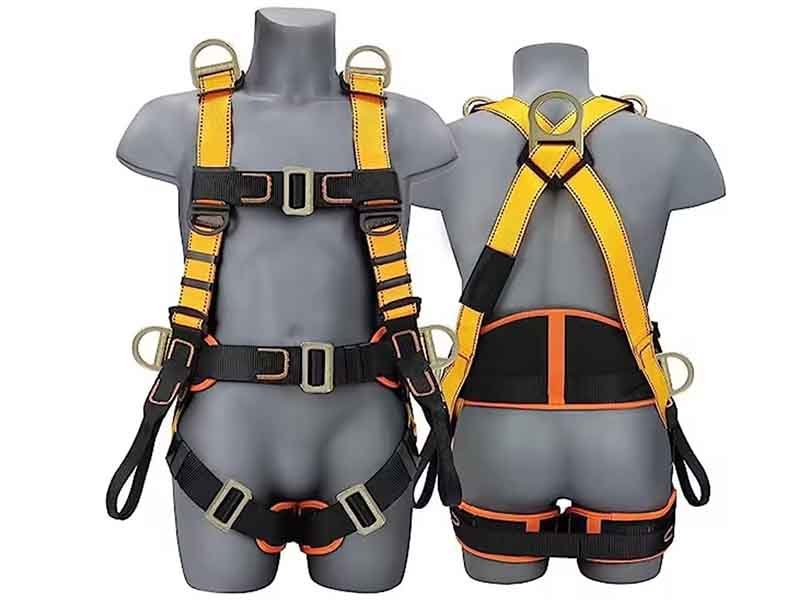
Use nylon for dynamic, heavy loads (hiking packs, camera slings); polyester for UV‑exposed and marine gear (deck bags, patio furniture); mil‑spec nylon for safety harnesses requiring high break strength and controlled stretch.
Both need mild soap and air drying. Polyester dries faster and resists mildew. Nylon should be rinsed after heavy moisture and treated with UV inhibitors periodically to slow degradation.
Cleaning Steps:
Inspection: Quarterly check for fraying, UV damage, hardware corrosion.
Reproofing: Reapply silicone/PUR coatings to nylon every 6 months.
Storage: Hang loosely; use desiccant packs for nylon.
Define your product’s stressors—load, environment, budget, and aesthetics. Select nylon for elasticity and strength or polyester for stability and cost. Or explore composites to capture both materials’ advantages.
Needs Assessment:
Prototype Testing: Order samples from Szoneier for real‑world trials: break tests, UV‑aging, comfort assessments.
Customization Options: Pantone dyeing, jacquard logos, reflective threads, hardware pairings rated to strap strength.
Workflow Example:
There’s no one‑size‑fits‑all answer: nylon brings strength and shock absorption, while polyester offers unbeatable environmental resistance and cost savings. Hybrid and recycled options further expand your toolbox.
Ready to design and sample your ideal strap?
Partner with Szoneier, the seasoned webbing R&D and manufacturing factory, for:
Contact Szoneier today to bring your custom webbing vision to life!


No worries, please contact us and we will answer all the questions you have during the whole process of webbing customization.
If you have your own artwork, logo design files, or just an idea,please provide details about your project requirements, including preferred fabric, color, and customization options,we’re excited to assist you in bringing your bespoke bag designs to life through our sample production process.

Copyright ©2021 Szoneier , All rights reserved.
Looking for premium custom webbing? Contact us now for competitive pricing, free samples, and expert consultation. Fill out the form below, and our team will get back to you within 24 hours!
 Optimized by Seraphinite Accelerator