...

From Inquiry to Delivery

How Does MOLLE Webbing Work: A Complete Guide

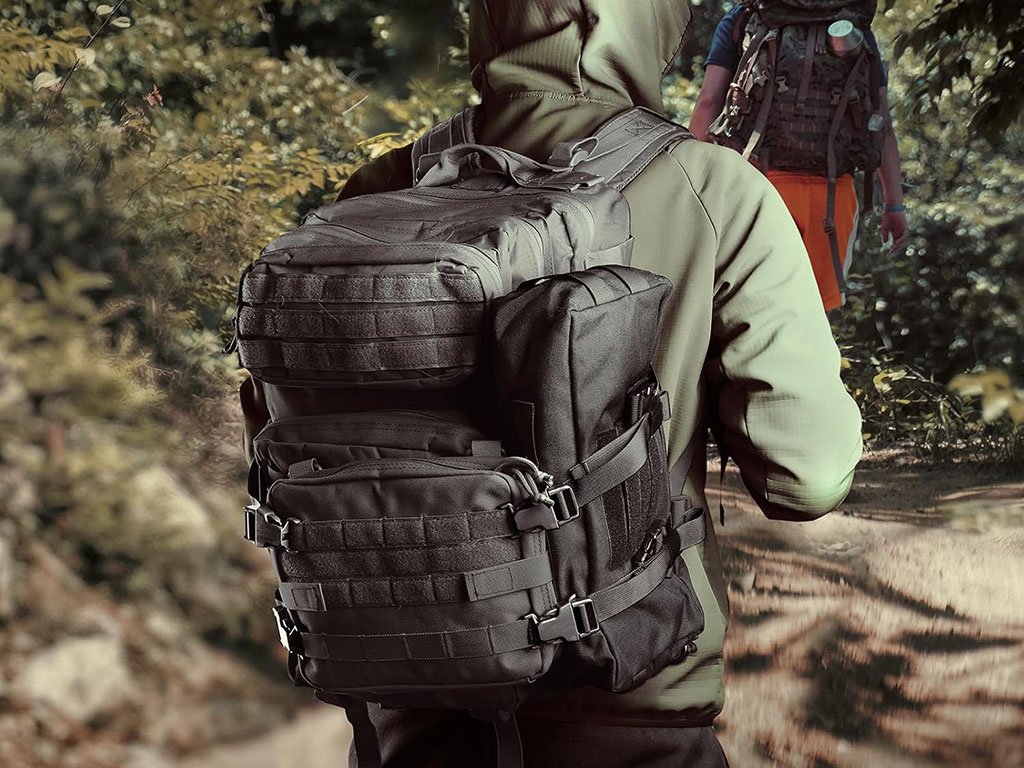
Straps and attachment systems are the unsung heroes of tactical gear—yet few understand how MOLLE webbing revolutionized modular load‑carriage. From military battlefields to outdoor adventure packs, MOLLE’s ingenious design lets you customize your setup on the fly.

MOLLE (Modular Lightweight Load‑carrying Equipment) webbing uses rows of heavy‑duty nylon PALS (Pouch Attachment Ladder System) straps spaced at 1″ intervals, enabling secure interweaving of compatible pouches and accessories. This system offers unmatched flexibility and load distribution, letting soldiers or outdoor enthusiasts tailor their gear layout for mission‑specific needs without special tools.

Ready to dive into what makes MOLLE tick and why Szoneier’s custom webbing can elevate your load‑out?

What Is MOLLE Webbing and Where Did It Originate?

MOLLE webbing is a standardized grid of heavy‑duty nylon straps, first introduced by the U.S. Army in the late 1990s. It evolved from ALICE and PASGT systems to offer modularity, durability, and rapid reconfiguration for modern combat and outdoor missions.

Who Invented MOLLE Webbing?
  • U.S. Army Development: In the mid‑1990s, the U.S. Army Material Command sought a system more adaptable than the Vietnam‑era ALICE gear.
  • Prototype Phase: Multiple contractors—ILBE (Improved Load‑bearing Equipment) teams—tested webbing layouts under harsh conditions.
  • Official Roll‑Out: By 1997, the first generation of MOLLE Type I pack frames and PALS‑equipped vests were fielded in limited units, becoming standard by 2002.
What Is the Purpose of MOLLE Webbing?
  • Modularity: Easily swap pouches, holsters, and tools in seconds for mission‑specific customization.
  • Load Distribution: Grid design spreads weight evenly across the platform.
  • Interoperability: Any PALS‑compliant accessory fits any MOLLE base—no proprietary hardware.
  • Durability: Military‑spec 500D–1000D nylon resists abrasion, mildew, and UV.

How Does the MOLLE Webbing System Function?

MOLLE works by weaving pouch straps through horizontal PALS webbing rows on the base platform, locking accessories in place via snap‑fastened straps. This interlacing creates friction and tension that prevents slippage under load or movement.

PALS Grid Layout
  • Dimensions: Straps are spaced 1″ apart vertically and 1.5″ apart horizontally.
  • Rows: Standard vests/backpacks feature 6–8 rows of PALS webbing.
Weaving Technique
  1. Start at the Top: Insert pouch strap through the first row of PALS on the bag.
  2. Alternate Rows: Weave under bag webbing, over pouch strap, alternating to bottom.
  3. Secure Snap: Fasten the snap or Velcro backing to lock the weave.
Friction & Tension Mechanics
  • Friction Points: Each weave intersection adds friction, resisting downward pull.
  • Load Locking: The strap snap adds final tension, holding the bottom of the pouch snug.
Common Variations
  • Quick‑Release Bungees: Integrated elastic cords for rapid pouch removal.
  • MOLLE Lite: Narrower straps for low‑profile gear.
  • Firing‑line Configurations: Tilted webbing for pistol mag retention.

Pro Tip: For maximum stability, weave through at least four PALS columns and six rows before snapping. This distributes weight and minimizes “bounce” during movement.

Which Materials and Specifications Are Used in MOLLE Webbing?

MOLLE webbing is typically constructed from 500D or 1000D nylon—denoting denier weight—woven into 1″‑wide straps and stitched onto a heavy‑canvas or nylon backing. High‑tensile strength and abrasion resistance are critical for combat and outdoor applications.

Nylon Denier & Durability
Denier (D)Fabric Weight (oz/yd²)Tensile Strength (lbf)Common Use
500D8–10~4,000Lightweight pouches
1000D12–15~6,000–9,000Main vests, backpacks
Stitching Standards
  • Bar‑Tack Reinforcements: 1/4″‑wide, 10,000+ stitch‑per‑inch tension points at belt loops.
  • Box‑X Patterns: Distribute load across four stitch lines in an “X” shape for ridged strength.
Backing Materials
  • Cordura® Nylon: Hydrophobic, tear‑resistant base.
  • 3D Mesh or Foam: Padded support layer for comfort under heavy loads.
Coatings & Treatments
  • PU Coating: Enhances water resistance.
  • Anti‑Microbial: Prevents mildew in humid conditions.
  • UV Inhibitors: Extend color and strength under sun exposure.

How Do You Attach and Detach Pouches on MOLLE Webbing?

Attaching a pouch requires fully weaving its PALS straps through the platform’s rows, then snapping the bottom. Detachment simply reverses the weave. Proper technique ensures a firm lock yet allows tool‑free removal within seconds.

Step‑by‑Step Attachment
  1. Align Pouch: Position at desired grid start.
  2. Top Weave: Insert pouch strap under the first PALS row.
  3. Alternate Weave: Continue under/over through six rows.
  4. Snap & Tuck: Secure bottom snap; tuck excess strap.
Quick‑Release Variants
  • Bungee Cords: Elastic holds strap, pop off for rapid removal.
  • Side‑Pull Tabs: Pull tab disengages Velcro‑backed strap in one motion.
Common Mistakes
  • Insufficient Rows: Weaving through fewer than four rows reduces stability.
  • Loose Snaps: Always press firmly until you hear a click.
  • Twisted Straps: Ensure flat weaving to avoid uneven load.
Maintenance Tips
  • Check Snaps Monthly: Replace worn fasteners to avoid accidental detachment.
  • Clean Webbing Channels: Remove debris that can prevent a tight weave.

What Are the Load Capacity and Durability Limits of MOLLE Webbing?

Standard 500D MOLLE webbing supports loads up to 4,000 lbf, while 1000D reaches 6,000–9,000 lbf. Multi‑row box‑X stitching and PALS grid density distribute weight evenly, preventing single‑point failures under combat or expedition‑grade use.

Load Ratings by Denier
DenierTensile Strength (lbf)Safe Working Load (lbf)*
500D4,000800 (20 %)
1000D8,000–9,0001,600–1,800
  • Safe Working Load uses a 5:1 safety factor per military spec.
Stitching Impact
  • Box‑X Stitch: Adds 30 % more holding power than linear stitching.
  • Bar‑Tack Ends: Prevent thread run under load spikes.
Real‑World Tests
  • Drop‑Test Protocol: Packs slung from 6 ft loaded with 30 lb—no pouch detachment after 100 cycles.
  • Abrasion Chambers: Simulate brush and rock contact—1000D webbing shows < 5 % wear over 10 km of simulated dragging.
Failure Modes
  • UV‑Degraded Webbing: Brittle after 1,000 hr sun exposure—inspect for cracks.
  • Thread Wear: Replace panels after 2–3 years of heavy use.

Expert Insight: Mountaineers gauge webbing life by counting UIAA cycle logs—when the weave shows 10 % abrasion damage, retire the panel.

How Do PALS and Other MOLLE Standards Differ Across Militaries and Brands?

While U.S. PALS uses 1″ × 1.5″ webbing spacing, British PLCE employs 25 mm × 25 mm grids. Various NATO forces adopt similar yet slightly offset patterns. Brand “MOLLE‑like” systems may tweak spacing or use proprietary snaps—always verify compatibility.

U.S. PALS vs. British PLCE
  • PALS (USA): 1″ vertical spacing; 1.5″ horizontal.
  • PLCE (UK): 25 mm spacing both directions—~0.98″.
NATO STANAG Variations
  • Minor differences in backing material thickness and stitch patterns.
  • German IdZ System: Uses MOLLE‑compatible grid with thicker backing for heavier loads.
Commercial “MOLLE‑Like” Designs
  • Tactical Brands: Some use 1″ × 1″ grids—less stable for PALS pouches.
  • Outdoor Gear Makers: May integrate laser‑cut PVC grids—lighter but less robust.
Ensuring Cross‑Compatibility
  • Measure Twice: Confirm grid spacing with a ruler before purchasing pouches.
  • Try Samples: Szoneier offers free grid swatches for fit testing.

Is MOLLE Webbing Suitable for Civilian and Outdoor Applications?

Absolutely. Civilian uses span hiking packs, photography rigs, First‑Aid kits, and even diy tool belts. MOLLE’s modularity and rugged build make it perfect for customizable everyday carry, while aftermarket pouches cater to countless hobbies and work‑use scenarios.

Outdoor & Camping
  • Hydration Pack Mounts: Clip a water bladder carrier onto any backpack.
  • GPS & Radio Holders: Keep devices within easy reach without extra clips.
Photography & Media
  • Lens Pouches: Slide onto camera backpack straps for quick lens swaps.
  • Battery Holders: Secure power banks or battery packs on tripod bags.
Emergency & First‑Aid
  • Compact Trauma Kits: Attach directly to duty belts or pack straps.
  • Rescue Rope Loops: Thread carabiners through PALS for rope management.
DIY & Trades
  • Tool Roll Adapters: Mount tool wraps to workbags.
  • Cable Management: Use PALS loops to secure coiled cables.

Lifestyle Tip: Travelers use MOLLE panels on roller bags to attach ID pouches, power banks, and travel documents—boosting airport efficiency.

Conclusion & Call to Action

MOLLE webbing’s genius lies in its elegant simplicity: a grid of heavy‑duty nylon straps that let you build, adapt, and carry exactly what you need—whether on the battlefield or the bike trail. From its U.S. Army origins to civilian DIY hacks, MOLLE stands as the gold standard of modular gear.

Ready to customize your own MOLLE panels or PALS‑compatible accessories?

Szoneier—with years of webbing R&D and manufacturing excellence—offers:

  • Free design consultation
  • Complimentary sample panels
  • Low MOQs & rapid prototyping
  • Guaranteed military‑grade quality

Contact Szoneier today to bring your modular webbing vision to life!
Make A Sample First?

If you have your own artwork, logo design files, or just an idea,please provide details about your project requirements, including preferred fabric, color, and customization options,we’re excited to assist you in bringing your bespoke bag designs to life through our sample production process.

Ask For A Quick Quote

Looking for premium custom webbing? Contact us now for competitive pricing, free samples, and expert consultation. Fill out the form below, and our team will get back to you within 24 hours!

Seraphinite AcceleratorOptimized by Seraphinite Accelerator
Turns on site high speed to be attractive for people and search engines.