- (+86)13823134897
- info@szoneierwebbing.com
From Inquiry to Delivery
 Skip to content
 From Inquiry to Delivery
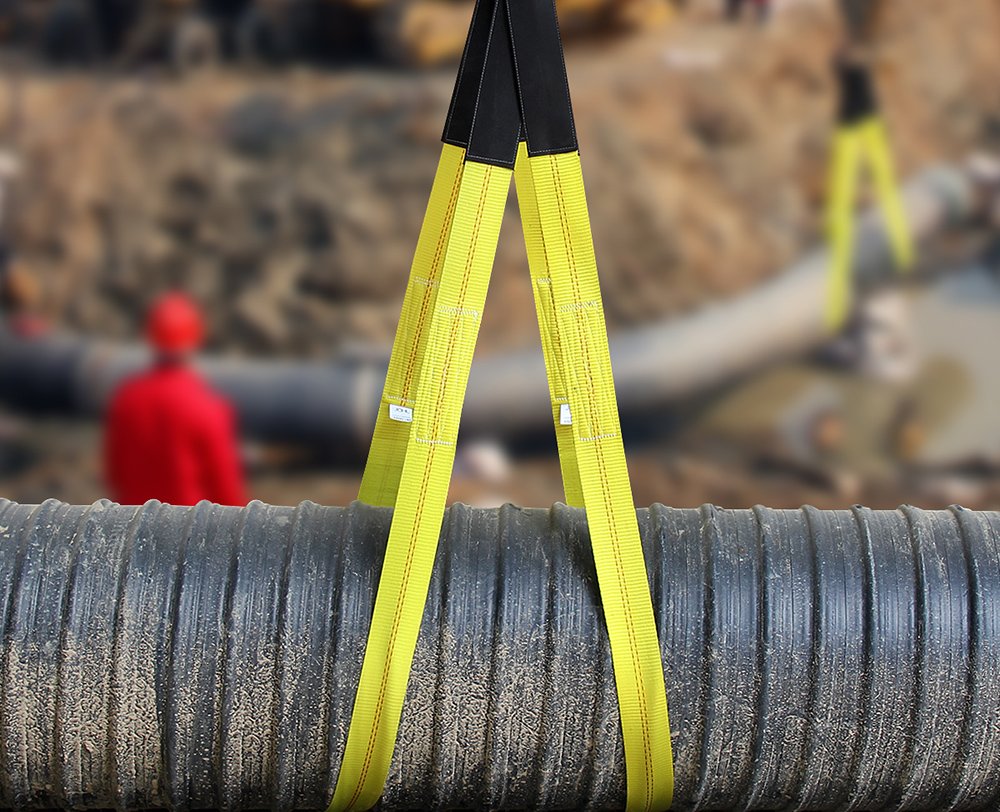
Have you ever watched a massive steel beam hanging from a crane and wondered what keeps it safely aloft? Spoiler: it’s not magic—it’s the humble lifting sling. Whether you’re moving machinery in a factory or hoisting materials on a construction site, choosing the right sling material can make the difference between seamless operation and costly downtime.
Nylon and polyester lifting slings are synthetic web slings engineered for heavy lifting—nylon offers higher elasticity and shock absorption, while polyester delivers superior UV and moisture resistance with lower stretch. Both materials meet rigorous safety standards, but your choice should balance load dynamics, environmental conditions, and application requirements to ensure optimal performance and longevity.
Picture this: a steel mill once suffered a near‑miss when a polyester sling failed after years of outdoor exposure. That scare triggered an in‑depth analysis of sling materials, leading to refreshed inspection protocols and a sling swap that saved lives—and millions in lost productivity. Intrigued? Let’s dig into the nitty‑gritty of nylon vs polyester lifting slings to keep your lifts both safe and efficient.
Lifting slings are flexible, load‑bearing loops or straps used with hooks or shackles to hoist heavy items. Synthetic materials like nylon and polyester offer high strength‑to‑weight ratios, corrosion resistance, and reduced risk of damaging lifted loads.
Definition & Components
Why Synthetic over Wire Rope?
Historic Shift
Synthetic slings gained popularity in the 1970s as high‑tenacity polymers became commercially viable, revolutionizing lifting safety and ease.
Critical Perspectives
Nylon slings exhibit high elasticity (up to 7% stretch), excellent shock absorption, and strong load‑bearing capacity, making them ideal for dynamic lifts and applications requiring load cushioning.
Mechanical Properties
| Property | Nylon Slings |
|---|---|
| Tensile Strength | 6,000–10,000 lb (per sling) |
| Elasticity (Elongation) | 4–7% under load |
| Abrasion Resistance | Medium |
| Melting Point | ~220 °C |
Performance Advantages
Typical Uses
Limitations & Care
Polyester slings provide low elongation (<3%), superior UV and moisture resistance, and stable strength under varying temperatures, making them well‑suited for long‑term outdoor applications.
Mechanical Properties
| Property | Polyester Slings |
|---|---|
| Tensile Strength | 6,000–10,000 lb (per sling) |
| Elasticity (Elongation) | 2–3% under load |
| Abrasion Resistance | High |
| Melting Point | ~260 °C |
Performance Advantages
Typical Uses
Limitations & Care
Neither is universally “better”—nylon excels in dynamic, shock‑absorbing lifts, while polyester offers superior stability and weather resistance. Choose based on load type and environment.
Comparison Table
| Criterion | Nylon Sling | Polyester Sling |
|---|---|---|
| Stretch | 4–7% (good shock absorption) | 2–3% (minimal movement) |
| UV Resistance | Moderate (use UV covers) | High (UV‑stabilized options) |
| Wet Strength Loss | 10–15% | <5% |
| Abrasion Resistance | Medium | High |
| Temperature Range | -40 °C to +100 °C | -50 °C to +120 °C |
| Color Choices | Limited dyes, may fade | Wide Pantone match, UV‑fast |
Use‑Case Scenarios
Critical Perspectives
Both materials achieve similar ultimate strengths, but nylon slings elongate more under load (4–7%) compared to polyester (2–3%), affecting shock absorption and load control.
Tensile vs. Working Load Limit (WLL)
| Metric | Nylon | Polyester |
|---|---|---|
| Breaking Strength | 10,000 lb | 10,000 lb |
| WLL (4:1 Design Factor) | 2,500 lb | 2,500 lb |
| Elongation at WLL | ~5% | ~2% |
Impact on Lift Dynamics
Visualization Example
A 5,000 lb load lifted 20 ft will stretch a nylon sling by ~1 ft, while a polyester sling stretches ~0.4 ft—critical for ceiling clearance in industrial facilities.
Critical Evaluation
Choose nylon slings for dynamic, shock‑loaded lifts and indoor use; opt for polyester when low stretch, UV resistance, and moisture stability are paramount, especially outdoors and marine settings.
Application Matrix
| Application | Problem Addressed | Recommended Sling |
|---|---|---|
| Crane Lifting (Steel Coils) | Shock loads | Nylon |
| Concrete Block Hoisting | Dimensional precision | Polyester |
| Marine Cargo Handling | Saltwater exposure | Polyester (UV grade) |
| HVAC Equipment Installation | Indoor, minimal stretch | Nylon |
| Pre‑cast Panel Positioning | Accurate alignment | Polyester |
Critical Perspectives
UV degrades nylon faster (20% strength loss in 1,000 h) versus polyester (5% loss); moisture weakens nylon (10–15% loss) but barely affects polyester; chemical resistance varies by polymer grade.
UV Exposure
| Material | Strength Loss (1,000 h UV) | Protective Measures |
|---|---|---|
| Nylon | ~20% | UV‑resistant covers, paints |
| Polyester | ~5% | UV stabilizers in yarn |
Moisture Impact
| Material | Water Absorption | Strength Retention (wet) |
|---|---|---|
| Nylon | ~4% | ~85–90% |
| Polyester | <0.5% | ~95–100% |
Chemical Resistance
| Chemical | Nylon | Polyester |
|---|---|---|
| Acid (pH < 3) | Poor | Fair |
| Alkali (pH > 11) | Fair | Good |
| Solvents (Ketones) | Poor | Poor |
Critical Considerations
Select slings by matching WLL, elongation, and environmental resistance to your operation; inspect daily for damage and annually with proof testing; maintain by cleaning per manufacturer guidelines and storing in a cool, dry place.
Selection Checklist
| Criterion | Guiding Question | Tip |
|---|---|---|
| Working Load Limit | “What max load will be lifted?” | Choose 25% above max load |
| Stretch Requirement | “Need shock absorption or precision?” | Nylon for cushioning, polyester for accuracy |
| Environment | “UV, salt, chemicals?” | UV‑resistant or covered slings |
| Sling Type | “Eye, endless, bridle?” | Match hitch to rigging equipment |
Inspection Protocol
| Frequency | What to Check | Accept/Reject Criteria |
|---|---|---|
| Before Each Use | Cuts, abrasions, acid burns | Any visible damage → retire sling |
| Monthly (High‑Use) | Stitch integrity, elongation consistency | >10% permanent stretch → retire |
| Annual Proof Test | WLL verification in test bench | Fail WLL → decommission |
Maintenance Tips
Case Study:
A manufacturing plant implemented RFID tagging and digital logs for all 2,000 slings—reduced accidents by 90% and cut inspection time by 75%.
You’ve seen the deep dive into nylon vs polyester—now imagine slings engineered exactly to your specs: working load limits, eye styles, colors, and logo placements. Szoneier brings 18+ years of R&D and ISO 9001‑certified manufacturing to every sling, offering:
Contact Szoneier today for a personalized quote and make your next lift safer, smoother, and exactly right.


No worries, please contact us and we will answer all the questions you have during the whole process of webbing customization.
If you have your own artwork, logo design files, or just an idea,please provide details about your project requirements, including preferred fabric, color, and customization options,we’re excited to assist you in bringing your bespoke bag designs to life through our sample production process.

Copyright ©2021 Szoneier , All rights reserved.
Looking for premium custom webbing? Contact us now for competitive pricing, free samples, and expert consultation. Fill out the form below, and our team will get back to you within 24 hours!
 Optimized by Seraphinite Accelerator