
- (+86)13823134897
- info@szoneierwebbing.com
From Inquiry to Delivery
 Skip to content
 From Inquiry to Delivery
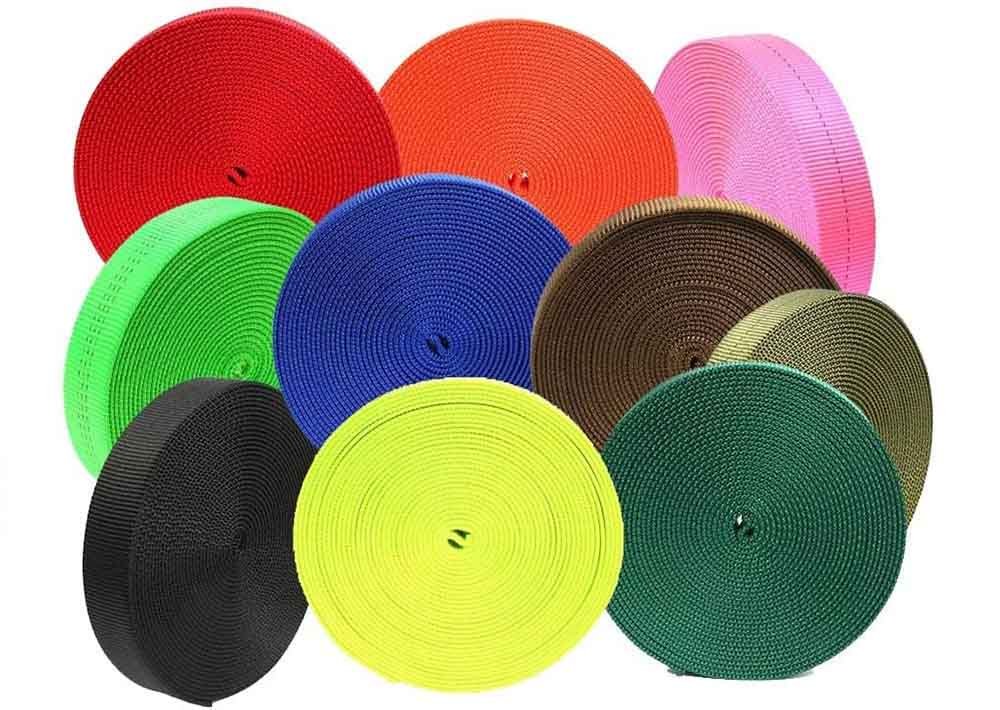
Lifting heavy loads safely is non-negotiable—whether you’re hoisting steel beams on a construction site, shifting cargo in a warehouse, or rigging lights for a stage show. Picking the wrong sling can mean scratches, downtime, or worse, accidents. So which sling wins: a flat webbing sling or a round sling?
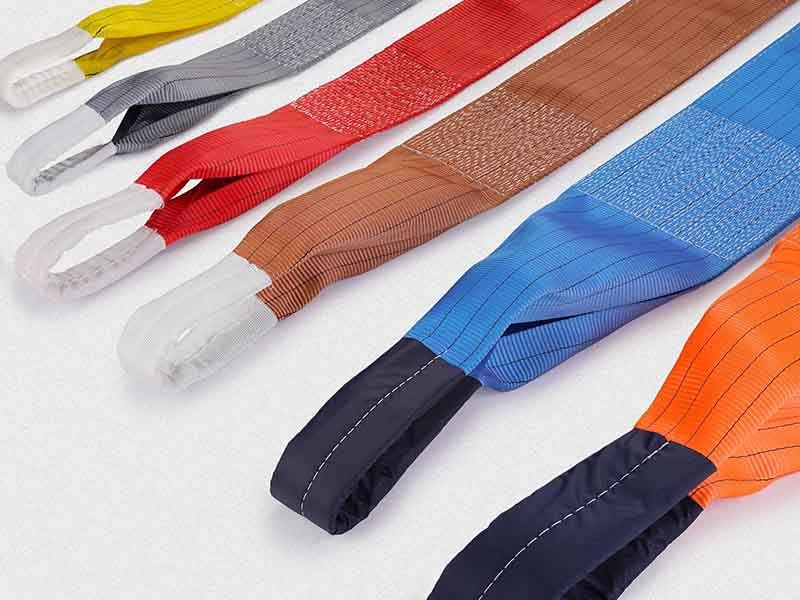
Webbing slings are flat straps—think giant seat belts—made from nylon or polyester, perfect for spreading load pressure evenly. Round slings hide a braided fiber core inside a tubular cover, offering extra protection against cuts and chemicals. Webbing slings are your go-to for lifting finished surfaces, while round slings shine in harsh, outdoor, or chemical-exposed settings thanks to their robust cover.
Picture this: a busy film set, giant lighting grid overhead, and suddenly a sling gives out—sending cables and fixtures crashing down. Yikes! Keep reading, because next time you hang a heavy rig, you’ll know exactly which sling to trust.
A webbing sling is basically a wide, flat strap woven from high-tensile fibers like nylon or polyester. That broad footprint spreads the load’s weight—so it won’t dent or scratch delicate surfaces. Load ratings depend on the strap’s width, fiber type, and stitch pattern. Color-coded per international standards, they’re easy to pick on the job. Webbing slings come in custom lengths, work great for finished materials, and are super simple to hook up.
Core Fibers & Stretch
Stitch Patterns & Strength
| Pattern | Typical WLL Increase | Elongation Impact |
|---|---|---|
| Straight-stitch | Base rating | Low stretch |
| Box-stitch | +10% | Medium stretch |
| Multi-bar | +20% | Higher elongation |
End Fittings & Customization
Color Coding (EN 1492-1)
| Color | WLL (t) |
|---|---|
| Violet | 1 |
| Green | 2 |
| Yellow | 3 |
| Grey | 5 |
| Red | 10 |
| Brown | 20 |
Because those straps are flat, you can lift polished countertops or painted panels without worrying about marks. They roll up neatly, too—no wrestling with bulky coils.
A round sling is a continuous loop of braided fiber yarn tucked inside a tubular, seamless cover. The inner core does all the heavy lifting, while the tough outer sheath shields it from abrasion, chemicals, and UV rays. Its circular profile hugs odd shapes—pipes, drums, engine blocks—spreading the load evenly. Lightweight and compact, round slings are a go-to for outdoor, marine, and chemically harsh conditions.
Core & Cover Construction
Protection Ratings
| Feature | Webbing Sling | Round Sling |
|---|---|---|
| Cut resistance | Exposed fibers | Core hidden |
| UV resistance | Moderate (poly)/Low (ny) | High (UV additives) |
| Chemical defense | Requires sleeve | Built-in cover |
Flexibility & Packing
Inspection Tips
Round slings fit like a glove around cylinders, making them perfect for oilfield pipe lifts or marine salvage where corrosion and abrasion are killers.
At their core, webbing slings are flat, broad straps that gently cradle loads by distributing force over a wide area—perfect for polished or painted surfaces. Round slings are tubular: a load-bearing braided core hidden within a seamless protective cover that shields fibers from cuts, UV, and chemicals. Webbing is generally stiffer, easier to inspect stitch-by-stitch, and offers greater shock absorption. Round slings coil into tight bundles, conform to irregular shapes, and deliver up to 40% longer service life under harsh conditions. Choosing between them means balancing surface protection, flexibility, abrasion resistance, and storage needs.
When you look at them side by side, the shape alone tells you a lot:
| Aspect | Webbing Sling | Round Sling |
|---|---|---|
| Cross-Section | Flat strip (25–500 mm wide × 2–10 mm thick) | Circular tube (Ø 20–50 mm constant) |
| Contact Footprint | Up to 500 cm² (for a 500 mm wide strap) | ≈ 150 cm² |
| Ideal Load Surface | Flat panels, finished metal, glass panes | Pipes, cylinders, irregular shapes |
| Storage & Handling | Folds like a ribbon | Coils like a hose, ~40% smaller bundle |
The big advantage of a round sling is its protective sheath:
| Damage Type | Webbing Sling Impact | Round Sling Impact |
|---|---|---|
| Abrasion | Exposed core wears immediately, reducing WLL | Sheath takes the wear; core stays intact until late in lifecycle |
| Cuts & Snags | Any fiber cut directly weakens the entire sling | Minor sheath cuts don’t affect core until cover fails |
| Chemical Splash | Nylon can weaken 20–30% from solvent attack | Sheath resists many chemicals for hours |
| UV Aging | Retains ~ 60–70% strength after 1,000 hours | Retains ~ 85–90% strength after same exposure |
Think of webbing slings like a stiff ribbon and round slings like a soft garden hose:
| Handling Metric | Webbing Sling | Round Sling |
|---|---|---|
| Flexibility | Moderate; wider straps are stiffer | High; hugs curves without kinks |
| Stretch Under Load | Nylon: 5–8%; Polyester: 2–4% | ≈ 2–3% |
| Coil Volume | 1.0 unit | ≈ 0.4 units |
| Ease of Untangling | Excellent; doesn’t twist | Good; but can “roll” if not coiled correctly |
Superior Abrasion Tolerance
Enhanced Chemical & UV Resistance
Compact Storage & Portability
Better Conformity Around Odd Shapes
Consistent Diameter
In a nutshell, if you’re working in a clean, indoor environment lifting flat panels, webbing slings give you gentle handling and shock absorption. If you’re out in the elements—exposed to abrasion, chemicals, UV, or odd-shaped loads—a round sling’s protective cover and compact coil make it the tougher, longer-lasting choice.
Both sling types must meet at least a 5:1 safety factor, but round slings often boast higher break strengths for the same working load limit (WLL). Webbing slings can stretch 5–8%, absorbing shock loads—handy if your crane swing isn’t perfectly smooth. Round slings stretch under 3%, holding loads rock-steady. Factor in UV and chemical aging, and you’ll see round slings maintain up to 90% of original strength after 1,000 hours of sunlight exposure.
Load & Break Strength Comparison
| Sling Type | WLL (10 t) | Break Strength | Stretch @ WLL |
|---|---|---|---|
| Nylon Webbing | 10 t | 70 t | 7% |
| Polyester Webbing | 10 t | 50 t | 3% |
| Round Sling | 10 t | 80 t | 2% |
Shock Absorption vs. Control
Environmental Aging
Inspect slings before every lift: look for cuts, fraying, discolored stitching, and deformed fittings. For webbing, check each stitch row; for round slings, look for worn cover sections or missing wear-indicator threads. Wash in cool water with mild soap, hang to air-dry out of direct sunlight. Store slings away from chemicals and sharp edges, ideally hung on racks. If core fibers show or cover thickness drops below 75%, retire the sling immediately.
Visual Inspection Steps
| Checkpoint | Webbing Sling | Round Sling |
|---|---|---|
| Cuts/Abrasions | Edges & stitching rows | Cover sheath integrity |
| Chemical Stains | Discoloration, melting | Sticky or brittle spots |
| Hardware Deformation | Bent shackles, hooks | N/A (covers hide core) |
Cleaning & Storage
Retirement Criteria
Go with webbing slings for delicate finishes, wide-load support, and cushioning—perfect for stone slabs, glass panes, or painted metal. Pick round slings when you need abrasion resistance, compact storage, and wrapping around pipes or irregular shapes. Think about lift angle, environment (chemical exposure, UV), and how often you’ll reuse the sling. Then lean on custom OEM services—lengths from 0.5 m to 50 m, stainless-steel end fittings, aramid covers—tailored exactly to your job.
Scenario Matching
| Application | Recommended Sling |
|---|---|
| Glass/Stone Slabs | Webbing |
| Pipe & Cylinder Lifts | Round |
| Marine/Offshore Environments | Round |
| Finished Furniture Moves | Webbing |
Customization Offers
Practical Tips
Yes—global standards like EN 1492-1 (webbing) and EN 1492-2 (round), plus ISO 4878 and ASME B30.9, govern material specs, safety factors, testing, and labeling. Slings carry tags showing manufacturer, serial number, WLL, and safety factor. Third-party labs test tensile strength, elongation, and weathering. Compliance means you meet insurance, regulatory, and client requirements—no nasty surprises during audits or inspections.
Standards at a Glance
| Standard | Sling Type | Key Focus |
|---|---|---|
| EN 1492-1 | Webbing | Color codes, stitch spec |
| EN 1492-2 | Round | Cover thickness, core tests |
| ISO 4878 | Both | Textile slings general |
| ASME B30.9 | Both | Inspection & use rules |
Tagging & Traceability
Quality Audits
Webbing slings cost about 10–20% less up front but may last only 1–2 years in tough conditions. Round slings cost 15–30% more initially yet endure 2–3 years—often yielding a 15–25% lower yearly cost. When you factor in downtime, maintenance, and replacement, round slings typically break even within 18–24 months, then pull ahead on savings—especially outdoors or around chemicals.
Cost vs. Lifespan
| Sling Type | Unit Cost (10 t) | Service Life | Annualized Cost |
|---|---|---|---|
| Webbing | $120 | 1.5 yr | $80 |
| Round | $150 | 2.5 yr | $60 |
Maintenance & Downtime
True TCO Calculation
Choosing the right sling boils down to what you lift, where you lift, and how often. Flat webbing slings win for delicate finishes and shock absorption; round slings dominate rugged, space-constrained, or chemically aggressive jobs with their protected core and compact coil.
Ready to spec your perfect sling? Reach out to Szoneier for a free design consultation, custom lengths and fittings, sample slings in 2 weeks, and factory-direct pricing. Let’s get your next lift done safer, faster, and more cost-efficiently—drop us a line today!
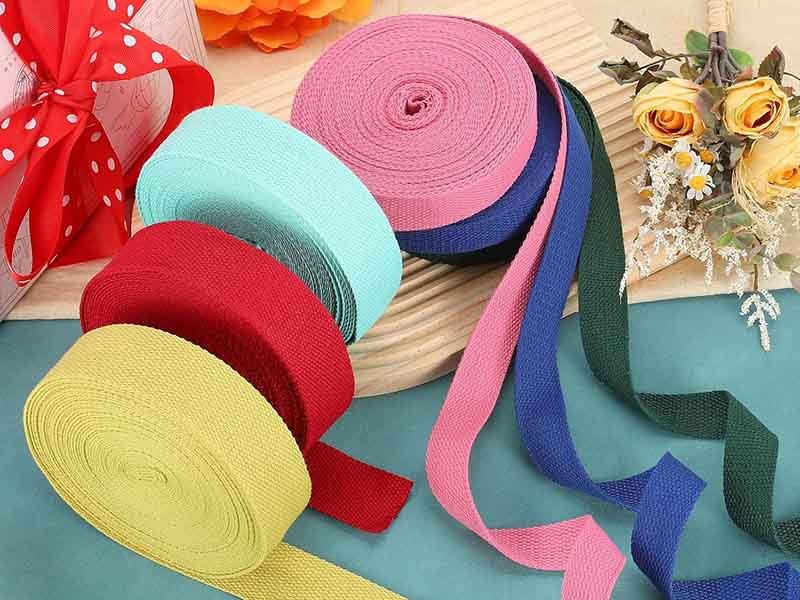


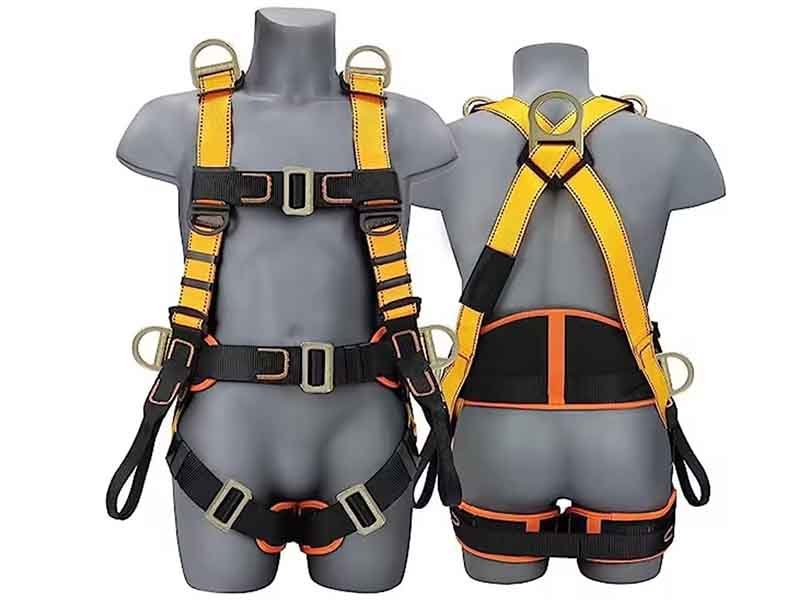
No worries, please contact us and we will answer all the questions you have during the whole process of webbing customization.
If you have your own artwork, logo design files, or just an idea,please provide details about your project requirements, including preferred fabric, color, and customization options,we’re excited to assist you in bringing your bespoke bag designs to life through our sample production process.

Copyright ©2021 Szoneier , All rights reserved.
Looking for premium custom webbing? Contact us now for competitive pricing, free samples, and expert consultation. Fill out the form below, and our team will get back to you within 24 hours!
 Optimized by Seraphinite Accelerator