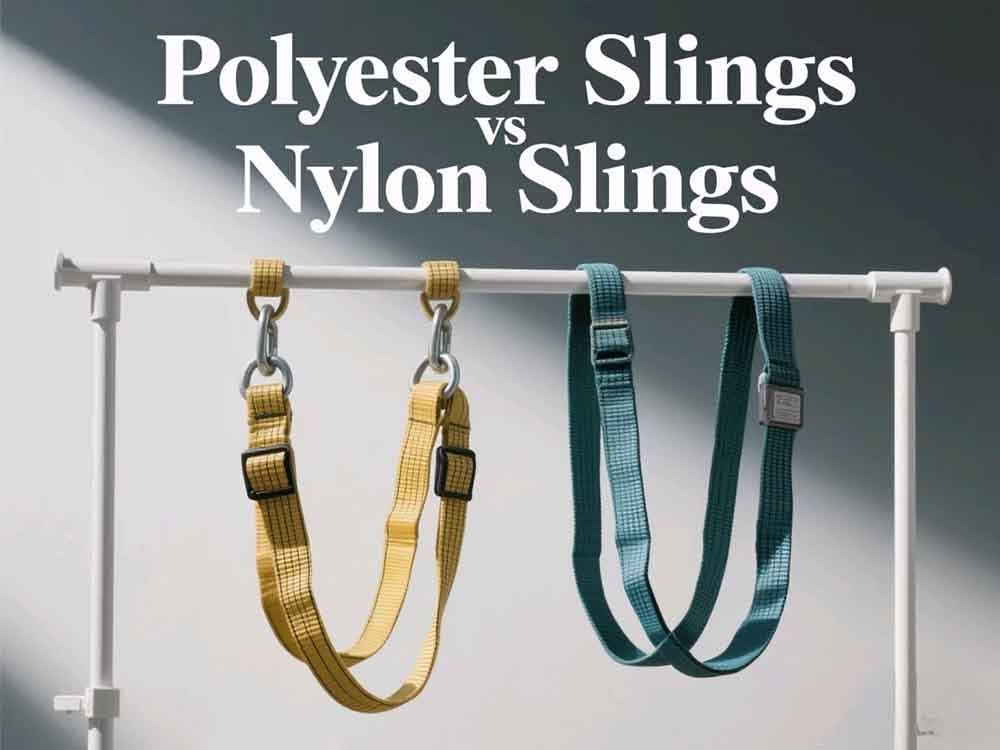
In the world of lifting and rigging, choosing the right sling material can spell the difference between a smooth, safe lift and an expensive, dangerous failure. Today, two synthetic champions dominate the industry: polyester and nylon slings. While both are woven from high-performance polymers, their unique characteristics—strength, elasticity, abrasion resistance, and environmental tolerance—determine which sling will excel under your specific conditions. Whether you’re hoisting delicate equipment in a climate-controlled warehouse or dragging heavy loads across a sun-baked construction site, understanding what sets these slings apart is critical.
Polyester slings excel in low-stretch, UV-resistant applications, offering better stability under load and superior chemical resistance. Nylon slings provide higher elasticity and shock absorption, making them ideal for dynamic lifts and environments where sudden load shifts occur.
This clear breakdown helps you immediately identify which sling meets your performance needs.
But beyond simple bullet points lies a deeper story: one of molecular structure, manufacturing processes, and real-world case studies that reveal how each material performs when the stakes are highest. Imagine a critical lift at dawn, where a single elastic bounce could send equipment crashing—or a hot summer afternoon, when intense UV rays gradually weaken your gear without you noticing. These scenarios illustrate why many professional riggers turn to Szoneier’s tailored solutions, customizing slings to perfectly match their load weight, operating environment, and safety regulations. Let’s dive deeper into the science and practical insights that help you make an informed, confident choice.
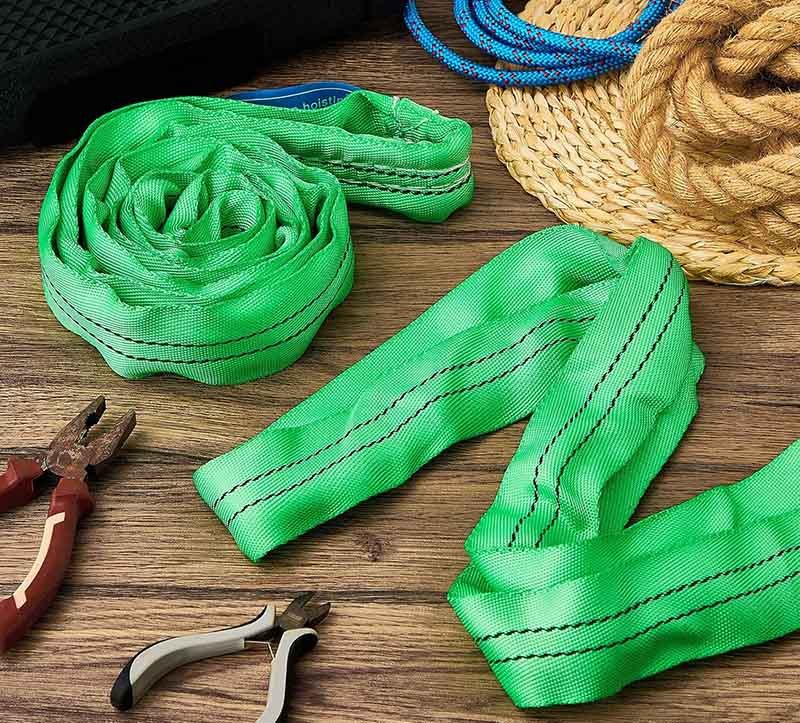
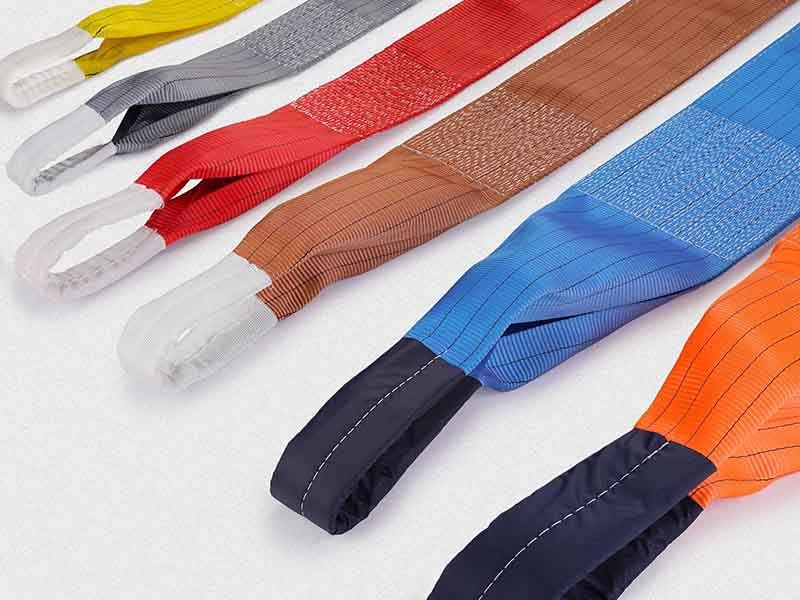
Polyester slings are manufactured from PET fibers woven into flat, looped slings. Their low stretch and high UV and chemical resistance come from the polymer’s crystalline structure. Ideal for applications requiring stable, controlled lifts, these slings undergo knitting or weaving processes followed by heat-setting and finishing to ensure consistent performance.
Polyester slings begin with polymerizing purified terephthalic acid and ethylene glycol, creating long PET polymer chains. These chains are melted, extruded through spinnerets to form filaments, then drawn to align molecular chains, boosting tensile strength and reducing elongation. Fibers are then either knitted or woven into flat webbing, with looped eyes heat-set at the ends to form the sling.
During heat-setting, slings are tensioned and exposed to controlled temperatures, which stabilize the fiber’s crystalline regions. This process locks in the sling’s dimensions and elasticity characteristics, ensuring the stretch remains under 3% at working load limit (WLL). The finished sling typically undergoes dyeing—often in industry-standard colors for easy capacity identification—before being sewn or fused.
Quality control at Szoneier includes tensile testing of sample strips, abrasion tests (Martindale), and UV exposure cycles. This multi-step manufacturing yields slings that resist chemical degradation from oils, solvents, and mild acids, and maintain performance under extended outdoor use. However, field inspections must still be routine: cracking or fraying at stress points can indicate weakened fibers. Szoneier’s customization options allow clients to specify protective coatings, reinforced eyes, or color-coding to integrate seamlessly into existing safety protocols.
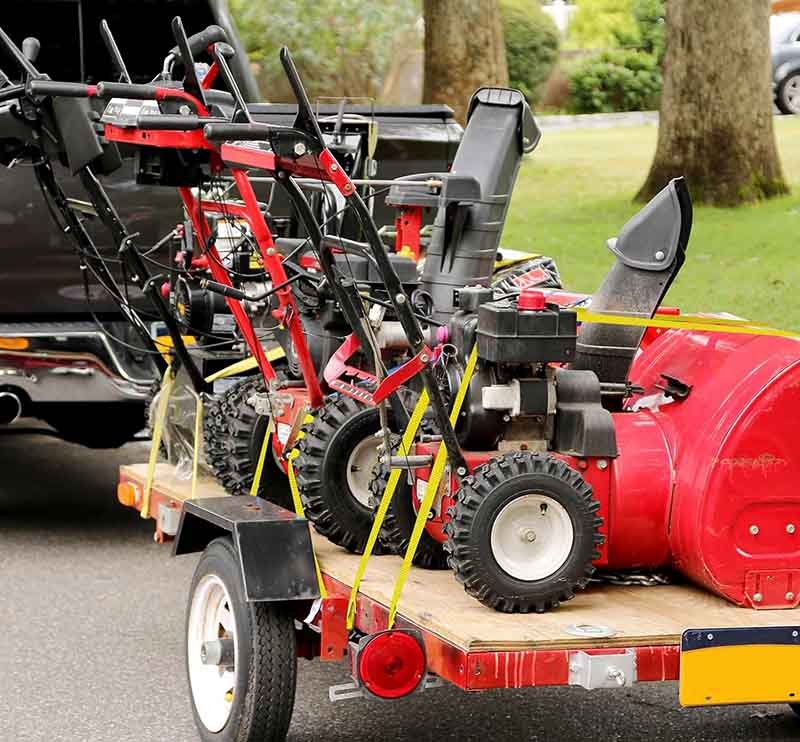
Nylon slings are made from polyamide fibers known for their elasticity and shock-absorbing properties. Their higher stretch (up to 5–7% at WLL) reduces shock loads during dynamic lifts. Manufactured via melt-spinning and textured in crimp cycles, nylon webbing offers excellent abrasion resistance and pliability, though it absorbs moisture and is less UV-resistant compared to polyester.
Nylon begins with polymerizing caprolactam to form polyamide-6 or polyamide-6,6 granules. These granules are melted and extruded into filaments, which are then cooled, drawn, and heat-set under controlled tension. The drawing aligns polymer chains but retains some crimp to permit elasticity. Next, fibers are woven or knitted into webbing with looped ends, stitched with high-tensile thread to create durable eyes.
The crimp structure of nylon enhances its shock absorption: during a sudden load application, the fibers elongate significantly, reducing peak forces on the lift system. This makes nylon slings ideal for dynamic environments—such as overhead crane operations with sudden load shifts or hoisting at heights where any bounce must be minimized to avoid hazards.
However, moisture absorption—up to 4% by weight—can reduce nylon’s WLL by 10–15% when wet. In marine or humid environments, this must be accounted for. UV exposure also degrades nylon more rapidly; prolonged sun exposure can reduce tensile strength by up to 20% over 500 hours of direct sunlight. Szoneier tackles these issues by offering UV-protective coatings and hydrophobic finishes, tailored per client specifications.
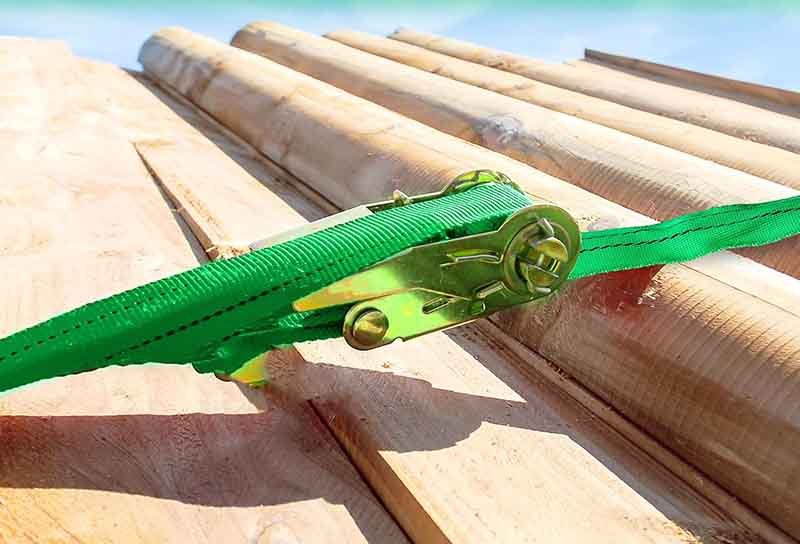
Polyester slings offer high tensile strength with minimal elongation, typically rated for WLLs from 1 to 50 tons and stretch under 3%. Nylon slings provide similar tensile ratings but elongate up to 7%, absorbing shock loads. Strength tables below illustrate typical WLLs and elongation rates at proof load.
| Material | WLL Range | Typical Stretch @ WLL | Proof Load Factor |
|---|---|---|---|
| Polyester | 1–50 tons | 2–3% | 2× WLL |
| Nylon | 1–50 tons | 5–7% | 2.5× WLL |
Different industries require precise load capacities and tolerance for movement. In fixed-point lifts—such as installing HVAC units—a sling that holds position without bounce is crucial. Polyester’s 2–3% elongation ensures that lifts remain steady. If a lift needs to hold position next to delicate machinery, every fraction of stretch avoided reduces risk of contact damage.
Conversely, in the marine sector where loads can swing with vessel motion, nylon’s ability to stretch under sudden loads protects hardware and operators. For example, a 10-ton nylon sling under a 15-ton shock load will elongate to absorb peak forces, returning to near-original length once the transient force subsides. This rebound effect also reduces wear on crane components.
Proof load factors—safety multipliers over WLL—differ: nylon’s higher factor (2.5×) reflects its capacity to withstand fatigue from dynamic forces. However, users must consider that repeated cycling can cause progressive fiber fatigue if moisture or chemicals are present. Szoneier’s engineers recommend inspecting dynamic nylon slings every 100 cycles under high-moisture conditions and replacing them when elongation permanently exceeds 10%.
Case Study: A European windfarm operator switched from polyester to nylon slings for blade installation to leverage shock absorption in gusty conditions. Load monitoring showed 30% fewer peak stress events, extending crane maintenance intervals by 20% and reducing downtime costs by 15%.
Polyester slings outperform nylon in UV resistance (up to 500 hrs without >10% strength loss) and chemical resistance against oils, acids, and solvents. Nylon slings resist abrasion better but degrade more under sunlight and harsh chemicals. Protective coatings can enhance both materials’ durability in extreme conditions.
Abrasion Resistance:
UV Resistance:
Chemical Resistance:
Szoneier customizes slings with PU coatings for abrasion protection, silicone finishes for UV blocking, and PTFE impregnations for chemical resistance. Clients operating in foundries, chemical plants, or desert locations benefit from these tailored options. Regular inspections—checking for fiber fuzz, discoloration, or pitting—ensure safe service life.
Polyester maintains performance across –40 °C to +100 °C and is impervious to moisture, making it ideal for cold and wet conditions. Nylon operates from –30 °C to +80 °C but absorbs up to 4% water by weight, reducing tensile strength and elongation. Extreme UV, salt spray, and chemical exposure further differentiate their service lives.
Temperature Extremes:
Polyester’s high glass transition temperature (~75 °C) and melting point (~255 °C) allow it to remain stable in both arctic and desert settings. At –40 °C, polyester retains flexibility without becoming brittle, and at +100 °C it maintains over 90% of tensile strength. Nylon’s lower glass transition (~50 °C) and melting point (~220 °C) mean it can stiffen below –30 °C and lose up to 15% strength above +80 °C. Operators in very cold climates often prefer polyester to avoid sudden stiffness that could cause fiber cracking under load.
Moisture Uptake:
Nylon’s hygroscopic nature leads to moisture absorption of up to 4% by weight, which reduces wet tensile strength by 10–15% and increases elongation by 2–3%. In marine or high-humidity environments, this effect requires derating the working load limit (WLL) by up to one sling grade. Polyester’s hydrophobic makeup repels water entirely, ensuring that lifts in rain, fog, or submerged conditions remain consistent with dry specifications. Szoneier offers hydrophobic finishes on nylon slings, reducing water pick-up by over 60% and mitigating performance loss.
UV Exposure & Weathering:
Ultraviolet radiation can degrade polymer chains, but polyester’s aromatic backbone provides natural UV stability, losing less than 10% tensile strength after 500 hours of xenon-arc testing. Nylon, conversely, can lose 20–25% strength under the same exposure. In desert or high-altitude sites, UV-protective silicone or acrylic coatings extend nylon sling life by up to 50%. Polyester slings may be supplied with additional UV stabilizers when continuous sun exposure is expected.
Salt Spray & Chemical Atmospheres:
Saltwater corrosion has negligible effect on polyester, but nylon can hydrolyze when exposed to salt spray and acidic fumes, gradually reducing molecular weight and mechanical properties. In chemical plants or coastal projects, Szoneier’s PTFE and polyurethane impregnations can shield fibers, resisting corrosive gases and spray for thousands of hours. Regular environmental inspections—checking for surface swelling, discoloration, or stiffness—ensure safe operations.
Case Application:
A hydroelectric plant in Scandinavia switched from untreated nylon to hydrophobic nylon slings with UV coating and found that wet-load derating dropped from 15% to under 5%, and sling replacement intervals increased by 30%. This real-world result underscores the importance of factoring temperature, moisture, and environmental stressors into sling selection and customization. Which Lifting Applications Benefit Most from Polyester Slings vs Nylon Slings?
Select polyester for precise, static lifts in outdoor, chemical, or UV-exposed environments. Choose nylon for dynamic, shock-prone lifts such as crane hoists, marine operations, and projects requiring bounce absorption.
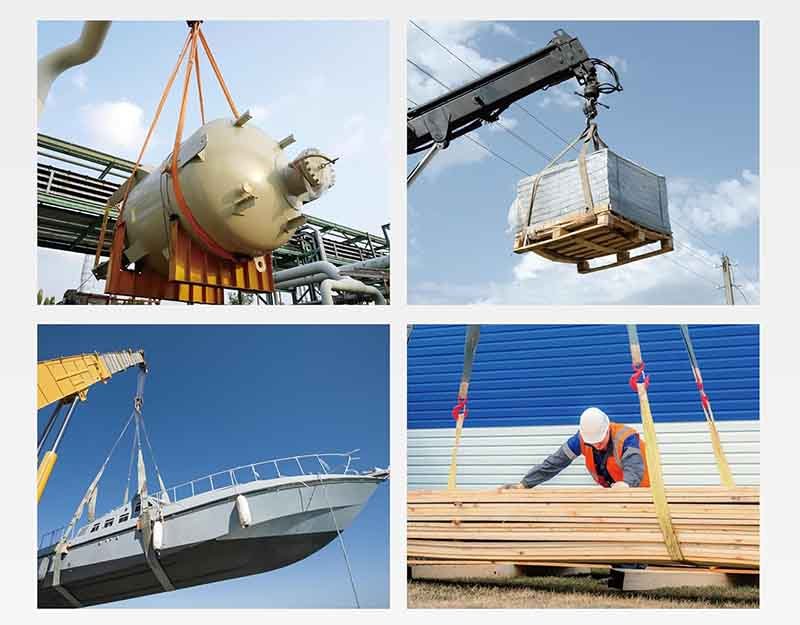
Select polyester for precise, static lifts in outdoor, chemical, or UV-exposed environments. Choose nylon for dynamic, shock-prone lifts such as crane hoists, marine operations, and projects requiring bounce absorption. Szoneier tailors solutions per industry needs.
When considering lifting applications, the choice between polyester and nylon slings hinges on the nature of the load, environmental challenges, and safety requirements. Static and Precision Lifts: Tasks such as setting HVAC units, installing machine tools, or positioning sensitive electronics demand minimal elongation. Polyester slings, with their 2–3% stretch under load, maintain positional accuracy, preventing equipment misalignment and reducing risk of secondary damage. Their resistance to UV, moisture, and chemicals ensures that performance remains consistent, even in outdoor or harsh industrial settings.
Dynamic and Shock-Absorbing Lifts: In contrast, operations involving frequent load fluctuations, sudden stops, or environmental motion benefit from nylon’s elasticity. Overhead cranes on construction sites, shipyards loading cargo, and wind turbine blade installations often experience variable forces and vibrations. Nylon’s 5–7% elongation absorbs those shock loads, reducing peak stress on rigging hardware and minimizing wear on hoisting machinery. This elasticity also dampens bounce when lowering loads, enhancing operator control and safety.
Marine and Offshore Operations: Saltwater exposure and constant vessel movement create unique challenges. While nylon slings absorb shock, untreated nylon can degrade in marine environments. Szoneier’s hydrophobic treatments and UV coatings help nylon slings withstand salt spray and sunlight, making them suitable for mooring tasks, deck crane operations, and offshore platform maintenance. Polyester slings, although hydrophobic, lack nylon’s shock absorption but excel in UV-heavy, corrosive marine atmospheres when stability is prioritized.
Chemical and Petrochemical Facilities: Lifts near chemical storage tanks, refineries, or acid-based processes require slings with resistance to solvents, acids, and alkalis. Polyester’s inherent chemical resistance and hydrophobic nature make it the go-to choice. These slings maintain integrity in pH extremes and repel moisture, reducing the need for frequent re-certification. For equipment maintenance inside chemical plants, polyester slings deliver reliable, static support under aggressive conditions.
Aerospace and Precision Manufacturing: Industries that demand micron-level accuracy—such as aerospace assembly or semiconductor fabrication—favor polyester slings to prevent micro-movements. The minimal stretch and consistent performance under varying temperatures ensure that critical components align perfectly during installation.
Customized Hybrid Solutions: Szoneier’s engineers often recommend hybrid configurations, combining polyester and nylon in multi-leg bridle assemblies. This approach leverages nylon’s shock absorption on one leg while maintaining positional control on another, optimizing performance for complex lifts.
By analyzing load behavior, environmental factors, and safety priorities, you can select the ideal sling material. Szoneier’s customization—ranging from protective coatings and specialized stitching to color-coded capacity bands—ensures that your slings perform precisely as needed, no matter the application.
Polyester slings typically cost 5–10% less than nylon and maintain performance longer in UV or chemical environments, giving them a 20% longer service life. Nylon slings have a higher upfront price but can reduce damage in dynamic lifts. However, when wet or under UV, they require more frequent inspections and potential derating, increasing maintenance overhead.
Initial Investment and Unit Cost:
Polyester slings are manufactured at scale with lower material and processing costs, resulting in a price point approximately 5–10% below comparable nylon slings. For a 10-ton WLL sling, polyester may retail around $150, while nylon of equal capacity is approximately $165–$170. The lower cost makes polyester attractive for fleets of slings in static applications, especially when budget constraints and large inventories are factors.
Service Life and Durability:
In outdoor or chemically aggressive environments, polyester’s inherent UV and chemical resistance translates to a longer service life. Field studies at on-shore and offshore sites indicate that polyester slings can last 20% longer before retirement criteria are met, compared to untreated nylon under identical conditions. This extended lifespan offsets the slightly higher initial cost of nylon for dynamic applications, making polyester the economical choice for static or corrosive settings.
Maintenance Frequency and Inspection Intervals:
Nylon slings require more rigorous inspection schedules when exposed to moisture or UV. In humid or marine conditions, nylon slings should be inspected every 30 days, with load testing every 250 cycles, to monitor moisture-induced fiber degradation. Polyester slings, unaffected by moisture, can extend inspection intervals to 60 days and load tests to 500 cycles. These differences reduce downtime and labor costs for polyester fleets.
Derating and Replacement Costs:
Moisture absorption in nylon demands derating of 1 sling grade, effectively lowering capacity. This requires either maintaining additional spare capacity or replacing slings more frequently. Combined with periodic derating inspections, total cost of ownership for nylon slings can rise by 10–15% over their lifecycle. Polyester’s stable WLL under all conditions eliminates derating, simplifying inventory management and reducing unexpected replacement costs.
Lifecycle Cost Comparison:
| Cost Category | Polyester Sling | Nylon Sling |
|---|---|---|
| Initial Purchase | $150 | $165 |
| Average Lifespan | 5 years | 4 years |
| Inspection Interval | 60 days | 30 days |
| Maintenance Cost/year | $200 | $300 |
| Total 5-Year Cost | $1,150 | $1,465 |
This simplified model shows polyester slings can offer up to a 20% reduction in total cost of ownership over five years, assuming moderate outdoor exposure. For highly dynamic or shock-prone uses, nylon’s performance benefits may justify the higher lifecycle costs.
Always adhere to EN 1492-1/2, ASME B30.9, and OSHA 1910.184 for synthetic slings. Conduct pre-use visual inspections, periodic load tests, and retire slings showing cuts, abrasive wear, chemical damage, heat exposure, or permanent elongation beyond 10%. Follow proper rigging angles, edge protection, and storage procedures to maximize safety and service life.
Key Industry Standards:
Pre-Use Visual Inspection:
Before every lift, visually inspect slings for:
Any visible damage means immediate removal from service. Document inspections on a log card attached to each sling, noting date, inspector initials, and findings.
Periodic Detailed Inspections and Load Testing:
Retirement Criteria:
Synthetic slings must be retired if any of the following are observed:
Best-Use Guidelines:
Training and Recordkeeping:
Ensure that all rigging personnel receive formal training on sling selection, inspection, and safe rigging practices. Maintain detailed records of inspections, tests, retirements, and replacements. Implement a tagging system with QR codes or RFID for quick access to sling history and certifications.
Whether you need polyester slings engineered for high UV tolerance or nylon slings designed for shock-absorbing performance, Szoneier has over 18 years of expertise to deliver your perfect lifting solution. Contact our team now for a free quote and rapid sampling tailored to your exact specifications.