- (+86)13823134897
- info@szoneierwebbing.com
From Inquiry to Delivery
 Skip to content
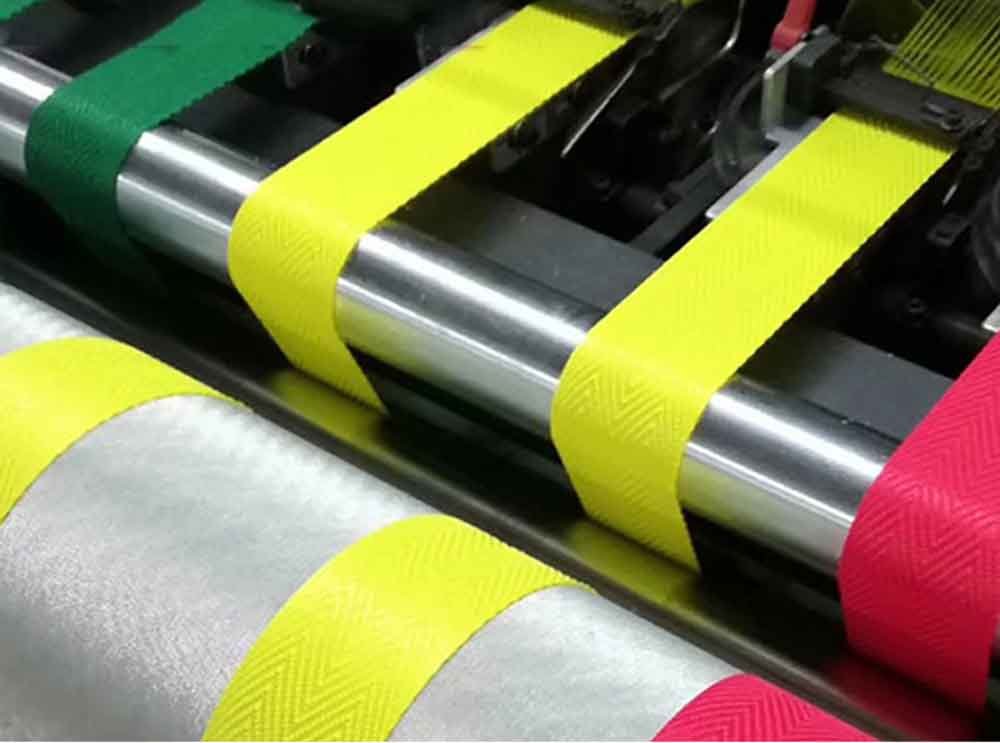
In an era where strength, flexibility, and durability are non-negotiable, nylon webbing has emerged as the backbone of countless industrial and consumer applications—from heavy-duty safety harnesses to fashionable backpack straps. Yet have you ever paused to wonder how this remarkable material is actually made? Whether you’re an engineer seeking to optimize production, a procurement specialist vetting suppliers, or a product designer curious about every stitch, understanding the end-to-end manufacturing process of nylon webbing can revolutionize how you specify, source, and innovate with this versatile textile.
Nylon webbing is produced by melting nylon polymers, extruding them into tapes, weaving or knitting under precise tension, and then applying specialized coatings (PU or DWR) to enhance abrasion and UV resistance. This process ensures a high-strength, flexible webbing suited for safety, outdoor, and fashion applications.
In today’s ultra-competitive market, where shoppers demand both performance and sustainability, mastering the art of crafting top-quality nylon webbing can distinguish your product from the rest. Imagine a hiking harness that never frays or a dog leash that endures years of wear—stories like these begin with meticulous control over raw materials, machinery calibration, and rigorous quality checks. Join me as we delve into each stage of production, uncover common pitfalls, and explore cutting-edge customization techniques that keep brands coming back to Szoneier for their private-label and OEM/ODM webbing needs.
Nylon webbing is a high-tensile tape woven or knitted from nylon polymer fibers. Renowned for its superior strength-to-weight ratio, elasticity, and abrasion resistance, it’s crucial for safety equipment, outdoor gear, furniture, and fashion accessories.
Nylon webbing’s essential role across industries stems from its remarkable combination of mechanical properties and manufacturing versatility. Here’s an in-depth look:
Strength-to-Weight Ratio:
Nylon 6,6 fibers typically deliver tensile strengths of 9,000–10,000 psi while maintaining a specific gravity around 1.14. Compared to polyester (8,000 psi, 1.38 g/cm³) or polypropylene (6,000 psi, 0.91 g/cm³), nylon webbing provides higher load capacity per unit weight—critical for load-bearing slings or safety harnesses where minimizing bulk maximizes comfort and maneuverability.
Elasticity and Recovery:
Under sudden shock loads (e.g., a falling load in a lashing strap), nylon webbing can elongate up to 20% before permanent deformation. This dynamic stretch dissipates energy, reducing stress on both the webbing and its anchoring hardware. Manufacturers tailor elasticity by adjusting yarn denier and weave density.
Abrasion & UV Resistance:
Though nylon is naturally hygroscopic, careful selection of stabilizers and finishes yields abrasion resistance exceeding 2,000 cycles on a Martindale tester. UV-resistant additives (e.g., hindered amine light stabilizers) prolong lifespan in outdoor applications to over 5 years of direct sun exposure without significant tensile loss.
Versatile Applications:
Sustainability Considerations:
As brands pursue greener credentials, bio-based nylon (from castor oil) and recycled nylon post-consumer waste (nylon-6 from fishing nets) are gaining traction. While mechanical properties may vary by ±5%, rigorous QC ensures performance parity.
Understanding these fundamentals lays the groundwork for optimizing each downstream process—raw material selection, extrusion, weaving, coating, and QC—to craft webbing that delights end users and meets stringent regulations.
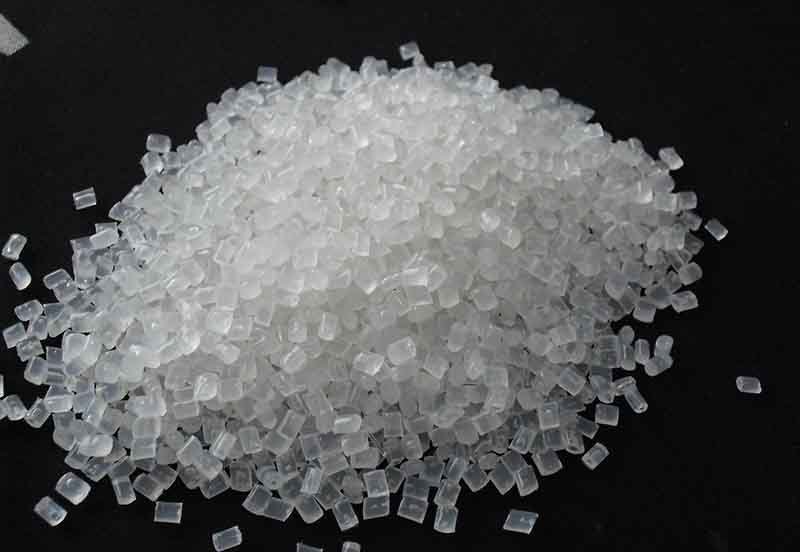
Producing top-quality nylon webbing starts with selecting the right nylon polymer—typically Nylon 6 or Nylon 6,6—along with UV stabilizers, antistatic agents, lubes, and plasticizers to enhance strength, abrasion resistance, and processing stability.
Nylon Polymer Choice:
Additives & Modifiers:
Masterbatch Preparation:
Pigment or additive masterbatches are pre-compounded at 10–20% loading, ensuring uniform dispersion when mixed with virgin polymer (80–90% ratio) in the extruder hopper.
Quality Benchmarks:
By meticulously controlling raw material specifications and pre-conditioning protocols, manufacturers ensure the foundational strength, consistency, and longevity of their nylon webbing.
The extrusion process melts nylon resin and forces it through a flat-die to create a continuous tape. Precise temperature control, die design, and quenching ensure uniform width, thickness, and molecular orientation for optimal strength and flexibility.
Melt Extrusion Fundamentals
Nylon pellets are dried to <0.5% moisture, then fed into a twin-screw extruder. The screws, heated in zones from 180 °C (feed) to 260 °C (die), achieve total polymer melting and homogenization.
Zone Temperatures:
| Zone | Temperature (°C) |
|---|---|
| Feed | 180–200 |
| Compression | 220–240 |
| Metering Die | 240–260 |
Once extruded, the molten tape passes over chilled rollers (10–15 °C) or through a water bath. Quenching rate affects crystalline orientation:
A well-tuned line achieves throughputs of 150–200 kg/hr of finished tape. Assuming a 50 mm width and 1.14 g/cm³ density, this equates to nearly 3 km of 50 mm webbing per hour, optimizing both capacity and material usage.
The extrusion stage sets the dimensional foundation for all subsequent weaving or knitting operations. Any deviation at this point translates into quality issues later—underscoring the importance of rigorous process control and real-time monitoring.
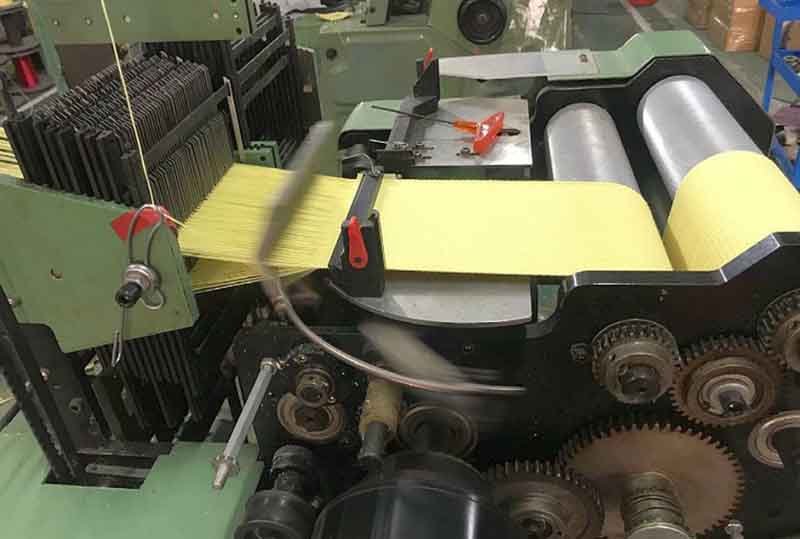
Key equipment includes warp knitting or weaving looms for interlacing yarns, tension control systems to ensure uniformity, and take-up/winding units to roll finished webbing. Modern installations integrate PLC automation and inline inspection for high throughput and quality.
| Equipment | Key Parameter | Typical Brand/Model |
|---|---|---|
| Twin-Screw Extruder | 150–200 kg/hr throughput | Clextral BC/TK Series |
| Flat-Die Assembly | ±0.2 mm width tolerance | Custom OEM |
| Warp Knitting Machine | 500 m/min max speed | Karl Mayer KRS Series |
| Rapier Loom | 1,000 picks/min | Tsudakoma SC Series |
| PLC Control System | Allen-Bradley ControlLogix | — |
| Inline Camera Inspection | 0.3 mm defect detection | MatiScan Web |
| Surface Winder | programmable torque | Oerlikon Schlafhorst |
Investing in the right mix of machinery, coupled with automation and inline QC, not only drives productivity but also ensures every meter of Szoneier webbing meets exacting customer specifications—whether it’s a private-label strap for a high-end backpack or military-grade tactical webbing.
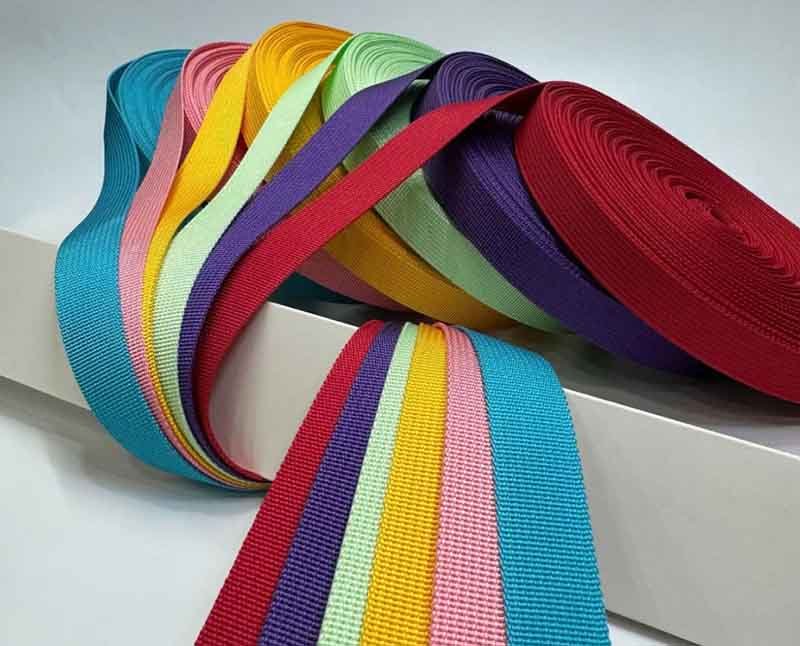
Performance coatings like polyurethane (PU) or durable water repellent (DWR C8/C6/C0) are applied via padding, calendaring, or knife-over-roll techniques to boost abrasion resistance, water-shedding, and UV stability, tailoring webbing for specific environments and end-use demands.
By selecting the optimal coating chemistry and application method, Szoneier ensures each batch of nylon webbing meets or exceeds client specifications—whether moisture-wicking dog leashes or flame-retardant industrial straps.
Quality control spans raw material inspection, in-process monitoring (tension, thickness, defects), and final testing (tensile, elongation, visual checks). Automated sensors, statistical process control (SPC), and documented procedures guarantee consistent performance and traceability.
Such an integrated QC system underpins Szoneier’s commitment to delivering webbing that performs reliably—batch after batch—empowering brands worldwide.
Typical defects include pinholes, uneven width, and fraying edges. Troubleshooting involves checking pellet moisture, calibrating die lips, adjusting tension settings, and performing preventive maintenance on knives and rollers to restore uniformity and strength.
| Task | Frequency | Responsible |
|---|---|---|
| Extruder Barrel Cleaning | Weekly | Maintenance |
| Die Lip Inspection | Monthly | Process Eng. |
| Blade Replacement | Every 150 kg tape | Line Operator |
| Tension Sensor Calibration | Quarterly | Automation |
| Oven Thermocouple Check | Quarterly | Quality |
| Camera Lens Cleaning | Daily | QC Operator |
By systematically addressing root causes and adhering to a strict maintenance regimen, manufacturers minimize downtime and uphold stringent quality standards.
Customization options include pattern weaving, heat transfer or screen printing for logos, embossing, color matching to RAL or Pantone standards, UV stabilization, flame retardant finishes, and specialized widths or thicknesses to meet unique application requirements.
A leading backpack OEM required a 25 mm strap with high grip and water repellency. Szoneier solution:
Delivered 5 km daily, zero failures in field tests, and a 20% cost saving versus competitor bids.
Through such tailored solutions, Szoneier enables brands to differentiate their offerings—whether in fashion, military, outdoor equipment, or industrial safety.
Crafting industry-leading nylon webbing demands a deep understanding of materials science, precision extrusion, advanced machinery, specialized coatings, and unwavering quality control. From the very first pellet to the final roll of customized webbing, each step requires critical thinking, data-driven tweaks, and a commitment to continuous improvement.
Ready to elevate your product line with premium nylon webbing?
Contact Szoneier today to discuss custom specifications, low-MOQ prototypes, and bulk manufacturing. Our 18+ years of expertise ensure your private-label or OEM/ODM project achieves unmatched strength, durability, and aesthetic appeal.
Let’s engineer the perfect webbing solution for your next breakthrough product.

 Optimized by Seraphinite Accelerator