Unlocking the secrets of vehicle recovery can turn a roadside nightmare into a straightforward operation. Whether you’re an off-road enthusiast stuck in the mud or a commuter whose car conked out on a remote highway, knowing how to install a tow strap properly is critical for safety and efficiency. Every year, incidents of improper rigging lead to equipment failure, vehicle damage, and even injuries. But with the right strap, solid attachment points, and a clear, systematic process, you can recover your vehicle—and assist others—without drama or damage.
Installing a tow strap requires selecting one rated above your vehicle’s weight, attaching it securely to designated tow points, removing slack, and communicating clearly between drivers. This ensures a controlled, shock-free pull that protects both vehicles.
Picture this: a family SUV buried up to its axles in riverbank mud, engine dying with each rev. As tension builds, a properly installed nylon strap stretches just enough to absorb the shock, gently pulling the vehicle free without a jolt. That moment of triumph—and relief—begins with knowing the exact steps and having quality gear. Let’s dive into each key question so you can tow with confidence, every time.
What Is a Tow Strap and How Does It Work?
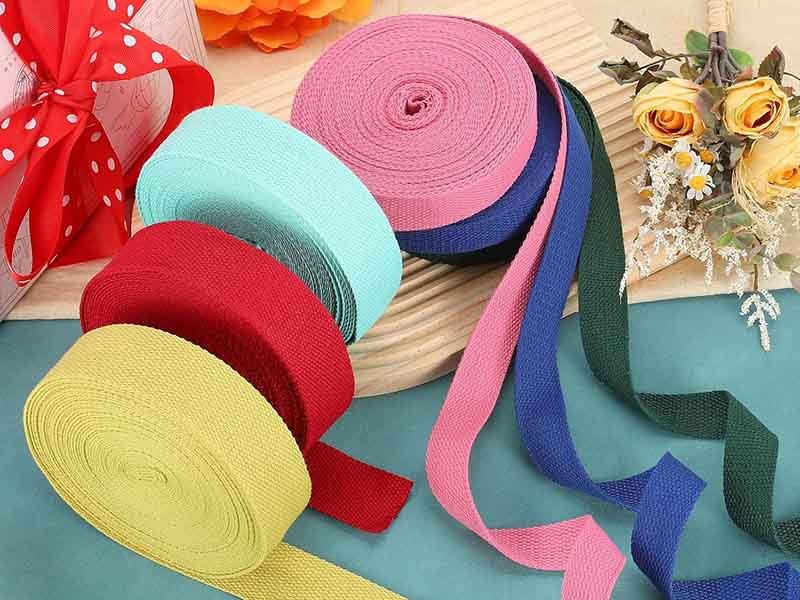
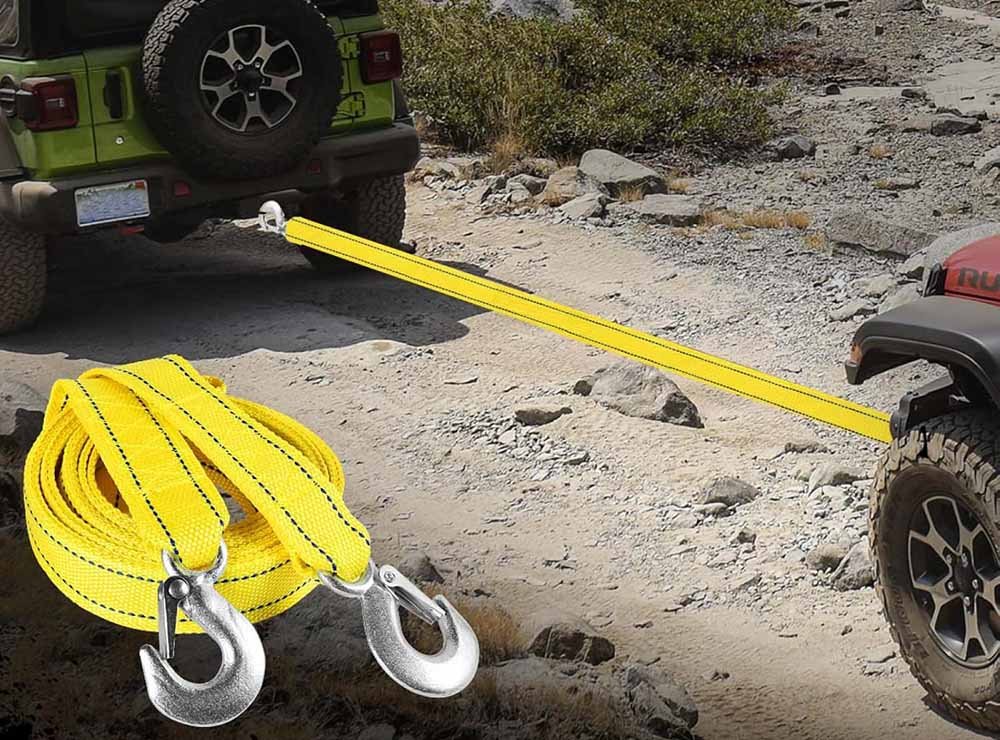
A tow strap is a strong synthetic webbing designed to transfer pulling force between two vehicles. Commonly made from nylon (for stretch), polyester (for UV and abrasion resistance), or polypropylene (lightweight), it absorbs shock under load, ensuring a smoother, safer recovery when attached to reinforced tow points.
Core Functionality
At its simplest, a tow strap connects two vehicles: one doing the pulling (“tow vehicle”) and one being pulled (“recovery vehicle”). Under tension, the strap’s webbing fibers stretch slightly—especially in nylon variants—cushioning impacts and preventing sudden jerks that could damage tow points or hitch mounts.
Material Properties
Nylon: Up to 20% elongation under load, excellent energy absorption, but heavier and prone to mildew if wet.
Polyester: Less than 5% stretch, superior weather and UV resistance, maintains length under constant tension—ideal for flat tows.
Polypropylene: Floats on water, budget-friendly, but lower abrasion tolerance—best reserved for occasional emergencies.
Strength Ratings
Straps list two key metrics:
Working Load Limit (WLL): Maximum safe working load, typically one-third of the strap’s Minimum Breaking Strength (MBS).
Minimum Breaking Strength (MBS): The force at which the strap will fail.
Rule of Thumb: Choose a strap with an MBS ≥ 3× your vehicle’s Gross Vehicle Weight Rating (GVWR). For a 2-ton SUV (4,000 lbs), use a strap rated at least 12,000 lbs MBS.
Design Variations
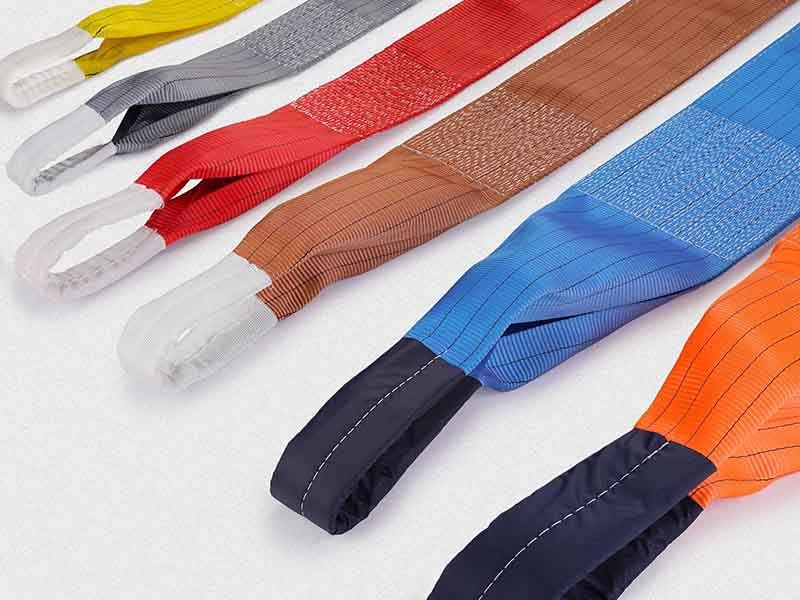
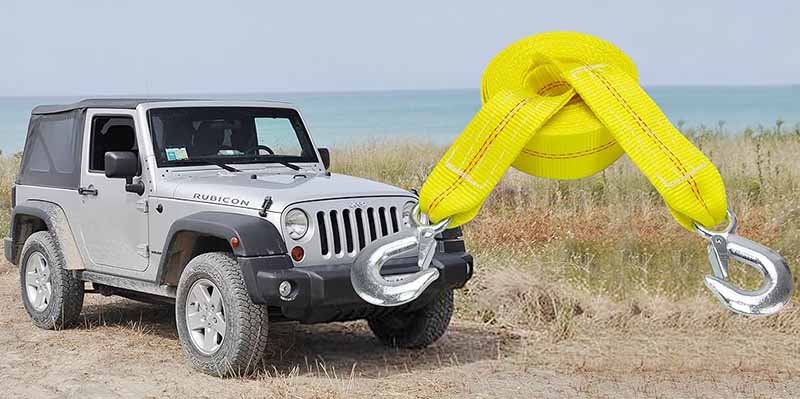
Loops vs. Hooks: Sewn loop ends minimize damage and distribute load more evenly than metal hooks.
Protective Sleeves: Guard webbing from abrasion over sharp edges like bumpers or tow bars.
High-Visibility Colors: Bright straps improve site safety by making the recovery setup clearly visible.
Applications
From off-road rock crawlers to roadside breakdowns, tow straps are indispensable. Always verify compatibility with factory tow eyes or aftermarket recovery points—never attach to suspension, bumpers, or axles.
Which Types of Tow Straps Are Best for Your Vehicle’s Recovery Needs?
Use nylon straps for off-road recoveries needing shock absorption, polyester straps for flat towing and heavy loads, and polypropylene straps for light, emergency use. Select strap width (2–3 inches) and length (10–30 feet) to suit your vehicle’s clearance and recovery scenario.
Nylon Tow Straps
Stretch Characteristics: 15–20% elongation under tension reduces peak forces and jarring.
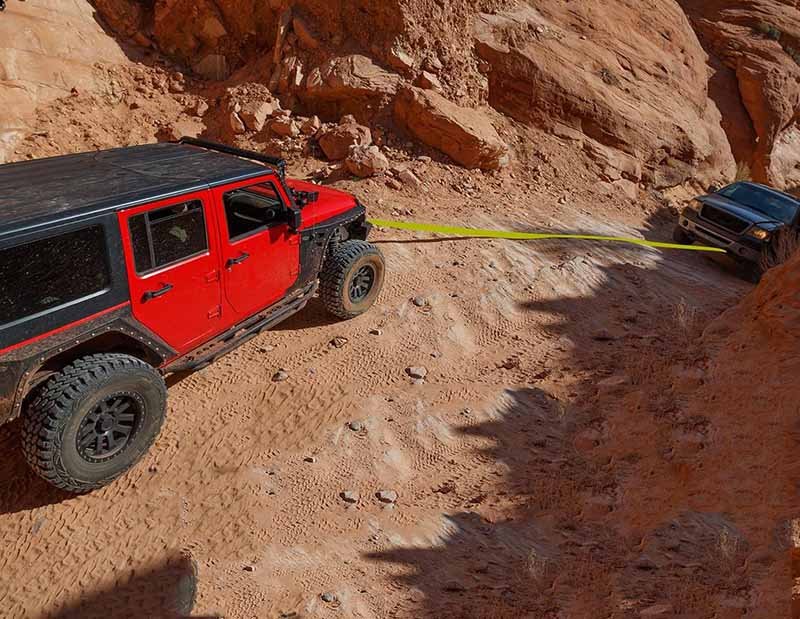
Ideal Use: Mud, sand, uneven terrain; perfect for ATV, Jeep, and SUV recoveries.
Considerations: Heavier, water-absorbent—dry thoroughly after use to prevent mildew.
Polyester Tow Straps
Minimal Stretch: Less than 5%, maintains consistent length—critical for towing trailers or campers.
Weather Resistance: Excellent resistance to UV, moisture, and chemicals.
Ideal Use: Flat towing on highways, heavy trailers, delicate cargo.
Polypropylene (PP) Tow Straps
Lightweight & Buoyant: Floats on water—handy for water rescues.
Lower Durability: Less abrasion resistance; recommended for occasional roadside use.
Ideal Use: Emergency backup in trunk; not for repeated heavy recoveries.
Sizing Guide
Strap Width
MBS (Min Breaking Strength)
Typical Applications
2″
10,000 lbs
Compact cars, light SUVs
3″
15,000–30,000 lbs
Trucks, Jeeps, serious off-road
4″+
40,000 lbs+
Commercial tow, heavy machinery
Specialty Options
Kinetic Recovery Ropes: Store kinetic energy for hard pulls; handle with care and proper training.
Soft Shackles & Bow Shackles: Replace steel hooks to avoid paint damage and reduce injury risk.
How Do You Choose the Right Tow Strap Rating, Length, and Material?
Match your vehicle’s GVWR to a strap with at least 3× MBS; pick length based on bumper clearance (minimum 10 ft) and material by recovery type: nylon for off-road elasticity, polyester for stable flat tows, PP for light emergency use.
Calculating Strength Requirements
Determine your vehicle’s GVWR (e.g., 6,000 lbs).
Multiply by 3 for safety margin: 18,000 lbs MBS.
Verify strap’s WLL ≥ 6,000 lbs (⅓ of MBS).
Selecting Strap Length
Short (10–15 ft): Best for tight off-road trails; keeps strap clear of obstacles.
Medium (15–20 ft): Balance between manageability and clearance.
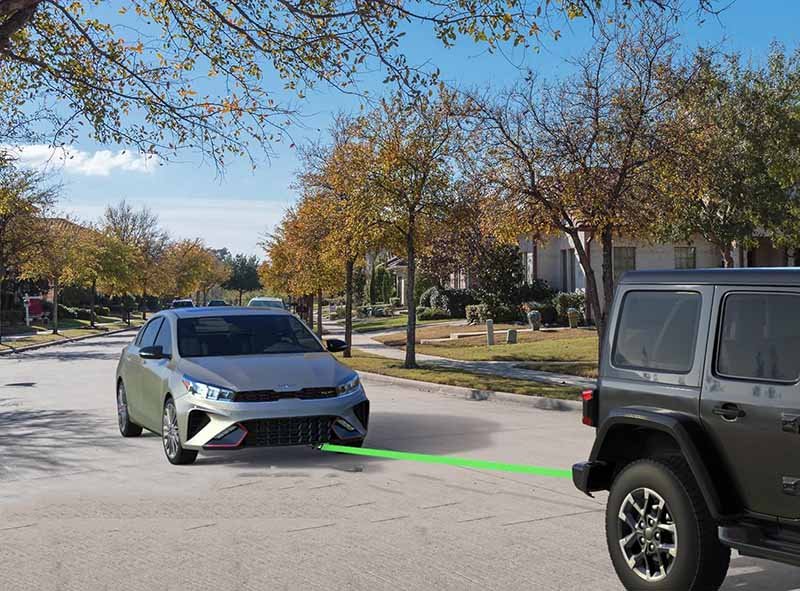
Long (20–30 ft): Provides distance to avoid bumper collisions on roads.
Weight vs. Durability: PP is light but less robust; polyester balances weight and longevity.
Environmental Conditions
Wet or Marine Use: PP floats and resists rot—ideal for riverbank recoveries.
UV-Intensive Climates: Polyester resists sun damage; extends service life.
Budget Considerations
Entry-Level Kits: PP straps with basic hooks—under $50, suitable for occasional use.
Mid-Range Kits: 3″ polyester or nylon straps with protective sleeves—$70–$120.
Professional Kits: High-visibility nylon straps, soft shackles, heavy-duty bow shackles—$150+.
Where Should You Attach the Tow Strap on Both Vehicles?
Always attach to factory-rated tow points—solid metal loops or eyes mounted to the frame. On the towing vehicle, use the hitch receiver or front/rear tow eye; on the recovery vehicle, secure to its dedicated tow eyes. Never hook to bumpers, axles, or suspension components.
Identifying Factory Tow Points
Consult the owner’s manual or inspect undercarriage for reinforced loops.
Look for welded D-rings or threaded tow eyes—designed to handle full strap loads.
Aftermarket Recovery Points
Certified recovery points should be rated equal to or higher than your strap.
Use a shackle hitch adapter to convert a 2″ receiver into a recovery loop.
Ensure pin and bracket rated properly; never substitute with unhardened hardware.
Attachment Best Practices
Remove all twists; lay the strap so fibers run straight.
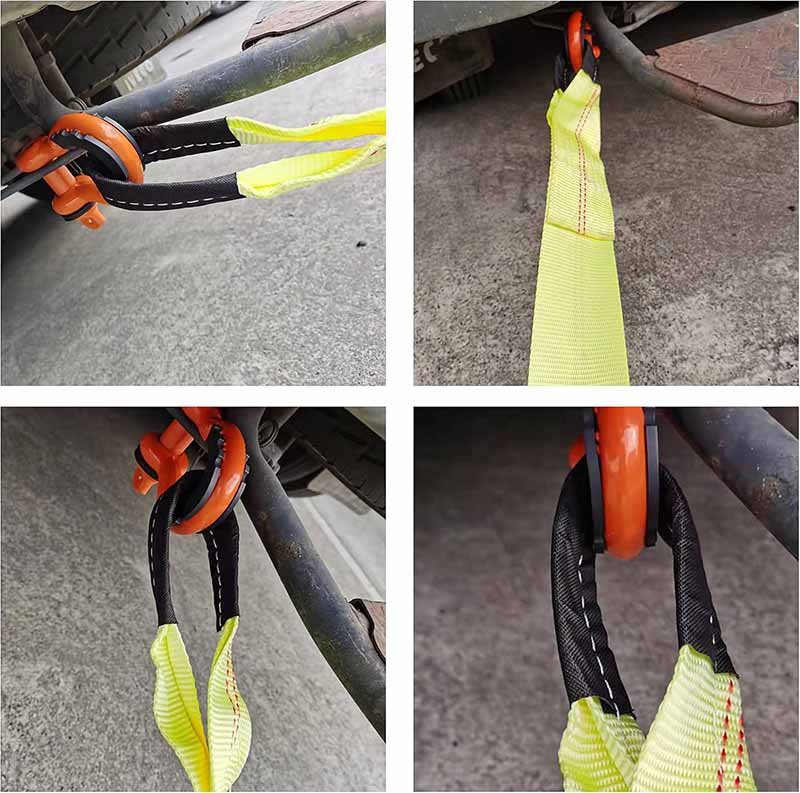
Use soft shackle or bow shackle through loop ends; tighten the pin securely.
Protect strap from sharp edges using sleeves or padding.
Common Mistakes to Avoid
Hooking to bumpers—plastic bumpers lack structural strength.
Wrapping strap around axle housing—risking component failure.
Using tow ball hitch—ball mounts are not designed for recovery loads.
How Do You Properly Install a Tow Strap: A Step-by-Step Guide
Lay the strap flat, thread ends through each vehicle’s tow eye, remove twists, secure loops with shackles, communicate clear hand signals, then have the towing vehicle move forward slowly until slack is taken up—avoid sudden acceleration.
Pre-Installation Checks
Inspect strap for frays, cuts, or UV damage.
Verify shackles are intact, pins thread smoothly, and rated properly.
Setup Sequence
Position both vehicles in a straight line, facing each other.
Engage parking brakes on both; shift to neutral.
Connecting the Strap
Feed one loop through recovery vehicle’s tow eye; secure with soft shackle.
Walk to tow vehicle; connect other loop similarly.
Remove any twists; lay strap flat on ground to avoid kinks.
Communication Protocol
Agree on simple signals: “Ready,” “Tension,” “Pull,” “Stop.”
Use hazard lights or horns if visibility is low.
Taking Up Slack
Tow driver moves forward slowly (≤5 mph) to remove slack.
Once slight tension felt, both drivers pause to confirm strap alignment.
Executing the Tow
Maintain steady, gentle speed—avoid sudden stops or accelerations.
Monitor strap tension; if jerky, stop and readjust.
Post-Tow Disconnect
Park vehicles; engage brakes.
Carefully remove shackles and strap—avoid recoil.
Inspect strap for damage before storing.
Safety Reminders
Never stand between vehicles or near strap if under load.
Keep spectators at least 20 feet away.
What Safety Measures Should You Follow During Installation and Tow?
Wear heavy-duty gloves and eye protection, keep bystanders clear, use high-visibility vests, maintain low constant speed (≤10 mph), and stop immediately if the strap kinks or makes unusual noises.
Personal Protective Equipment (PPE)
Gloves: Protect against webbing cuts and pinches.
Eye Protection: Guards from snapping fibers under tension.
Site Preparation
Park on level, stable ground if possible.
Set up safety cones or flares to warn traffic.
Visibility & Communication
Both drivers wear high-vis vests, especially at night.
Use two-way radios or hand signals in noisy or low-light conditions.
Speed & Control
Maximum towing speed: 10 mph on rough surfaces, 25 mph on smooth pavement.
Avoid sudden braking—use engine braking to control momentum.
Emergency Procedures
Keep a sharp knife handy (in sheath) to cut strap if it snags dangerously.
Have a fire extinguisher in vehicle—strap material is flammable under extreme heat.
Legal Considerations
Some jurisdictions require tow indicators (flags, lights).
Check local towing regulations—unsecured loads can result in fines.
How Do You Inspect, Maintain, and Store Your Tow Strap After Use?
Inspect for fraying, cuts, or discoloration; clean with mild soap and water; air-dry completely; and store in a cool, dry place away from direct sunlight, ideally in a dedicated storage bag. Replace any strap showing damage.
Inspection Checklist
Webbing: No broken fibers, frays, or burn marks.
Stitching: Intact, without loose threads.
Hardware: Shackles and hooks free of corrosion, cracks, or deformation.
Cleaning & Drying
Rinse in cold water to remove mud and grit.
Use mild detergent; avoid bleach or solvents.
Hang vertically in shaded area; ensure full dryness before storage.
Storage Best Practices
Coil strap loosely—avoid tight rolls that crease fibers.
Place in ventilated bag or container to deter mold.
Rotate strap every 6 months to prevent permanent creasing.
Lifespan & Replacement
Nylon: 3–5 years under regular use; polyester/PP: 5–7 years.
Replace immediately if any damage noted—never risk a compromised strap.
Record Keeping
Log each use and inspection date in a glovebox notebook or digital app.
Track manufacturer’s warranty and date of purchase.
Conclusion
A successful vehicle recovery hinges on choosing the right tow strap, mastering proper attachment techniques, and rigorously following safety protocols. With over 18 years of expertise in custom webbing manufacturing, Szoneier delivers premium nylon, polyester, PP, and cotton straps—complete with private-label and OEM/ODM options, low MOQs, fast sampling, and 100% quality assurance.
Ready to elevate your recovery kit with Szoneier’s tailored tow straps?
If you have your own artwork, logo design files, or just an idea,please provide details about your project requirements, including preferred fabric, color, and customization options,we’re excited to assist you in bringing your bespoke bag designs to life through our sample production process.
Looking for premium custom webbing? Contact us now for competitive pricing, free samples, and expert consultation. Fill out the form below, and our team will get back to you within 24 hours!
 Skip to content

 Optimized by Seraphinite Accelerator