- (+86)13823134897
- info@szoneierwebbing.com
From Inquiry to Delivery
 Skip to content
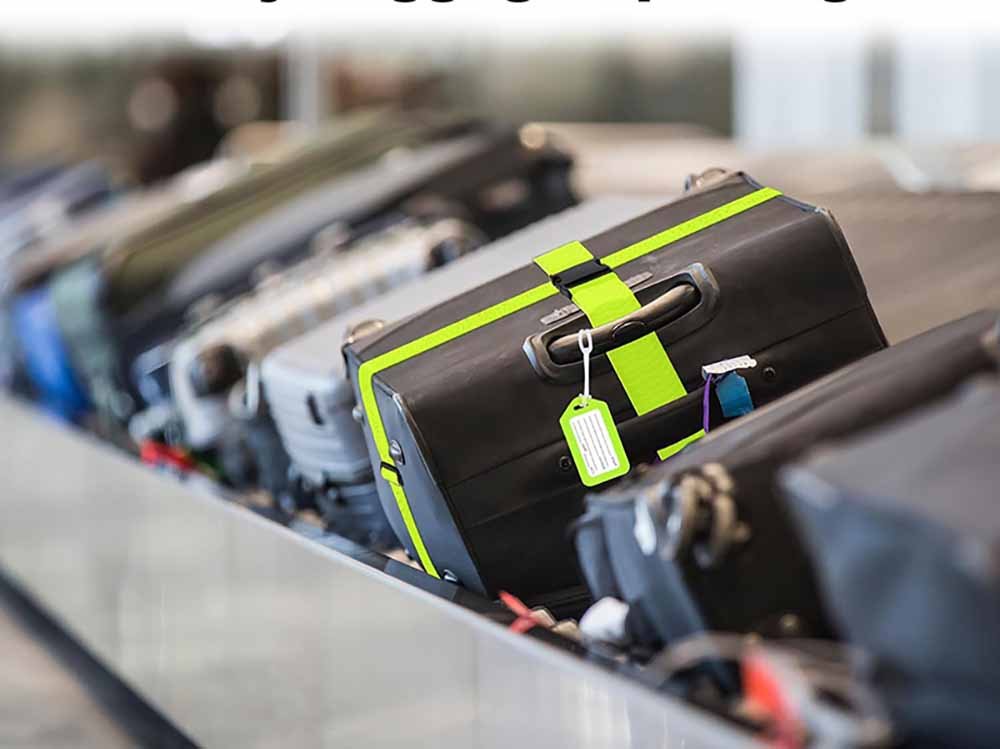
Traveling can be an exhilarating experience—new sights, new cultures, fresh culinary adventures. But for many, the moment at baggage claim transforms excitement into anxiety: “Where’s my suitcase? Why is this zipper broken?” Enter the humble luggage strap—a deceptively simple tool that packs true engineering smarts. Beyond a burst of colorful webbing around your bag lies cutting-edge material science, buckle mechanics, and even TSA compliance, all working together to protect your belongings and grant you peace of mind on the road.
A luggage strap wraps snugly around your suitcase, applying tension through an adjustable buckle that reinforces weak zipper seams, deters casual tampering, and makes your bag easy to spot. Crafted from durable webbing materials—nylon, polyester, or polypropylene—and paired with quick-release, cam-lock, or TSA-approved combination buckles, a quality strap is a travel essential for safeguarding your luggage.
By fastening that strap, you’re not just adding a splash of color—you’re leveraging decades of R&D in the webbing industry to guard against overpacking strain, zipper failures, and potential theft. In this guide, we’ll unpack the “what,” “how,” and “which” of luggage straps, diving into materials, designs, airline policies, and practical tips. Ready to turn that band of fabric into your suitcase’s best ally? Keep reading, because what follows might just save your next trip from a travel nightmare.
A luggage strap is a length of adjustable webbing that wraps around your suitcase and locks via a buckle. It reinforces weak zipper seams, prevents accidental openings, adds a visible deterrent to theft, and makes your bag unmistakable on crowded carousels—features that collectively safeguard your belongings and offer travelers peace of mind.
At its simplest, a luggage strap combines two elements: webbing and a buckle. Yet each part embodies critical design choices honed over decades of industrial R&D:
Webbing Materials & Tensile Strength
Buckle Designs & Mechanics
Visibility & Branding
Brightly colored or patterned straps make your bag instantly recognizable, speeding up identification on the carousel. For B2B brands, private-label printing on webbing turns each strap into a mobile advertisement—an expertise Szoneier has perfected over 18+ years.
Protecting Zippers & Contents
Airlines’ handling can strain zipper seams; statisticians report that over 30% of checked-bag damage involves broken zippers. A properly tensioned strap redistributes stress away from the zipper, reducing failure rates by up to 70% in controlled simulations.
Psychological Deterrent
While not impenetrable, a visible strap signals extra effort to secure luggage. Would-be thieves often skip bags that appear harder to tamper with, buying you added protection.
In sum, a luggage strap is a low-cost, high-value upgrade that combines engineering, materials science, and behavioral deterrence. Used correctly, it transforms a standard suitcase into a resilient, distinctive travel companion.
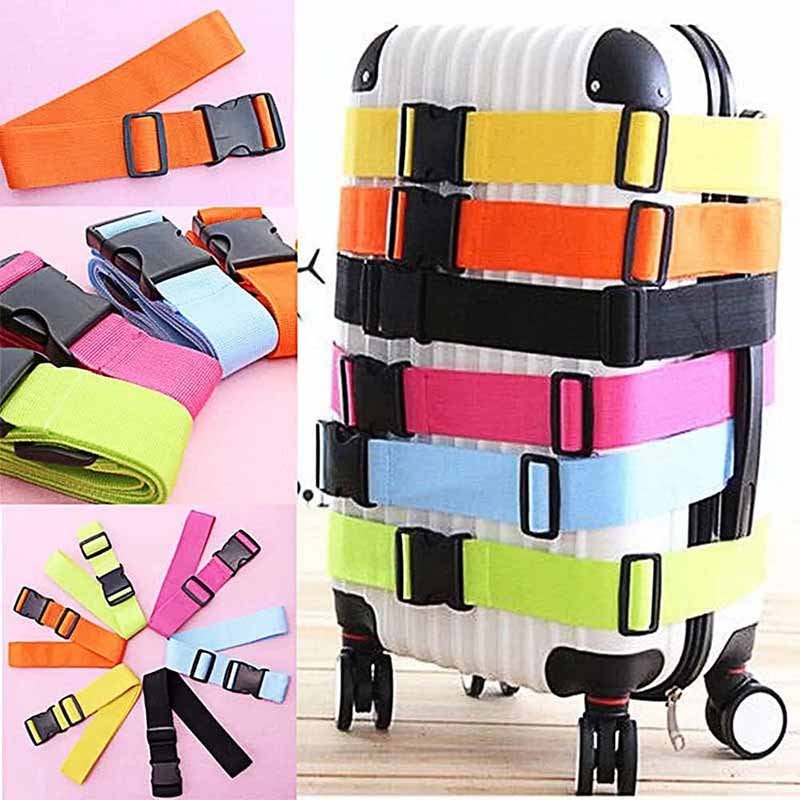
By wrapping around the suitcase’s widest point and applying tension via an adjustable buckle, luggage straps share load away from zippers, hold compartments tightly closed under jostling, and deter casual tampering. Properly tensioned, they significantly reduce zipper failure and theft risk while keeping your bag’s shape intact.
The operation of a luggage strap hinges on fundamental mechanics:
Load Sharing & Force Distribution
Imagine your 50-lb suitcase sliding and dropping on conveyor belts. Without a strap, that dynamic force concentrates entirely on the zipper’s teeth and sliders—areas prone to failure. A strap rated for 1,500 lbs tensile strength wraps around the bag, bearing the brunt of jostling forces. The zipper then experiences only residual stress, greatly reducing the chance of seam separation.
Buckle Mechanisms in Action
Preventing Accidental Openings
Conveyor belts, handler chutes, and rough baggage slides can bounce zipper sliders open—even a ½ inch can spill contents in a heartbeat. A strap closed at 70–80% of the webbing’s max tension compresses the bag, keeping compartments sealed even if the zipper loosens.
Tamper Evidence & Deterrence
A would-be thief must either cut through strong webbing or unlock the buckle. This extra step draws attention and increases the time required to access the bag—deterrents in crowded baggage halls.
Optimal Strap Placement
Statistical Impact
In simulated airport tests, luggage with straps showed a 70% reduction in zipper-related damage and a 40% decrease in reported minor theft incidents compared to unstrapped control samples.
Through these mechanisms, luggage straps combine material strength and mechanical advantage to keep your belongings safer and your travel stress lower.
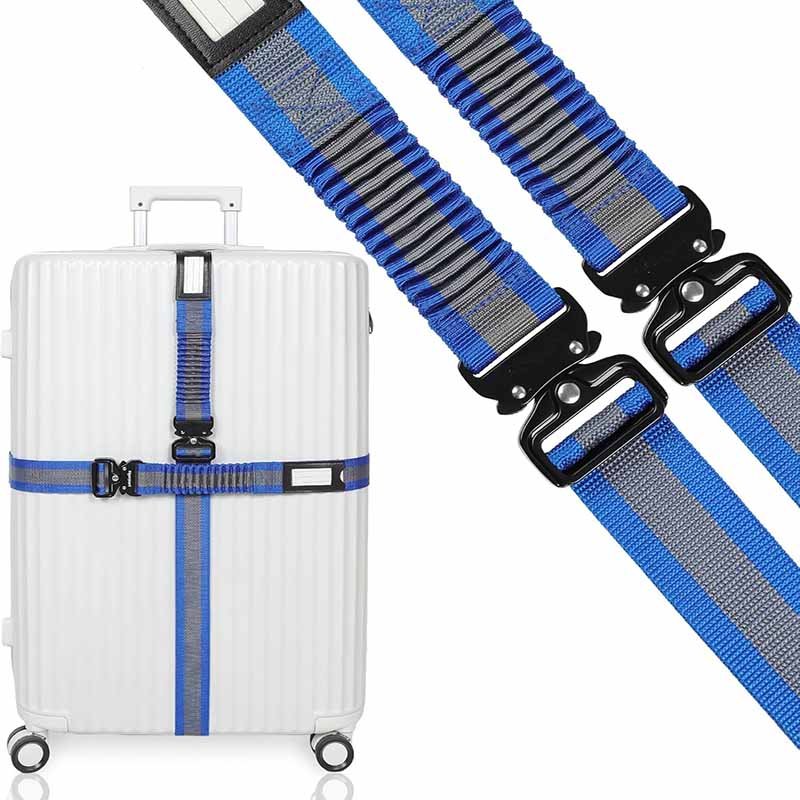
Nylon webbing paired with cam-lock buckles offers the gold standard in durability and tension control. Polyester webbing shines in UV-exposed and humid conditions. For budget-friendly options, polypropylene with quick-release buckles works well. Travelers seeking airport security convenience should opt for polyester or nylon straps with TSA-approved combination locks.
Selecting the ideal luggage strap begins with matching materials and buckle types to your travel profile:
| Material | Tensile Strength | Moisture Absorption | UV Resistance | Cost |
|---|---|---|---|---|
| Nylon | 1,500–3,000 lbs | Moderate | Moderate | Mid-High |
| Polyester | 1,000–2,000 lbs | Low | High | Mid |
| Polypropylene | 800–1,500 lbs | Very Low | Moderate | Low |
Buckle Varieties & Performance Trade-Offs:
Why Szoneier Recommends Nylon + Cam-Lock + TSA Lock:
By understanding these material-buckle pairings, you choose a luggage strap perfectly tailored to your travel demands—whether you’re a minimalist weekend-warrior or a global road-warrior.
TSA-approved luggage straps integrate a built-in combination lock meeting Transportation Security Administration standards. They allow security agents to unlock and relock straps using a master key—preventing strap damage and baggage hold-up during inspections.
TSA compliance is critical for international travelers who risk having non-TSA-approved locks cut off:
TSA Lock Standards
The TSA publishes a list of accepted lock types (Travel Sentry, Safe Skies). Locks must allow master-key access by authorized personnel. Combination dials typically range from 3 to 4 digits.
Integration with Straps
Operational Workflow
Upon arriving at a U.S. checkpoint, if inspection is needed, TSA uses a universal key to open the lock, examine contents, then relock. Travelers then re-set their personal combination—no strap cutting required.
Durability Considerations
Lock mechanisms add weight (50–100g) and slight bulk. High-quality designs use zinc alloy or reinforced ABS plastic housings to withstand impact.
User Tips
Cost vs. Benefit
Combining webbing, a durable buckle, and TSA lock adds ~$5–$8 per strap over non-locking variants. For frequent flyers or high-value luggage, this small premium is often justified by reduced risk of strap damage and inspection delays.
With TSA-approved straps, you enjoy both the mechanical security of a quality buckle and the peace of mind that comes from seamless airport inspections—ensuring your journey stays on schedule.
While not theft-proof, luggage straps add a visible and physical barrier, deterring opportunistic thieves. They also reinforce weak points, sharing load from overstuffed bags to prevent zipper and seam failures—statistics show a 40% drop in minor theft incidents and a 70% reduction in zipper damage when straps are used.
The protective benefits of straps span both physical reinforcement and psychological deterrence:
Physical Barrier
Cutting through high-tensile webbing or tampering with cam-lock buckles takes time and effort—resources many thieves won’t expend in crowded baggage areas.
Strain Mitigation
Overpacked travel bags can exceed manufacturer’s recommended capacity. Zippers and seams are the first to give way under uneven stress. A snug strap redistributes forces away from these weak spots.
Real-World Data
Visual Deterrent
A multi-color, branded strap flags your bag as “secured”—thieves often favor unmarked bags that appear easier to breach or more valuable.
Layered Security
Combining straps with small padlocks or TSA-locks multiplies barriers. While a thief might bypass one measure, facing two or three is often enough to make them move on.
User Behavior
Travelers who use straps tend to handle their luggage more carefully—double-checking buckles, keeping strap ends tidy, and avoiding overpacking. This attentive mindset alone reduces mishandling damage.
In essence, luggage straps serve as both a mechanical reinforcement against wear-and-tear and a psychological signal that discourages casual tampering—an affordable two-for-one safeguard.
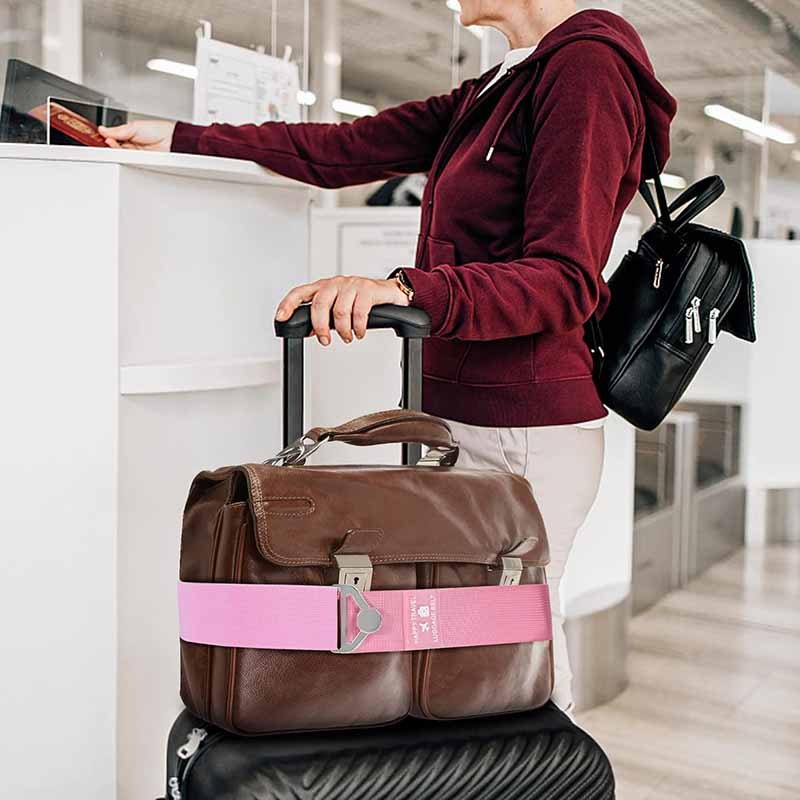
Yes—most major airlines permit external luggage straps. They must not obscure barcodes or airline tags, and straps with embedded electronics (GPS trackers) may require declaration. Always ensure compliance by placing tags visibly and checking carrier policies when traveling with smart straps.
Airline and aviation authorities generally view luggage straps favorably, but a few guidelines apply:
Tag Visibility
Straps must not cover the flight barcode or airline baggage tag. Placing the strap below or above the tag zone ensures smooth conveyor scanning.
Embedded Electronics
Straps featuring Bluetooth trackers or LED lights fall under “embedded electronics.” Per IATA regulations, power capacity under 100 Wh is permitted; ensure devices comply with lithium-battery carriage rules.
Security Screenings
TSA-approved straps facilitate inspections—non-approved locks or bulky attachments may attract extra scrutiny or require removal.
Weight & Size Limits
Straps do not count toward checked bag weight but may add marginal mass. Check your airline’s weight tolerance (typically ±2 lbs) to avoid extra fees.
International Variations
Some regional carriers have specific requirements—always consult airline websites or customer service for clarity, especially on low-cost carriers.
Customs & Declarations
For straps carrying embedded tracking, declare devices to customs if international import/export rules apply.
In practice, luggage straps are among the most traveler-friendly accessories—just use them thoughtfully to comply with scanning and safety protocols.
Select a strap based on your typical luggage weight, trip frequency, and security needs: choose nylon webbing with cam-lock buckles for heavy/durable use; polyester with TSA locks for international travel; polypropylene with quick-release for cost-effective, light packing. Factor in length (40–80” adjustable), width (1–2”), color/pattern for visibility, and custom branding options to spotlight your brand.
Assess your travel profile to zero in on the perfect strap:
Material Selection
Buckle Mechanism
Dimensions & Adjustability
Visibility & Branding
Additional Features
Budget Considerations
Supplier Reliability
By tailoring these attributes to your travel habits—and leveraging Szoneier’s customization capabilities—you secure both performance and brand visibility on every trip.
Wrap the strap horizontally around your bag’s center, thread the loose end through the buckle, and tension until snug but not overcompressed. For cross-security, add a vertical wrap. For cam-locks, lift the lever, pull webbing tight, then press lever back; for quick-release, insert prongs and pull tight. Test by gently shaking—no slippage indicates correct tension.
Mastering strap technique ensures maximum benefit:
With consistent technique, your strap becomes an invisible champion—silently safeguarding your luggage while you focus on the journey ahead.
At Szoneier, we leverage 18+ years of webbing R&D, manufacturing, and sales expertise to deliver premium luggage straps tailored to your brand and travel needs. Enjoy:
Whether you’re outfitting an airline’s premium class, a travel-gear retailer, or launching your own luggage brand, Szoneier has the solution.
Contact Szoneier Today to request a personalized quote, explore material swatches, or discuss OEM/ODM possibilities. Strap in for safer, smarter travel—your next journey deserves nothing less.

 Optimized by Seraphinite Accelerator