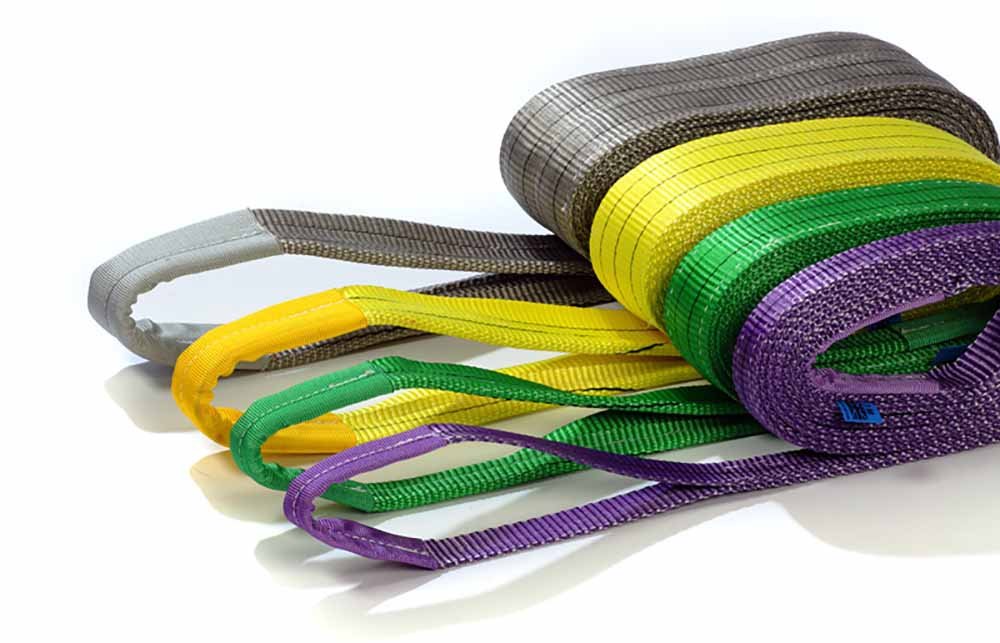
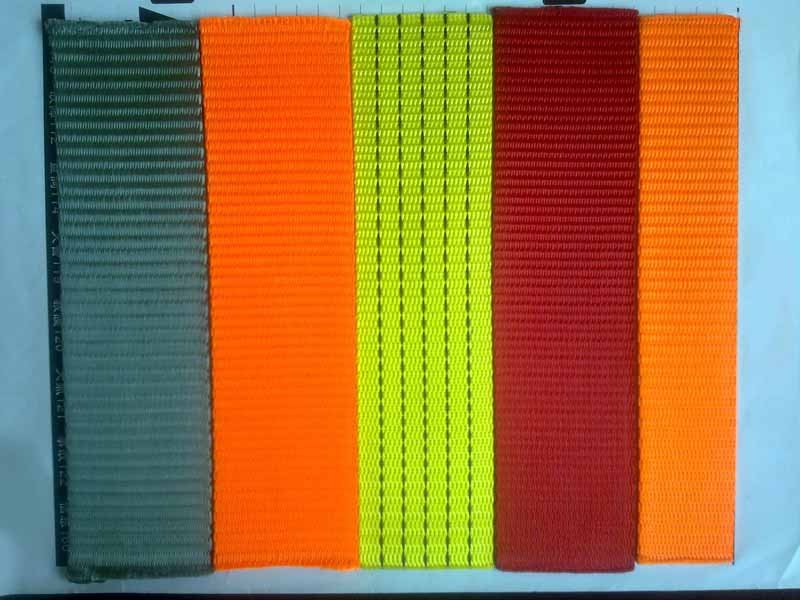
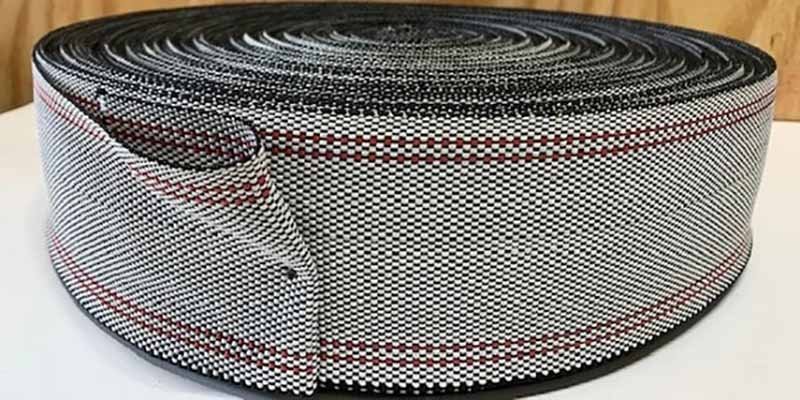
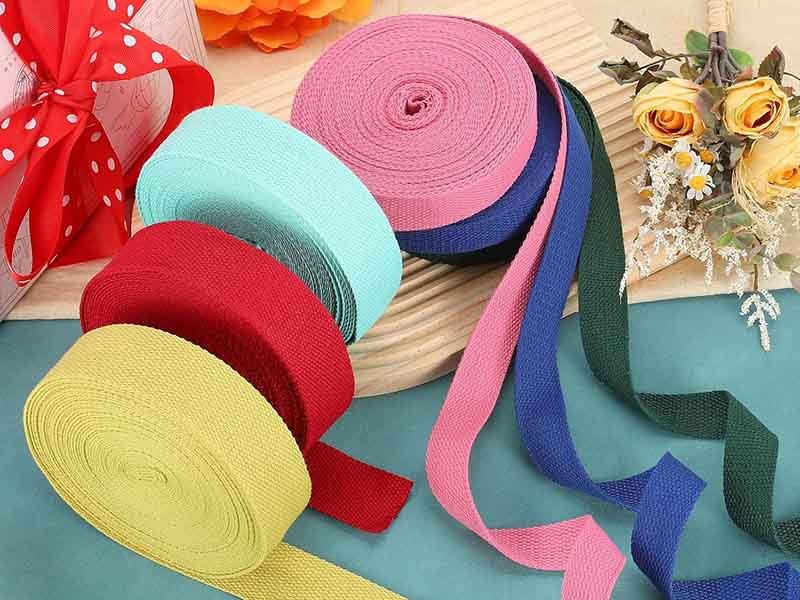
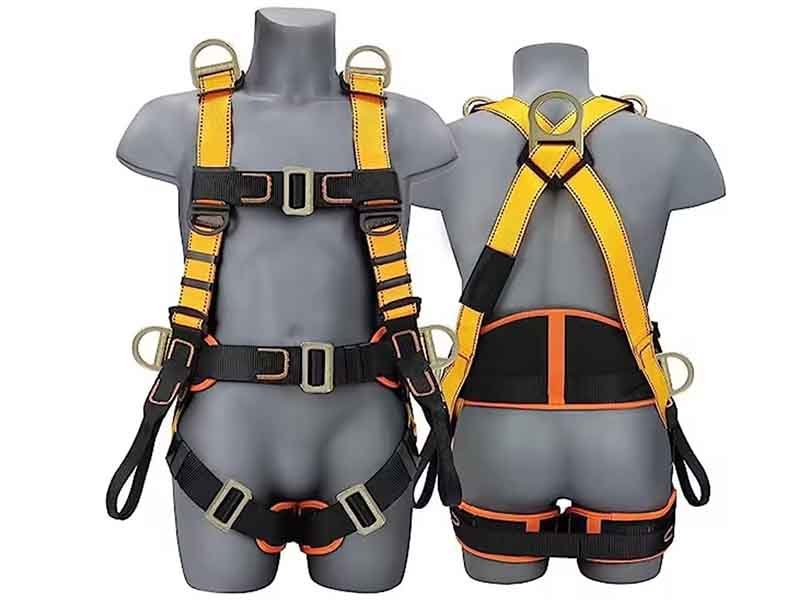
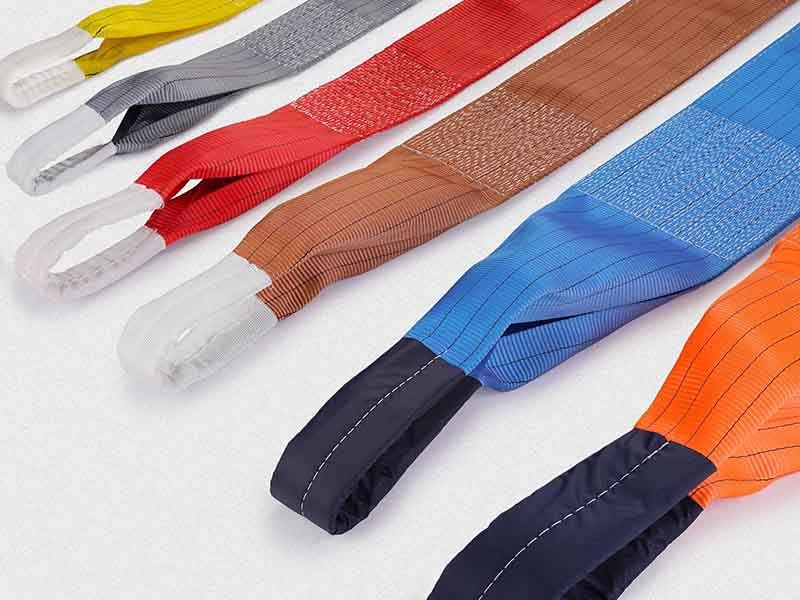
Synthetic webbing powers everything from industrial lifting slings and safety harnesses to fashionable bag straps and promotional lanyards. These versatile straps must combine strength, flexibility, and longevity—traits achieved through a finely tuned manufacturing workflow. But what really happens behind the scenes? Synthetic webbing is produced by melting polymer pellets (nylon, polyester, or polypropylene), extruding them into high-tenacity filaments, weaving these on specialized looms, then applying dye, heat-setting, coatings, and custom finishing for UV, abrasion, or branding needs.
The narrative of a polymer pellet metamorphosing into a webbing strap is one of precision engineering and material science. Imagine the buzz of a twin-screw extruder processing a pellet blend at 280 °C, spinnerets forming thousands of micro-filaments, and looms interlacing yarns at hundreds of meters per minute. Finally, envision your brand’s logo woven seamlessly, or a specialized coating giving marine-grade UV resistance. In this comprehensive guide—with insights drawn from Szoneier’s 18+ years of webbing R&D—you’ll uncover every critical step, backed by data tables, real-world best practices, and tips for specifying custom webbing that meets your exact needs. Ready to thread the needle? Let’s get started.
What Raw Materials Are Used to Make Synthetic Webbing?
High-performance webbing begins with polymer pellets—nylon for elasticity and abrasion resistance, polyester for UV and moisture resistance, or polypropylene for cost efficiency and buoyancy. Additives like UV stabilizers, flame retardants, or antimicrobial agents tailor performance.
Polymer Selection:
Nylon (Polyamide): Tensile strength ~9,000 psi, elongation at break around 20–30%. Excellent abrasion resistance and elongation recovery, ideal for dynamic loads like safety harnesses or tie-down straps.
Polyester (PET): Tensile strength ~8,500 psi, elongation at break ~15–25%. Superior UV and hydrolysis resistance—common for outdoor slings, marine webbing, and vehicle seat belts.
Polypropylene (PP): Tensile strength ~6,000 psi, elongation at break ~15–20%. Inexpensive, floats, and chemical-resistant. Used broadly in packaging straps, promotional lanyards, and low-load applications.
Additive Compounding:
UV Stabilizers: Extend outdoor lifespan by mitigating polymer chain scission under sunlight—tested to increase UV aging resistance by 50–80% based on ISO 4892 methods.
Flame Retardants: Achieve UL94 V-0 or V-2 ratings through brominated or phosphorus-based additives—critical for safety equipment and industrial compliance.
Antimicrobial Agents: Silver-ion or zinc-based additives inhibit mold and bacterial growth in humid or medical settings.
Pellet Quality Metrics:
Melt Flow Index (MFI): A range of 5–15 g/10 min ensures consistent extrusion and filament uniformity. Deviations lead to filament diameter variations, affecting tensile performance.
Moisture Content: Below 0.02% is necessary to prevent hydrolysis during melting, which can degrade polymer chains and reduce final filament strength.
Material
Tensile Strength
Elongation at Break
UV Resistance
Cost Level
Nylon
9,000 psi
20–30%
Moderate
High
Polyester
8,500 psi
15–25%
High
Medium
Polypropylene
6,000 psi
15–20%
Low
Low
By understanding these trade-offs, you can specify a webbing solution that balances performance and budget. Szoneier leverages ISO 9001/14001-certified raw materials to guarantee consistent pellet properties and additive dispersion, so every batch meets your specs.
How Are Synthetic Fibers Transformed into Webbing Yarn?
Extrusion melts compounded pellets into a homogeneous mix, which is spun through spinnerets into filaments, drawn to orient polymer chains for strength, texturized or air-jet processed for bulk, then wound onto bobbins.
Extrusion & Spinning Process:
Twin-Screw Extruder: Pellets feed into a heated barrel (260–280 °C). Twin screws ensure additive mixing and homogeneity. Pressure builds until molten polymer exits a spinneret plate containing micro-holes (0.2–0.5 mm diameter).
Filament Cooling: Filaments pass through a controlled water bath or air-cooling zone at 20–25 °C. Cooling rate affects crystallinity; too rapid leads to brittle fibers, too slow yields lower tenacity.
Drawing & Orientation:
Multi-Stage Draw: Fresh filaments have amorphous regions. Through rollers heated at 80–120 °C, filaments stretch (draw ratio 4:1–7:1), aligning molecules and increasing crystallinity. This process increases tensile strength by 50–70% and decreases elongation variability.
Texturizing Techniques:
Air-Jet: High-pressure air tangles filaments, creating a bulk, soft texture suitable for wearable webbing—used in bag handles and safety belts for comfort.
False-Twist: Filaments twist, heat-set on a heated spindle (>280 °C), then untwisted, producing permanent crimps. Enhances elasticity and coverage.
Quality Control Metrics:
Denier/Dtex: Yarn thickness from 300 denier (lightweight straps) up to 2,500 denier (heavy-duty slings). Szoneier offers a range from 400 to 3,000 denier per filament counts of 1–24.
Broken End Count: Monitored during spinning; target <0.1% per 1 km to ensure smooth weaving and minimal defects.
Bobbins & Storage:
Wound under tension control to avoid crimp loss. Stored in humidity-controlled rooms (RH 50–60%) to maintain filament performance.
By strictly controlling extrusion parameters and draw ratios, Szoneier delivers uniform, high-tenacity yarns that form the backbone of robust synthetic webbing.
Which Weaving Techniques Are Employed in Synthetic Webbing Production?
Common weaving methods include plain weave for balanced strength, twill weave for flexibility and drape, and herringbone for decorative appeal—each executed on rapier or air-jet looms at speeds up to 600 m/min.
Loom Selection:
Rapier Looms: Use flexible rapiers to carry weft yarns; ideal for high precision and varied patterning. Rapier looms handle up to 500 picks per minute.
Air-Jet Looms: Propel weft threads with air jets; high-speed weaving (up to 600 m/min) for simple patterns. Efficient for plain weave production.
Weave Patterns & Properties:
Plain Weave: Over-under pattern. Offers the most uniform strength in warp and weft. Common for general-purpose webbing like seat belts and tie-down straps.
Twill Weave: Diagonal ribs produced by a 2:1 or 3:1 pattern. Increases drape and flexibility, reducing stiffness—suitable for bag straps requiring smoother hand feel.
Herringbone & Specialty Weaves: Decorative patterns with zigzag effects. Used for premium goods and fashion-oriented webbing, balancing aesthetics with structural integrity.
Standard widths range from 10 mm to 100 mm. Specialty widths up to 200 mm for heavy-duty slings. Edges finished via selvage weaves or ultrasonic cutting to prevent fraying.
Production Rates & Scale:
A single rapier loom can produce ~300 kg of webbing per 8-hour shift. Szoneier operates 50+ high-speed looms, enabling large-scale, custom runs with rapid changeovers.
By choosing the right loom type and weave structure, Szoneier tailors webbing for strength, flexibility, and visual appeal—meeting diverse industry needs.
How Is Dyeing and Finishing Applied to Synthetic Webbing?
Webbing undergoes solution dyeing for core colorfastness or piece dyeing after weaving. Heat-setting locks in dimensions, while coatings (PU, PVC) and treatments (waterproofing, anti-UV) enhance durability.
Solution Dyeing vs. Piece Dyeing:
Solution Dyeing: Pigments added during polymer melting—yields superior colorfastness (ΔE < 1 after 1,000 h of QUV exposure) and reduces water use.
Piece Dyeing: Weaving followed by dye bath immersion (80–100 °C). Allows small-batch color flexibility but requires effluent treatment systems.
Heat-Setting & Relaxation:
Post-dye heat-setting at 150–200 °C under tension relaxes internal stresses. Fixes dimensional stability (shrinkage <2%) and reduces future distortion.
Coating & Lamination:
PU/PVC Coatings: Enhance abrasion resistance and waterproofing. Applied via knife-over-roll or calendar laminating to achieve 50–200 g/m² coat weights.
Film Lamination: TPU films bond under heat and pressure, adding tear resistance and a smooth finish for aesthetic applications.
Specialty Treatments:
Anti-UV: Surface sprays with HALS (hindered amine light stabilizers) to bolster outdoor lifespan by +60%.
Anti-Slip: Silicone or rubber dot patterns applied for ergonomic grips in rescue and sports webbing.
Quality Checks:
Color fastness tested per ISO 105-B02. Coating adhesion per ASTM D 1004. Waterproof tests ensuring hydrostatic head ≥5,000 mm.
Leveraging both in-line and batch finishing systems, Szoneier guarantees consistent color, dimensional stability, and performance enhancements to meet your end-use requirements.
What Quality Control Measures Ensure Durable Synthetic Webbing?
Webbing quality is verified through tensile testing per ASTM D 4595, abrasion resistance via Martindale (ISO 12947), dimensional inspections, and fatigue cycling to simulate real-world loading.
Tensile Strength Testing:
Conducted on a universal testing machine at 300 mm gauge length, 100 mm/min crosshead speed. Minimum break strength verified against spec (e.g., 1,500 kgf for 50 mm webbing).
Abrasion Resistance:
Martindale method applies 12 kPa pressure and 2,000 cycles—mass loss <5% indicates high durability.
Color & UV Aging:
QUV exposure for 1,000 h assesses ΔE color change (<2 acceptable). UV chamber cycles replicate sunlight exposure.
Dimensional Tolerance:
Width and thickness measured on digital calipers. Tolerance ±0.5 mm ensures consistent fit in buckle systems.
Fatigue Cycling:
Simulates repeated load/unload for 100,000 cycles at 50% breaking load. Retention of ≥90% original strength validates long-term reliability.
Visual & Microscopic Inspection:
Checks for weaving defects, broken ends. Microscopes detect fiber fibrillation or coating pinholes.
Szoneier’s integrated QC lab ensures every roll meets or exceeds industry standards before shipment.
How Are Custom Designs and Patterns Integrated into Synthetic Webbing?
Custom branding is woven in-loom using variable yarn colors and dobby/weave dobby attachments, or applied post-weave via heat transfer printing, silicone printing, embossing, and edge stamping.
In-Loom Patterning:
Dobby and jacquard attachments on rapier looms automate pattern repeats up to 200 hooks. Allows multi-color logos woven directly without post-processing, ensuring permanence and edge clarity.
Post-Weave Printing:
Heat Transfer: TPU decals pressed at 180–200 °C for 5–10 seconds. Ideal for full-color gradients but slightly impacts flexibility.
Silicone & UV Printing: Screen or digital silicone inks cured by UV lamps—adds minimal stiffness and excellent wash-fastness.
Embossing & Edge Treatments:
Embossed logos use heated rollers to imprint designs. Edge stamping presses logos into edge fibers for discreet branding.
Multi-Material Laminations:
Combining TPU overlays with webbing offers 3D logos or reflective patterns. Reflective tape lamination embeds retroreflective glass beads for safety gear.
Prototype & Sampling:
Digital mockups and quick-turn samples (5–7 days) allow clients to approve weave patterns and colors before full production. Szoneier maintains sample looms dedicated for prototyping.
These techniques empower brands to integrate complex visuals and functional treatments directly into webbing, elevating both aesthetics and performance.
What Packaging and Shipping Considerations Affect Synthetic Webbing Delivery?
Webbing is wound into rolls (50–500 m), secured with protective cores and shrink wrap, packed in moisture-barrier bags, and palletized or boxed to comply with international shipping regulations (IMDG, IATA, etc.).
Roll Specifications:
Standard lengths: 50, 100, 200, 500 m. Core diameters 38 mm or 76 mm. Controlled tension winding avoids deformation.
Protective Packaging:
Each roll wrapped in kraft paper and sealed in PE or metallized moisture-barrier bags. Desiccant packets control humidity.
Labeling & Documentation:
Labels include material, denier, width, color code, batch number, test reports. Accompanied by COA (Certificate of Analysis) and MSDS (if additives used).
Shipping Modes & Compliance:
By sea or air freight. For flame-retardant additives, UN packaging codes apply. Szoneier coordinates all necessary customs documentation and export compliance.
Lead Times & Logistics:
Standard lead time: 15–20 working days for production, plus 5–7 days sample pre-check. Expedited options available.
By optimizing packaging and handling, Szoneier ensures webbing arrives in pristine condition, ready for immediate use or integration into finished products.
Request Your Custom Synthetic Webbing from Szoneier
Now that you’ve seen the meticulous process behind every meter of synthetic webbing—from material selection and filament extrusion to weaving, finishing, and quality control—imagine the possibilities for your application. Whether you need a robust lifting sling, a UV-resistant marine strap, or a branded promotional lanyard, Szoneier’s 18+ years of R&D and manufacturing expertise can bring your vision to life.
Ready to get started?
Contact us for a free consultation: Provide your specs (material, width, pattern, additives) and receive a detailed quote within 24 hours.
Order a sample: Test before you commit—quick-turn samples in 5–7 days.
Place your custom order: Low MOQ options (from 50 meters) accommodate small startups to large OEM runs.
Partner with Szoneier to ensure your synthetic webbing not only meets but exceeds industry standards—and helps your products stand out in performance and style. Click here to inquire now and elevate your webbing solutions today!
If you have your own artwork, logo design files, or just an idea,please provide details about your project requirements, including preferred fabric, color, and customization options,we’re excited to assist you in bringing your bespoke bag designs to life through our sample production process.
Looking for premium custom webbing? Contact us now for competitive pricing, free samples, and expert consultation. Fill out the form below, and our team will get back to you within 24 hours!