- (+86)13823134897
- info@szoneierwebbing.com
From Inquiry to Delivery
 Skip to content
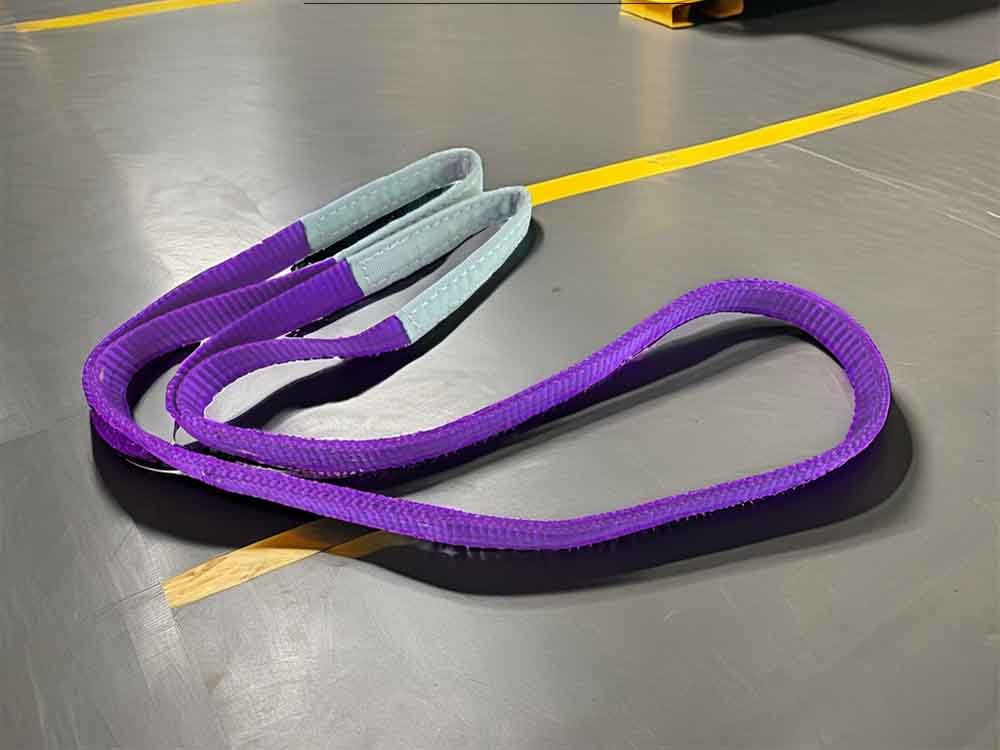
Lifting heavy equipment, awkward cargo, or delicate components can feel like an extreme sport—one misstep and you risk damage, injury, or project delays. Whether you’re in construction, warehousing, manufacturing, or even theatrical rigging, lifting straps can make the difference between a seamless operation and a costly mishap.
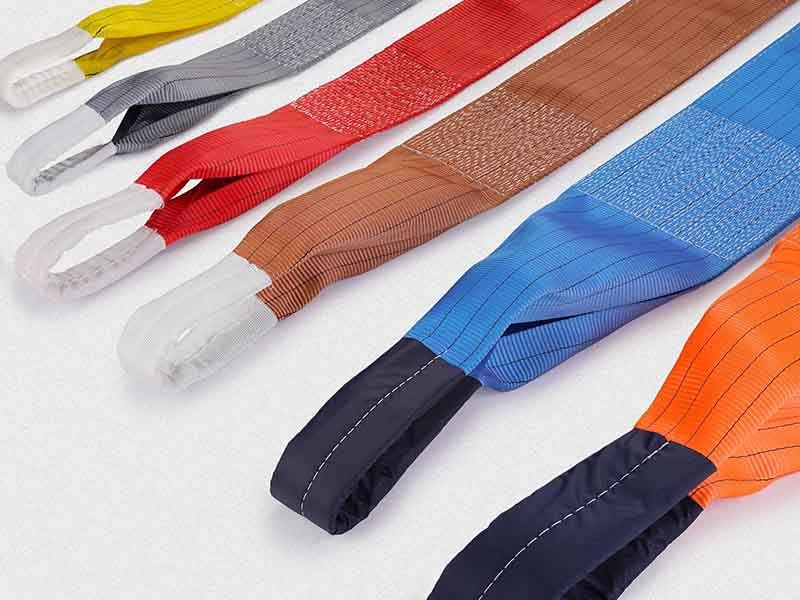
Lifting straps are reinforced webbing assemblies used to secure, hoist, and move heavy loads safely by distributing weight evenly and reducing stress on lifting points. Constructed from high-strength nylon, polyester, or specialized fibers, they feature rated eye loops, protective sleeves, and color-coded length or capacity indicators. By providing controlled load paths and minimizing direct metal-to-load contact, lifting straps enhance workplace safety and efficiency across industries from construction sites to event production.
Imagine you’re mid-project on a busy job site: a bulky HVAC unit needs hoisting onto a rooftop in sweltering heat. The crane operator hesitates—without the right gear, that unit could slip and shatter your schedule. Stay with me, because mastering lifting straps will save you time, money, and maybe even your lunch break.
Lifting straps are flat or round woven webbing assemblies designed to cradle loads, attach to lifting equipment, and distribute tension uniformly. They work by transforming point loads into broad, controlled pressure zones, preventing damage to cargo and hardware. Rated loops and protective sleeves ensure secure connections to hooks or shackles, while elongation under load remains minimal to maintain positional accuracy during hoisting and horizontal pulling tasks.
Lifting straps convert concentrated forces into distributed pressures by wrapping or looping around cargo. This broad contact reduces crushing on sensitive surfaces—think ventilator coils or delicate art pieces. At their core, these straps rely on high-tensile synthetic fibers, woven to create plies that share load evenly across their width. Eye loops at each end, reinforced with stitching or metal thimbles, allow safe connection to crane hooks, chain hoists, or forklift tines.
Beyond simply bearing weight, lifting straps manage shock loads during dynamic lifts. Unlike wire rope slings, which are nearly inelastic, nylon or polyester straps offer slight elongation (typically 2–5%) to absorb jerks, reducing peak forces transmitted to the lifting gear and structure. This shock absorption is critical when starting a lift, especially under wind or uneven ground conditions.
Functional components include:
By understanding how these elements work together, operators can prevent gear failures and unintended load shifts.
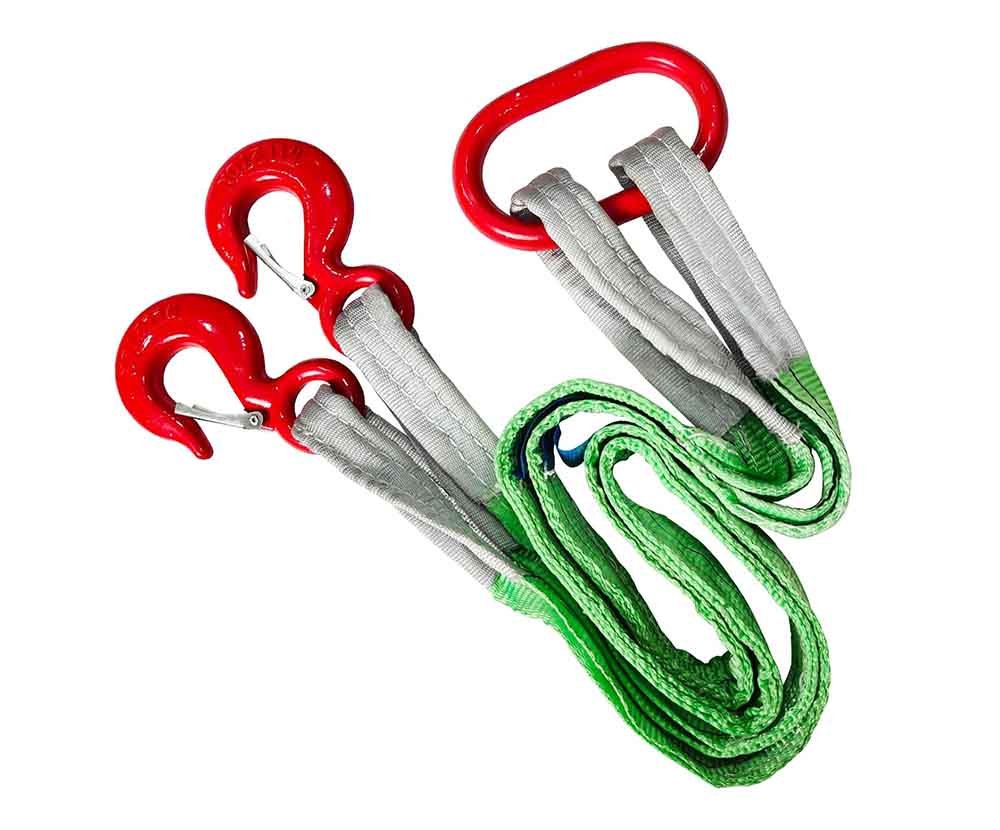
Lifting straps utilize polyester, nylon, or specialty fibers like HMPE (High Modulus Polyethylene) to balance strength, elongation, and environmental resistance. Polyester offers minimal stretch (2–3%) and excellent UV durability; nylon delivers more give (up to 5%) and shock absorption; HMPE slings boast super-high break strengths at lower weights but cost more. Single- or multi-ply woven constructions tailor capacity, while protective coatings guard against chemicals and abrasion.
Polyester Webbing:
Nylon Webbing:
HMPE (Dyneema/ Spectra):
| Material | Typical WLL Range | Elongation | UV Resistance | Cost Level | Typical Applications |
|---|---|---|---|---|---|
| Polyester | 5–20k lb | 2–3% | High | $ | Construction, marine, general |
| Nylon | 3–15k lb | 3–5% | Moderate | $ | Shock loads, machinery moving |
| HMPE | 20–100k+ lb | <1% | Moderate | $$$ | Specialty, aerospace, heavy |
Construction choices hinge on your load profile, environment, and budget. Multi-ply straps stack layers for higher capacities; round slings wrap fibers for a 360° load cradle, matching shape-sensitive lifts.
By spreading load across broad fabric faces and minimizing sharp metal-to-load contact, lifting straps reduce crushing, punctures, and stress risers. Their engineered elongation dampens shock during snatch lifts, while protective sleeves and thimbles guard against abrasion. Color-coded ratings and length markers enable quick inspections, ensuring operators choose correctly sized gear. Collectively, these features lower accident risk, prolong gear life, and streamline compliance with OSHA and ASME lifting standards.
Load Distribution: The flat geometry of webbing disperses forces over larger contact areas compared to shackles or chains, preserving cargo integrity. For example, when lifting HVAC units enclosed in sheet metal, straps prevent frame dents and maintain load balance.
Shock Absorption & Dynamic Loading: Sudden crane starts or wind-induced sway generate transient spikes. Nylon straps’ controlled stretch softens these jolts, reducing sudden torque on hooks and booms. Without this, rigid rigging can fracture welds or stress crane gear.
Visibility & Verification: Brightly colored straps with printed length and WLL data simplify pre-lift checks. A quick glance confirms correct selection, cutting inspection times by up to 40% on busy job sites.
Regulatory Compliance: Strap labeling per ANSI/ASME B30.9 ensures traceability (manufacturer, date, capacity). This documentation is critical for audits and liability protection if an incident occurs.
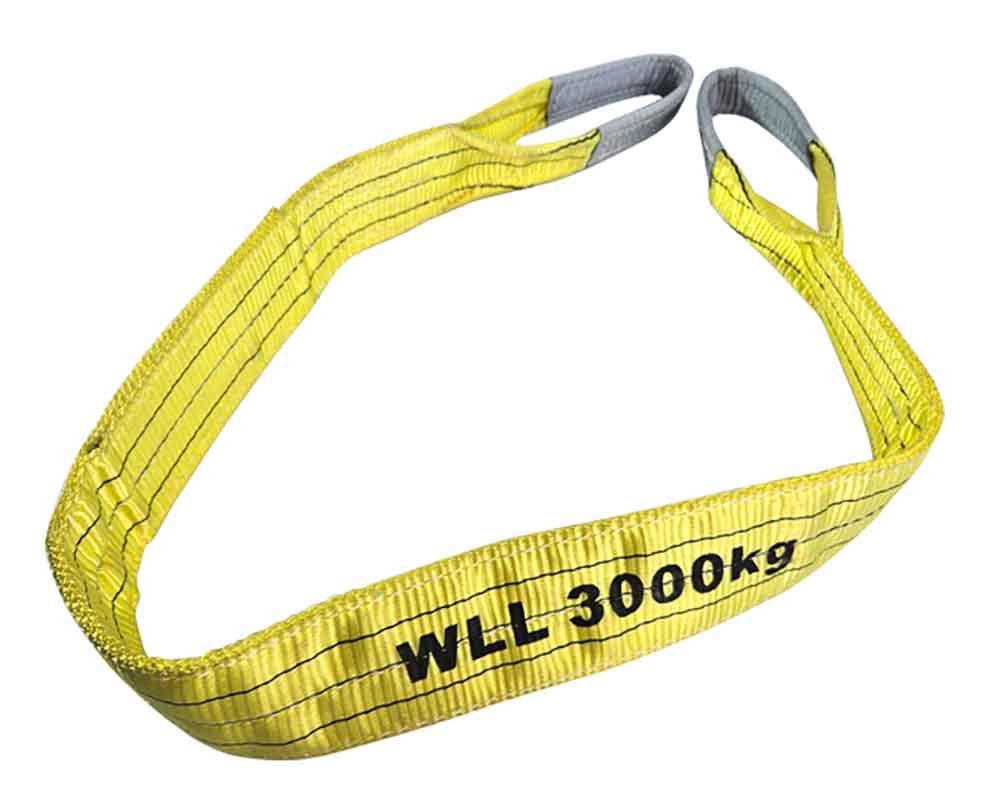
Lifting straps are indispensable across a wide range of sectors—from construction and manufacturing to entertainment and renewable energy—wherever heavy, awkward, or delicate loads must be moved safely. Their adaptability allows them to cradle HVAC units, suspend lighting trusses, hoist marine engines, and transport wind-turbine blades. By choosing the right sling type (flat, round, endless) and material, operators in each industry maximize efficiency, protect their cargo, and stay compliant with safety standards.
1. Construction & Infrastructure
2. Manufacturing & Warehousing
3. Entertainment & Events
4. Marine & Offshore
5. Renewable Energy
6. Specialized Applications
By tailoring sling construction—material, ply count, length, and protective features—to each environment, these industries leverage lifting straps for safer, more efficient load management and regulatory compliance.
Match strap working load limit (WLL) to at least twice your heaviest load, accounting for dynamic factors. Select material based on environment (polyester for UV/marine, nylon for shock), choose webbing width and ply count for capacity, and verify strap length and fit for load contours. Always consult strap manufacturer’s load charts and utilize protective sleeves on sharp edges. If in doubt, upsize to the next rating.
Load Calculations: Use formulas:
Material & Environmental Factors:
Length & Geometry: 1–2 foot extra tail allows safe knotting or hook placement. Endless round slings suit packaging loads; flat straps handle irregular shapes.
Inspection & Certification: Ensure new straps arrive with manufacturer tags; cross-check batch numbers for recall notices.
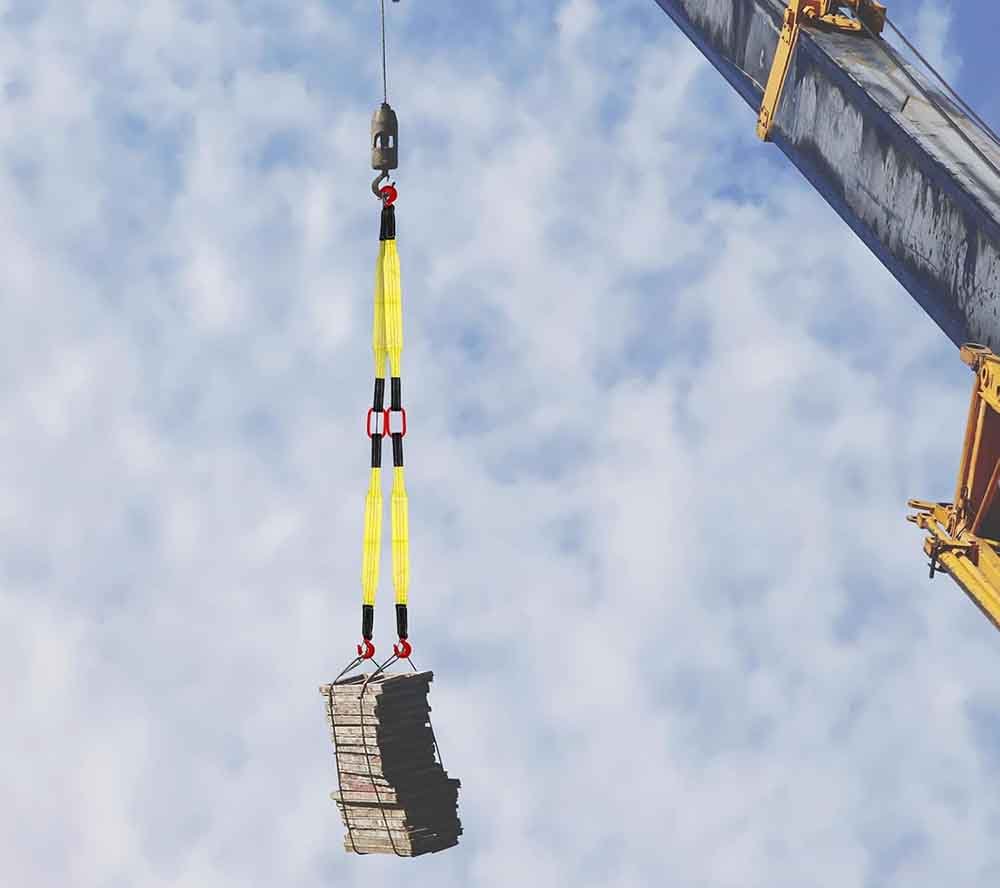
Yes—ANSI/ASME B30.9 and European EN 1492-1 set design, marking, and inspection criteria. Straps must display manufacturer, serial number, WLL, and date of manufacture. Regular inspections, detailed in OSHA 1910.184 and employers’ written programs, dictate removal from service upon detecting damage like broken fibers, chemical degradation, or heat damage. Compliance ensures legal liability coverage and maximizes operational safety.
ANSI/ASME B30.9 Requirements:
EN 1492-1 European Standard:
OSHA & Employer Programs:
Noncompliance risks fines, equipment failure, and insurers’ denial of claims after accidents.
Inspect straps before every lift for cuts, abrasion, chemical stains, or distortion. Perform periodic detailed inspections (e.g., monthly) to check stitching, thimbles, and protective sleeves. Clean with mild detergent and air-dry away from sunlight. Store coiled on racks in dry, shaded environments, avoiding contact with solvents or sharp edges. Retire straps upon any evidence of damage exceeding safe tolerances.
Daily Pre-Use Checks:
Periodic Inspections:
Cleaning & Storage:
Retirement Criteria (ASME/OSHA):
Never exceed rated WLL or use damaged straps; avoid sharp-edge contact without protective sleeves; don’t tie knots—use approved hardware; prevent twist or knot-induced stress risers. Never allow sudden load impact—use tag lines and controlled hoisting. Failing to follow manufacturer’s guidelines or bypassing inspection protocols are leading causes of lifting accidents.
Overloading & Ignoring WLL: Treat WLL as an absolute ceiling; overloads cause fiber rupture.
Sharp Edges & Abrasion: Use corner protectors to maintain web integrity.
Knots vs. Hardware: Knots can reduce strap strength by up to 50%; always use shackles or hooks.
Dynamic Drops & Shock Loading: Engage snatch blocks or soft starts to minimize peak loads.
Lifting straps are versatile, high-performance tools that transform complex hoisting and load-movement challenges into safe, controlled operations. By understanding material properties, load ratings, regulatory requirements, and best maintenance practices, you can optimize efficiency, prolong strap life, and minimize workplace incidents.
Ready to elevate your lifting solutions? Contact Szoneier today to customize your lifting straps: choose from nylon, polyester, or HMPE materials; specify lengths, plies, and protective sleeves; and add your private-label branding. With over 18 years of expertise in webbing R&D and manufacturing, Szoneier guarantees 100% quality, low MOQs, free design and sampling, rapid prototyping, and expedited delivery. Let us engineer the perfect lifting strap for your application—safely, reliably, and on time.

 Optimized by Seraphinite Accelerator