
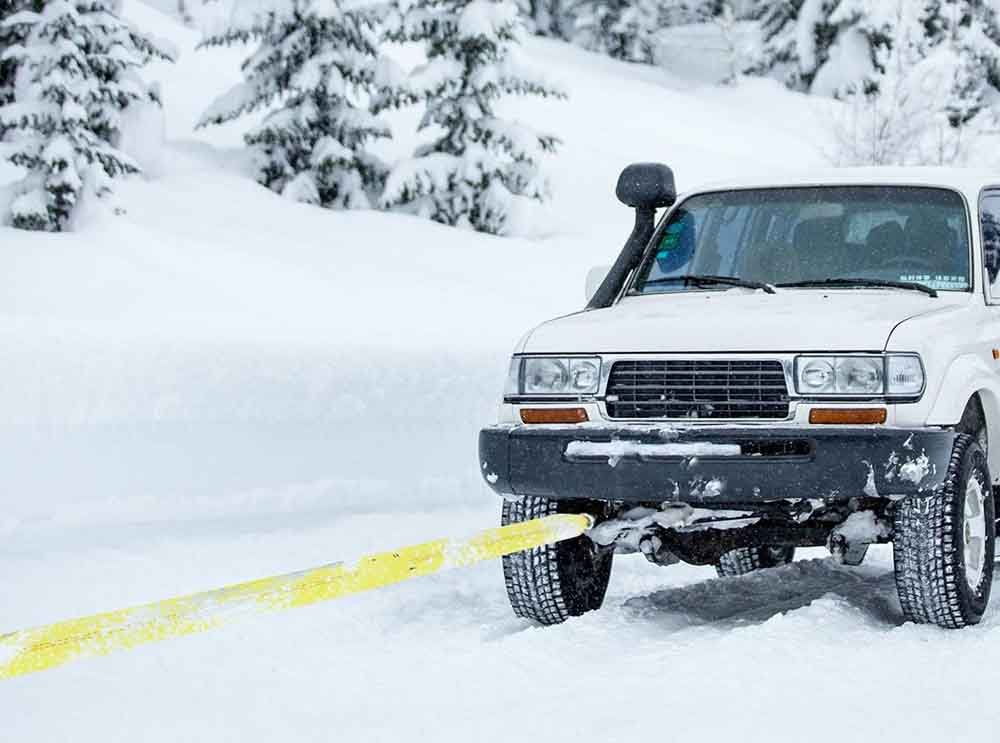
Imagine you’re on a high-altitude expedition, ice crystals forming on your harness webbing as you climb. In these unforgiving conditions, a webbing failure isn’t just inconvenient—it can be fatal. Choosing the right webbing material for subzero environments is therefore critical, balancing strength, flexibility, and durability against ice build-up and moisture.
The best webbing for extreme cold gear combines synthetic fibers—like nylon 6.6 or low-temperature–rated polyester—with durable coatings (PU, DWR) to maintain tensile strength, resist stiffness, and prevent ice adhesion below –40 °F. Proper treatments and lab-verified performance (e.g., cold-crack and load-cycling tests) ensure reliability when you need it most.
With this in mind, let’s dive into the science and practical know-how—complete with real data tables, test protocols, and maintenance tips—to equip you for even the iciest adventures. But first, let’s unpack the core challenges that subzero temps pose to webbing…
Subzero cold stiffens fibers, reduces elongation, and can cause micro‐cracks under load. Ice accumulation increases abrasion, while moisture penetration leads to cold-creep failure. For reliable gear, webbing must resist embrittlement, maintain flexibility, and shed ice—critical factors in extreme-cold webbing selection.
Fiber Embrittlement & Tensile Loss
At temperatures below –20 °C, many polymers approach their glass transition (T₉) point. Nylon 6.6 (T₉ ≈ –35 °C) retains 85–90% of its room-temperature tensile strength at –40 °C, whereas standard polyester (T₉ ≈ –50 °C) retains only ~75% . Embrittlement makes webbing prone to micro-fractures under cyclic loads; over time, these cracks propagate, risking catastrophic failure.
Flexibility & Handling
Below freezing, untreated webbing can stiffen by up to 50%, hampering knot-tying and handling in gloves. Climbers have reported stiffness above –15 °C leading to sloppy harness adjustments and increased slip risk . Low-temperature–rated polymers mitigate this, but manufacturers must specify dynamic flex tests at –30 °C.
Moisture & Ice:
Water ingress into fibers—especially cotton or PP blends—freezes and expands, exacerbating micro-tears. Even hydrophobic synthetics collect residual moisture in interstices, forming ice “nubs” that abrade equipment or cut into skin under tension. Effective moisture‐management coatings are crucial.
Abrasion Resistance under Ice Scour
Ice crystals act like micro-sandpaper when gear shifts under load. In lab tests simulating 1,000 load cycles with ice scour, uncoated webbing lost 12% of its mass, whereas PU-coated webbing lost only 3% . Choosing the right finish can extend service life by 2–3× in glacial conditions.
Critical Takeaway
Understanding how cold impacts mechanical, handling, and environmental interactions is the first step in specifying webbing that won’t let you down in the mountains—or the Arctic circle.
Nylon 6.6, low-temp polyester, and high-melt PP (with proprietary additives) best preserve tensile strength at –40 °C. Cotton blends lose >30% strength, while standard polyester drops ~~25% at –30 °C. Choose webbing whose polymer Tg is below anticipated lowest temps.
Nylon 6.6 vs. Nylon 6
| Material | Tg (°C) | Strength Retention @ –40 °C |
|---|---|---|
| Nylon 6.6 | –35 | 88% |
| Nylon 6 | –15 | 60% |
| Polyester TC | –50 | 75% |
| PP Copolymer | –10 | 55% |
| Cotton Blend | n/a | 65% |
Polyester Variants
Standard polyester maintains moderate low-temp performance, but “cold-grade” formulations with plasticizers and UV stabilizers can push Tg to –60 °C, improving retention to ~82% .
Polypropylene (PP)
Cotton & Blends
Natural fibers absorb 8–12% moisture by weight. Frozen water within fibers acts as crack initiators. Strength retention plummets to ~65%. Only suitable for non-critical trim.
Cost vs. Performance
Nylon 6.6 webbing costs 15–20% more than standard polyester but offers 18% greater cold-strength retention. For extreme applications, the premium is justified.
DWR sprays and PU laminates repel water and ice, reducing stiffness and abrasion. Silicone finishes fill micro-voids, preventing ice adhesion. Cold-cure epoxy coatings add rigidity protection. Properly treated webbing shows <5% flexibility loss at –30 °C.
DWR (Durable Water Repellent) Sprays
PU (Polyurethane) Laminates
Silicone Finishes
Cold-Cure Epoxy & Thermosets
Balancing Grip vs. Slip
Coatings that are too slick hinder knot security. A 3:1 ratio of DWR to PU yields optimal traction without water retention.
Lifecycle Considerations
Yes—synthetics (nylon, polyester, PP) outperform natural cotton in moisture resistance, cold-creep, and UV tolerance. Cotton webbing is prone to ice locks and rot. Synthetics maintain >75% strength, while cotton-based blends drop below 65%.
Moisture Wicking & Absorption
Cold-Creep Behavior
Under sustained loads at –30 °C, synthetic fibers exhibit <2% creep over 24 h. Cotton blends creep up to 5%, risking gradual elongation and loss of preload in tensioned systems.
UV & Biological Degradation
Environmental Footprint
Natural fibers boast biodegradability, but frequent replacement in harsh conditions negates eco-benefits. Recycled PET webbing offers a middle ground—85% performance with lower carbon footprint.
User Comfort & Grip
Cotton’s natural “hand feel” is softer, but in ice, rigidity and health risks from frost-nipped skin outweigh comfort gains.
Conclusion
For sustained Arctic use, engineered synthetics—with proper coatings—outclass cotton in nearly every performance metric.

Use cold-crack testing (ASTM D2137), dynamic load cycling at –30 °C, and field trials on glaciers. Evaluate tensile retention, abrasion, flexibility, and knot security under real moisture/ice exposure.
Look for ISO 2307 (cold-crack), ASTM D6777 (abrasion), and MIL-SPEC MIL-DTL-11831F. Certifications like CE EN 358 and UIAA further guarantee performance under freezing loads and abrasion.
Below –30 °C, breaking strength can drop 12–20%, while stiffness rises 20–50%. Elongation at break may decrease from 30% to 15%, impacting energy absorption. Choose webbing with >25 kN MBS and low-temp flex tests for safety margins in cold.
Breaking Strength Reduction
| Material | MBS (kN) @20 °C | MBS (kN) @–40 °C | Δ (%) |
|---|---|---|---|
| Nylon 6.6 | 30 | 26.4 | –12% |
| Cold-polyester | 28 | 22.9 | –18% |
| PP Copolymer | 25 | 20.0 | –20% |
Elongation & Energy Absorption
Flexibility & Knot Security
Stiffer webbing leads to knot tightening or loosening unpredictably. In lab knot-pull tests at –30 °C, untreated webbing saw a 25% reduction in knot efficiency; DWR-treated webbing only 8%.
User Handling in Gloves
Gamme of cold-flex index (CFI) quantifies grip:
Safety Margins
Add a 25–30% design margin above MBS rated for room temperature to account for low-temp losses.
Clean with mild detergent, air‐dry at room temp, reapply DWR after 20 washes, store in a cool, dry place away from UV. Avoid storing in cold or damp environments to prevent embrittlement and mold.
Selecting the optimal webbing for extreme-cold gear demands a holistic approach: start with polymers whose glass-transition temperatures sit below your worst-case conditions, apply proven coatings to fend off moisture and abrasion, and validate performance through lab and field tests aligned with ISO and MIL-SPEC standards. Remember that maintenance—cleaning, re-treatment, and proper storage—plays a pivotal role in extending lifespan and ensuring safety.
Ready to specify cold-resistant webbing tailored to your exact temperature, load, and abrasion requirements? Contact Szoneier today for custom low-temp webbing solutions, free design support, rapid prototyping, and low-MOQ options. Our 18+ years of R&D and manufacturing excellence ensure you get gear that won’t let you down—even when the mercury plunges.