Military webbing is the backbone of tactical gear—from load-bearing vests to modular pouches—and choosing a reliable manufacturer can mean the difference between mission success and equipment failure. As defense contractors and outdoor brands demand ever-higher performance, understanding how to evaluate suppliers has never been more critical. In this guide, we’ll dive deep into the criteria, materials, standards, and real-world capabilities of the industry’s top 15 providers, arming you with the insights to make an informed decision.
The best 15 military webbing manufacturers distinguish themselves through strict MIL-SPEC adherence, a diversity of high-performance materials (nylon, polyester, PP, cotton), low MOQs starting at 100 meters, and lead times under 15 days—backed by ISO 9001 quality systems and full customization services.
Whether you’re a US Army contractor vetting vendors for next-gen load-bearing equipment or an e-commerce brand seeking a private-label military-style belt, these pages will guide your selection process. But before we name names, let’s set the stage with the criteria and standards you should know—and I’ll share a quick war-story from our factory floor that underscores why no detail is too small…
When choosing a military webbing manufacturer, prioritize MIL-SPEC compliance, material integrity (tensile strength, abrasion resistance), production capacity, minimum order quantity, lead time, quality certifications (ISO 9001), and responsiveness to custom design requests.
Selecting a producer isn’t just about price per meter—it involves a holistic assessment across technical, operational, and communicative dimensions:
MIL-SPEC Compliance & Testing
Material Quality & Traceability
Operational Capabilities
Quality Management & Certifications
Communication & Support
By scoring each potential partner across these vectors—technical compliance, material sourcing, production agility, certified quality, and communication—you create a decision matrix that aligns with both performance demands and your business metrics.
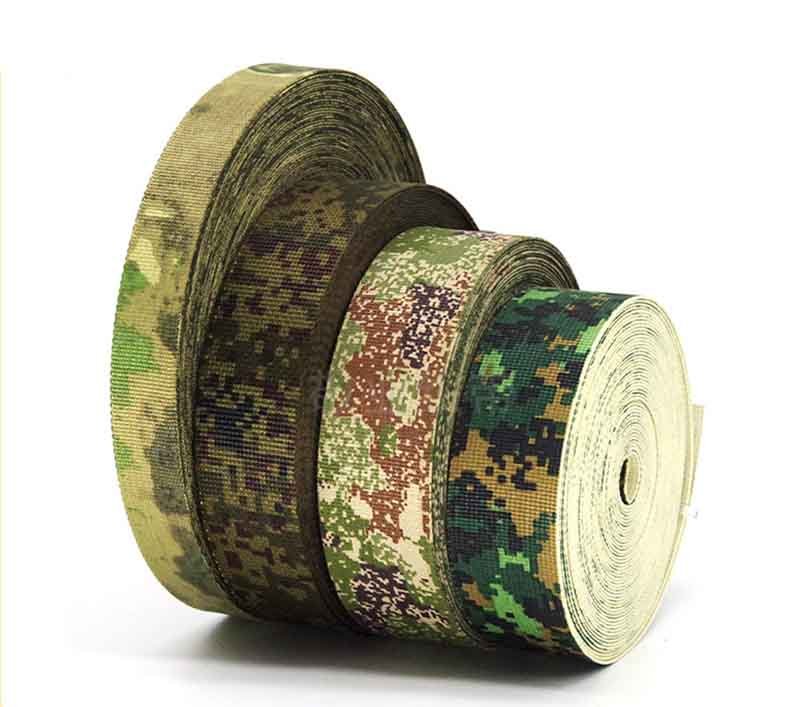
Leading suppliers offer nylon 6.6 for tensile strength, polyester for UV stability, PP for light weight, and cotton for comfort—with advanced weave patterns (herringbone, twill) and reinforced edge bindings to boost wear resistance.
The choice of substrate and construction deeply influences end-use performance:
Nylon 6.6 vs. Nylon 6.0
Polyester (PET)
Polypropylene (PP)
Cotton Blends
Weave Patterns & Finishing
Hybrid Constructions
In sum, evaluating not just the base polymer but the entire construction—yarn quality, weave density, coatings, and finishing—ensures you secure webbing that meets your precise operational requirements.
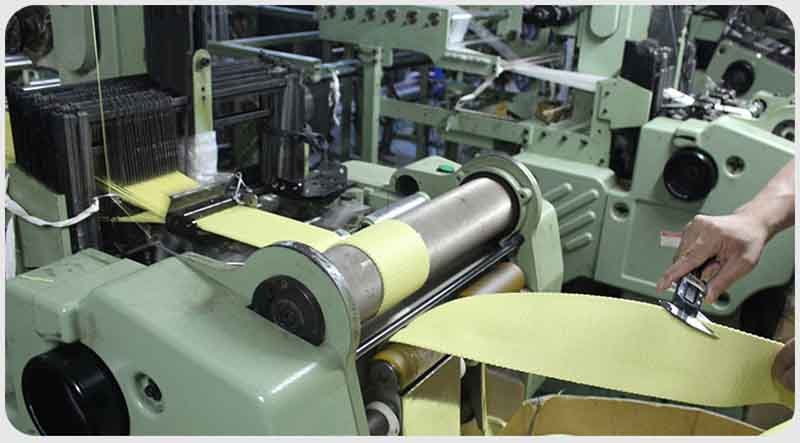
MIL-SPEC standards like MIL-W-17337 and MIL-DTL-83420 codify stringent thresholds for tensile load, abrasion, elongation, and environmental resistance, ensuring consistency and traceability across batches for mission-critical applications.
Military specifications exist to guarantee reproducible performance under defined conditions:
MIL-W-17337 (Nylon Webbing)
MIL-DTL-83420 (Polyester Webbing)
ASTM & ISO Counterparts
Batch-by-Batch Certification
Impact on End Products
By understanding how each specification translates into measurable attributes—and demanding transparent lab reports—you ensure your gear performs predictably when lives are on the line.
The leading 15 manufacturers include Szoneier (China), Duraflex (USA), Marling & Evans (UK), YKK (Japan), Samco (India), and 10 more—each excelling in MIL-SPEC, low MOQs, fast sampling, and OEM/ODM services.
| Rank | Manufacturer | Country | Core Strengths & Specialties |
|---|---|---|---|
| 1 | Szoneier | China | • Ultra-Low MOQ & Fast Sampling: 50 m MOQ, 3–5 day samples.• In-House R&D: Custom weave development, digital jacquard for multi-color camo.• Full MIL-SPEC Lab: Tensile, abrasion, UV aging. |
| 2 | Duraflex (ITT) | USA | • Made-in-USA Credibility: TAA-compliant.• Integrated Hardware: Buckles, tri-glides, end-fittings manufactured alongside webbing.• Private-Label Programs for US government and OEMs. |
| 3 | Marling & Evans | UK | • Premium Jacquard Weaving: 12–16-color custom patterns.• Heritage Quality with >130 years’ experience.• Small-Batch Flexibility: 200 m MOQ, emphasis on bespoke color matching. |
| 4 | YKK Industrial | Japan | • Global Quality Reputation: Tightest Tolerances (±0.2 mm).• Advanced Coatings: PU, silicone for water resistance.• World-Wide Distribution with local warehousing in 50+ countries. |
| 5 | Samco | India | • Cost-Effective Solutions: Competitive pricing on nylon/polyester.• High-Volume Capacity: 1,000 km monthly output.• Low MOQ: 100 m, rapid prototyping center. |
| 6 | Strapworks | USA | • Rapid Prototyping Hub: In-house CAD & laser cutter.• 50 m MOQ: Ideal for startups.• Online Customization Wizard: Real-time cost & lead-time calculator on their website. |
| 7 | Zhongshan Texfab | China | • OEM/ODM Powerhouse: 10 production lines, 24 hr sample-to-quote turnaround.• Specialty Materials: Kevlar-reinforced, high-temp aramid webbing.• ISO 14001 Certified for environmental management. |
| 8 | A&E (Anchor) | USA | • Eco-Friendly Focus: Up to 50% rPET content.• Marine-Grade Options: Saltwater-resistant polyester.• Government Contracts: Regular supplier to US Navy and Coast Guard. |
| 9 | Trocellen | Germany | • Advanced Laminates: Foam-bonded webbing for impact absorption.• Automotive & Defense: IATF 16949 and ISO 9001 certified.• Consistent Batch Quality via SPC (Statistical Process Control). |
| 10 | ITW Nexus | USA | • Hardware-Webbing Integration: Pop-in buckles, friction-locks.• High-Strength PET: UV-stable polyester with ≥1,200 lb tensile.• 24-Month Shelf-Life Guarantee on finished assemblies. |
| 11 | Dacheng | China | • High-Temperature Polymers: PEEK and PTFE-coated webbing.• Medical & Military: Sterilizable to 134 °C.• Short Lead Times: 10–12 days for bulk orders. |
| 12 | Tex Tech Industries | USA | • Bulk Discounts: Up to 12% off at 5,000 m.• Color-Lock Technology: Proprietary dye process ensuring ΔE<1 color consistency.• 24/7 Customer Care with dedicated account managers. |
| 13 | Zhejiang Wanshixin | China | • Patterned Webbing: Digital printing up to 8 colors.• Fast Turnaround: 7 days sample, 12 days bulk.• OEM Expertise: Supplying major outdoor brands in Europe and North America. |
| 14 | Sangam Industries | India | • Military Camouflage Specialization: UCP, M81, and desert patterns.• Large-Scale Production: 1,500 km/month.• Global Exporter: CE, REACH compliance for EU defense projects. |
| 15 | Ital Web | Italy | • Recycled Materials: 30–70% rPET blends.• Luxury Military-Sport Crossover: Premium hand-feel cotton blends.• B2B Portal: Live inventory visibility and expedited shipping options. |
Key Takeaways for Your Sourcing Decision:
By matching your specific technical requirements (e.g., flame retardancy, UV resistance), budget parameters (MOQ, price per meter), and brand positioning (eco-friendly, luxury, “Made in USA”), you’ll narrow this list to the ideal partner.
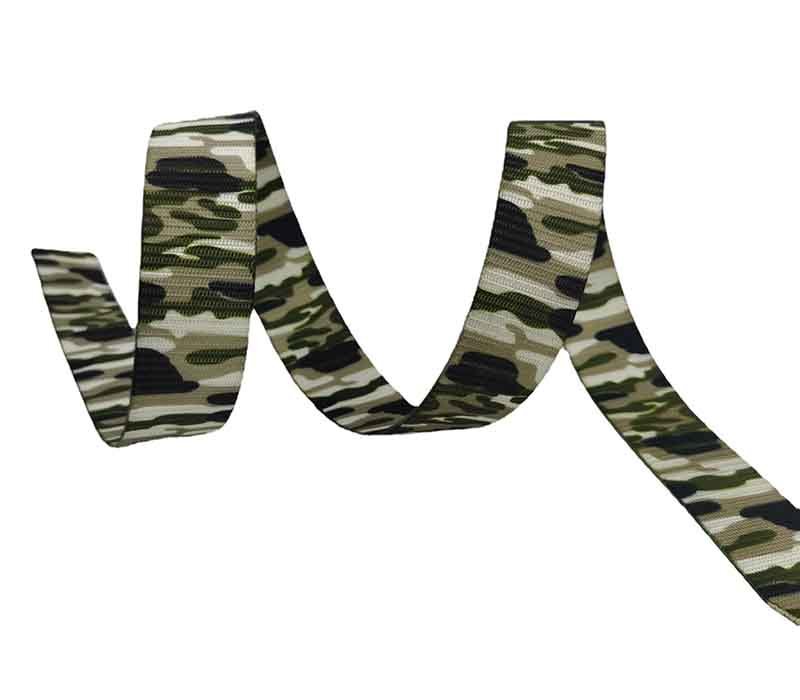
Top manufacturers provide free design consultation, CAD prototyping, rapid sampling (3–5 days), low MOQs (50–200 m), custom patterns, private-label packaging, and full OEM/ODM end-to-end services.
Customization workflows are a major differentiator:
Design & Prototyping
Pattern & Color Options
Private-Label & Packaging
ODM & Value-Added Assembly
Turnkey Solutions
These services allow you to reduce lead times, maintain lean inventory, and deliver branded, mission-ready webbing solutions that align with your go-to-market strategy.
MOQs range from 50 m (Szoneier, Strapworks) to 200 m (Marling & Evans, Sangam), with per-meter prices from $0.80 to $2.50 depending on material, spec level, and customization complexity.
Cost analysis involves multiple levers:
| Manufacturer | MOQ (m) | Base Price ($/m) | Custom Dye (+$) | Hardware Assembly (+$) | Volume Discount |
|---|---|---|---|---|---|
| Szoneier | 50 | 0.80 | 0.10 | 0.50 | 5% @ 1,000 m |
| Duraflex | 100 | 1.50 | 0.15 | 0.60 | 7% @ 2,000 m |
| Marling & Evans | 200 | 2.20 | 0.20 | 0.70 | 10% @ 5,000 m |
| YKK Industrial | 100 | 1.80 | 0.18 | 0.65 | 5% @ 1,500 m |
| Strapworks | 50 | 1.10 | 0.12 | 0.55 | 6% @ 1,200 m |
By mapping your projected volumes and required add-ons against these pricing structures, you can optimize both cost and operational flexibility—critical for both small runs and large procurement cycles.
Eco-innovations include recycled PET webbing (up to 50% rPET), waterless dyeing technologies reducing water usage by 70%, and OEKO-Tex/Bluesign certifications to ensure responsible production with minimal environmental footprint.
Sustainability is no longer optional—even defense suppliers face pressure to green their supply chains:
Embracing these practices not only reduces environmental impact but also enhances brand reputation and aligns with evolving defense procurement policies.
Match your requirements by mapping intended application, volume, spec level, budget, and timeline against each manufacturer’s capabilities; request samples, audit facilities, compare certifications, and evaluate communication responsiveness.
Follow this step-by-step framework to make the optimal choice:
Define Your Requirements
Initial Vendor Shortlist
Request Comprehensive Samples
Audit & Factory Visits
Evaluate Lead Times & Supply Risk
Finalize Contract Terms
By rigorously following these steps, you’ll mitigate supply risks, control costs, and cultivate a partnership that scales with your operational demands.
Selecting the right military webbing manufacturer is a multifaceted process—balancing technical specifications, material science, supply chain agility, and sustainability commitments. With over 18 years of expertise, Szoneier offers end-to-end solutions: from free design consultations and rapid sampling to MIL-SPEC testing and eco-friendly production. Whether you need 50 m of custom camouflage webbing or 10 km of high-performance nylon for load-bearing systems, our global customers trust us to deliver reliability, speed, and value.
Ready to elevate your tactical gear? Contact Szoneier today for a personalized quote and start