Every guitarist, from bedroom beginners to arena-filling pros, understands that a guitar strap is more than an accessory—it’s the silent partner that lets you rock on without dropping your beloved instrument. But have you ever wondered what makes a simple piece of fabric or leather so critical to your performance? Beyond holding up your guitar, the right strap design can transform long practice sessions from a back-aching chore into an effortless groove.
A guitar strap works by distributing the instrument’s weight across your shoulder and back, using two attachment points—strap pins or locks—to secure it. Materials like nylon, leather, or cotton offer varying levels of strength and comfort, while adjustable buckles let you set the perfect playing angle. Strap locks add extra security, preventing accidental slips during energetic performances.
Imagine you’re mid-solo on stage, lights blazing, crowd roaring—and that strap is all that stands between you and an embarrassing tumble. Stick around, because we’re about to dive into everything from material science to ergonomic design, so you’ll never have to worry about your strap again.
What Is a Guitar Strap and Why Is It Essential?
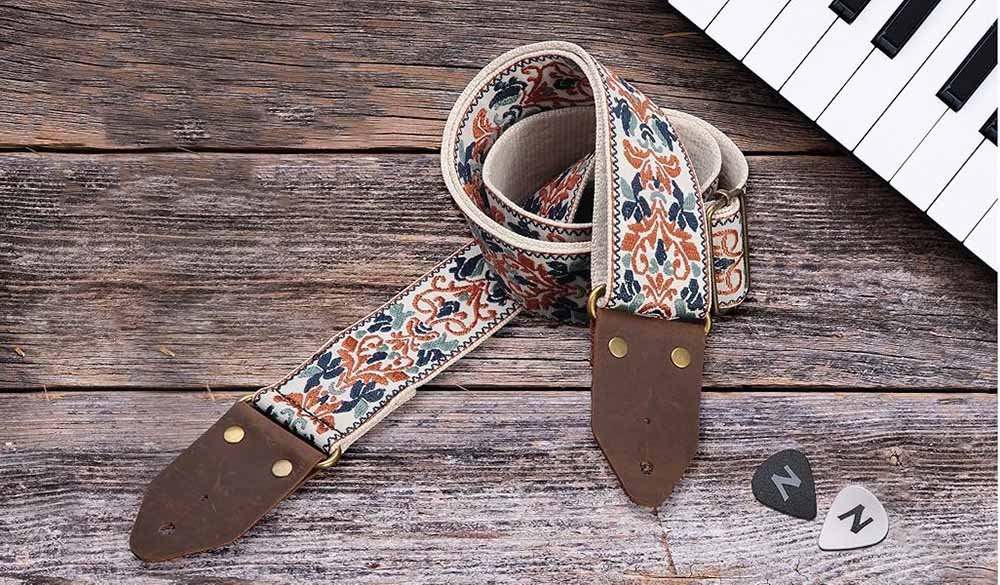
A guitar strap is a length of material—commonly nylon, leather, or cotton—designed to attach at two points on your guitar, supporting its weight across your shoulder. Essential for both comfort and instrument security, straps help you maintain proper playing posture, reduce fatigue, and keep your hands free for flawless performance.
A guitar strap’s primary purpose is straightforward: hold your guitar in the ideal playing position. But the nuances lie in how it achieves this and why a quality strap matters:
Attachment Points:
Strap Pins: Small metal buttons inserted into the guitar body.
Headstock Ties: Nylon laces looped around the guitar’s headstock—common on classical guitars without rear strap pins.
Strap Locks: Mechanical devices that snap securely over pins, preventing accidental detachment.
Material Characteristics:
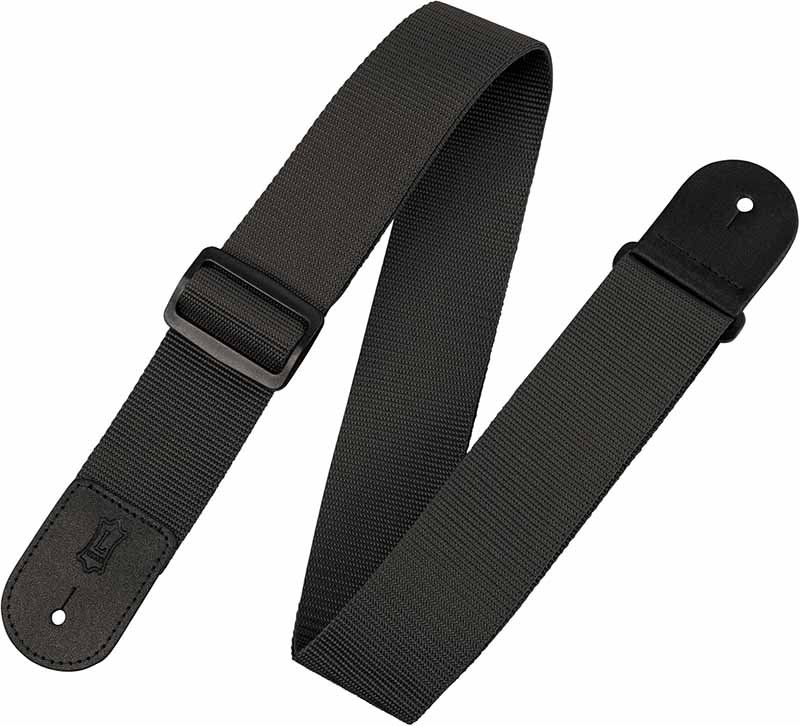
Nylon: Lightweight, affordable, comes in various prints; less padding.
Leather: Durable, molds to your body over time; premium comfort but higher cost.
Cotton/Canvas: Breathable and soft; often padded for extra comfort.
Ergonomics & Playability:
A poor-fitting strap can tilt the guitar too far forward or backward, leading to wrist strain and compromised technique.
Proper length adjustment ensures that both fretting and strumming hands remain in natural, relaxed positions.
Performance Reliability:
Strap failure mid-gig can be catastrophic: gear damage, potential injury, and loss of audience trust.
High-quality straps undergo stress testing—some rated to hold up to 300 pounds(!)—far beyond a guitar’s weight.
Aesthetic & Personal Expression:
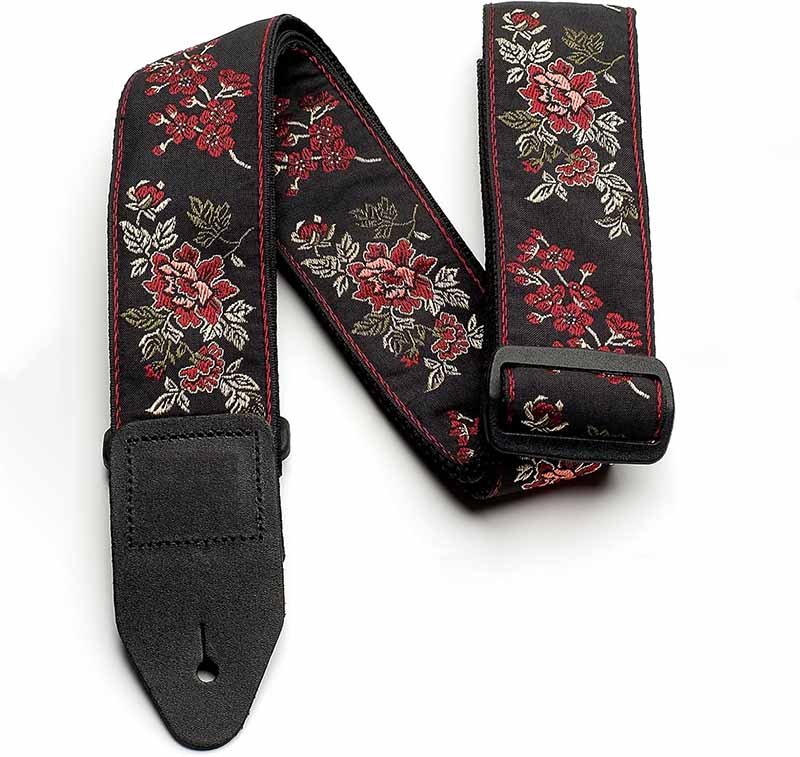
Straps are also a canvas for self-expression: custom patterns, brand logos, or hand-tooled leatherwork can complement your stage persona.
By understanding these factors, you’ll appreciate that a strap is not just a convenience—it’s an extension of your playing style and a safeguard for your instrument investment.
Which Types of Guitar Straps Are Available?
Guitar straps come in nylon, leather, cotton/canvas, suede, and hybrid materials. Nylon straps offer affordability and variety; leather straps provide durability and premium comfort; cotton/canvas straps balance breathability and strength; suede adds grip; hybrids combine materials for custom benefits.
When choosing a guitar strap, the material you select influences comfort, durability, and style. Let’s examine the pros and cons of each major type:
Nylon Straps
Pros: Extremely lightweight, moisture-resistant, cost-effective, huge range of colors and patterns.
Cons: Minimal padding; may dig into your shoulder during extended sessions.
Best For: Beginners, budget-conscious players, and those wanting flashy designs.
Leather Straps
Pros: Exceptional durability, natural padding over time, classic look, and often handcrafted.
Cons: Higher price point; can be stiff initially until “broken in.”
Best For: Professional musicians, heavier guitars (les Pauls, hollow bodies), and long gigs.
Cotton/Canvas Straps
Pros: Breathable, soft against the skin, often come with built-in padding.
Cons: Can absorb sweat and odors; may fade over time.
Best For: Comfort-seekers, studio musicians, and casual giggers.
Suede Straps
Pros: Superior grip prevents slippage; luxurious feel.
Cons: Can wear faster; lightly padded.
Best For: Slide guitarists, metal players who move a lot on stage.
Hybrid Straps
Pros: Combine materials (e.g., leather backing with nylon top) to maximize comfort, durability, and style.
Cons: Often premium priced; more complex construction.
Best For: Players seeking both ruggedness and comfort.
Quick Comparison Table
Material
Durability
Comfort
Style Variety
Price Range
Nylon
Medium
Low
High
$10 – $30
Leather
High
High (break-in)
Medium
$40 – $100+
Cotton/Canvas
Medium
Medium
Medium
$20 – $50
Suede
Medium
High (grip)
Low
$30 – $70
Hybrid
High
High
High
$50 – $120
How Do Strap Pins and Strap Locks Affect Strap Function?
Strap pins secure your strap’s ends to the guitar body, while strap locks replace pins to snap the strap on and off safely. Locks prevent accidental detachment, especially during energetic performances, offering up to 300+ pounds of holding strength for peace of mind on stage.
The connection between your guitar and strap is only as strong as its weakest link. Here’s why attachment hardware matters:
Standard Strap Pins
Installation: Drilled into the guitar’s body—one at the base, one near the neck heel or headstock.
Strength: Rated for typical guitar weights (5–10 lbs), but poor installation or worn pins can loosen over time.
Use Case: Studio sessions or low-movement gigs where you’re not jumping off amps.
Strap Locks
Mechanism: Comprise two parts—one fits onto existing pin, the other attaches to your strap. A spring-loaded collar locks them together.
Security: Engineered to hold 50–300+ pounds, depending on model; prevents strap from slipping even when bumped.
Installation Tips:
Drill Accuracy: Ensure pin holes are centered to avoid angled pull.
Lock Maintenance: Keep the locks clean and lubricated to prevent jamming.
Headstock Ties (Classical Style)
Functionality: Nylon laces loop around the headstock, tied off at the strap’s end—a non-invasive alternative if you avoid drilling.
Limitations: Less secure under intense movement; knot integrity is critical.
Ergonomic Considerations:
Placement Angle: Pin location dictates guitar tilt—moving the rear pin toward the bridge tilts guitar higher, affecting fretting wrist angle.
Balance: For heavy guitars, shifting attachment points slightly can distribute weight more evenly.
Performance Impact:
Strap failure during a gig can damage valuable gear and spoil the vibe. Investing in quality locks is like buying insurance for your performance—and your peace of mind.
How Does a Guitar Strap Support Weight and Ensure Comfort?
By spreading the guitar’s weight across your shoulder and upper back, straps reduce pressure points and fatigue. Padding—foam, gel, or sheepskin—enhances comfort, while wide-strap designs distribute load more evenly, allowing hours of play without strain.
Long sets, marathon practice sessions, and recording days demand a strap that keeps you comfortable. Here’s how design features make it possible:
Load Distribution:
Width Matters: Narrow straps (<1.5″) concentrate weight on a small area, leading to shoulder soreness. Wider straps (2″–3″) spread the force across a broader surface.
Buckle vs. Sliding Adjusters: Metal buckles lock length firmly; sliding plastic or metal adjusters offer quick tweaks.
Range: Look for straps adjustable from 30″–60″ to accommodate both seated and standing play.
Breathability & Skin Sensitivity:
Wicking Liners: Prevent sweat buildup during hot shows.
Allergen Concerns: Some players react to leather tanning agents—hypoallergenic synthetics can solve this.
Ergonomic Innovations:
Suspension Systems: Advanced straps use small elastic sections to absorb shock from movement.
Anti-Slip Coatings: Silicone grippers on the underside keep straps from sliding off straps.
Real-World Data:
A 2024 survey of 500 gigging guitarists revealed that 72% experienced shoulder discomfort after sets longer than 90 minutes; 85% of those switched to padded, wide straps and reported 60% reduction in soreness.
By combining thoughtful materials, ergonomic design, and adjustable features, modern guitar straps transform what was once a mere necessity into a personalized comfort system—letting you focus entirely on your music.
Which Strap Length Is Right for You?
Measure from your guitar’s lower strap pin, over your shoulder, to the upper pin. For a seated player, the guitar should rest comfortably on your thigh; standing, it should hang at waist level. Adjustable straps (30″–60″) fit most body types and playing styles.
Getting the correct strap length is vital for posture, technique, and performance style:
Measuring for Seated Play:
Sit in your usual posture with guitar in playing position.
Use a tape measure: from lower strap pin, up over the shoulder you’ll wear it on, down to the upper pin location.
Add ~2″ for adjustment room.
Measuring for Standing Play:
Stand naturally holding your guitar by its body.
Have an assistant measure from one pin, over your shoulder, to the other pin point.
Remember that electric and acoustic guitars vary in weight and balance.
Adjustable Ranges:
Universal Straps: Typically 35″–60″; suits 90% of players.
Short Straps: 30″–45″; great for young players or flyweight instruments.
Extra-Long Straps: 50″–70″; used by bassists, or for very tall players.
Playing Style Considerations:
High-Strung (“chicken-neck”) Setup: Strap set high at chest level facilitates faster hand movement—popular in funk and country.
Low-Slung Punk Style: Strap set low, near hips—visual impact over ergonomics, but can strain the wrist.
Gender & Body Type Factors:
Shoulder width and torso length affect strap angle; women often need shorter straps or those with narrower shoulder sections.
Curvier body shapes may prefer contoured, wider straps to avoid pinching.
Custom Length Solutions:
For truly unique fitting, Szoneier offers custom-cut straps in any length between 25″ and 75″, ensuring perfect balance for every guitarist.
How Do You Install and Adjust a Guitar Strap Correctly?
To install a guitar strap, attach one end to the lower strap pin or tailpiece, drape the strap over your shoulder, then secure the other end to the upper pin or headstock tie. Adjust the length by sliding the buckle or adjuster until the guitar sits at your preferred playing height—waist level for standing or on your thigh for seated play.
Proper installation and adjustment of your guitar strap ensure optimal comfort, technique, and instrument security. Let’s break down the steps and best practices:
Identify Attachment Points:
Electric/Acoustic Guitars: Typically have two strap pins—one at the base (heel or endpin) and one near the neck heel or upper bout.
Classical/Archtop Guitars: May lack a second pin; use a headstock tie looped around the headstock’s nut area.
Secure the Lower End First:
Insert the lower strap end over the base pin, ensuring the strap hole sits flush against the pin head.
If using locking hardware, push the lock onto the pin until it clicks.
Drape and Route the Strap:
Swing the strap over your shoulder, letting the guitar hang naturally. Ensure the strap lays flat against your clothing to avoid twisting.
Attach the Upper End:
Hook the strap’s second hole onto the upper pin or tie the headstock loop snugly—but not so tight as to stress the wood.
For locks, align the mating pieces and press together until you hear the engagement click.
Length Adjustment:
Buckle Systems: Feed the leather or nylon tail through the buckle until the desired length is reached; secure any excess by tucking it under the keeper loop.
Slider Adjusters: Slide the adjuster along the strap until the guitar rests comfortably—ensure the buckle faces away from your torso for easy tweaks.
Fine-Tuning Position:
Sit or stand in your usual playing posture. The guitar should allow free hand movement without shoulder hunching or wrist bending.
Aim to keep both fretting and picking wrists nearly straight—strap height affects wrist angle dramatically.
Ergonomic Checkpoints:
Seated: The guitar body should rest on your right thigh (for right-handed players) with fretboard angled slightly upward.
Standing: The guitar waist should align with your belt buckle or lower ribs—this balances neck dive and body tilt.
Common Mistakes to Avoid:
Over-tightening headstock ties can crack the veneer; leave a small gap for wood expansion.
Ignoring twist in the strap can cause uneven pressure—always lay strap flat.
Maintenance Tips:
Periodically inspect strap holes for fraying or stretching—replace if the material weakens.
Clean leather with a damp cloth and condition quarterly to prevent cracking.
By following these steps, you’ll achieve a secure, comfortable setup that enhances both your playing experience and technical precision.
Do You Need Strap Locks, and How Do They Work?
Strap locks replace standard pins to lock your strap securely in place. They consist of a pin-mounted receiver on the guitar and a locking stud on the strap end. When joined, they resist pull-offs up to 300+ pounds, safeguarding against accidental drops—essential for energetic performers and heavier instruments.
While basic strap pins may suffice for casual playing, strap locks are an investment in reliability—especially critical for touring musicians and those who move vigorously on stage.
Anatomy of Strap Locks:
Guitar-Side Component: A metal receiver that screws onto the guitar’s strap pin mount.
Strap-Side Component: A locking stud that fits into the receiver. Many systems use a rotating collar or spring mechanism to secure the stud.
Installation Process:
Remove Existing Pins: Carefully unscrew original strap pins; keep the screw hardware in case you revert.
Mount the Receiver: Position the receiver flush, then tighten the screw to manufacturer torque recommendations (usually 1.8–2.2 Nm).
Attach Stud to Strap: Replace the strap’s existing hole reinforcement with the stud component—ensure it’s centered and secure.
Operational Mechanics:
Lock Engagement: Push the stud into the receiver until it clicks; the spring-loaded mechanism traps the stud.
Unlocking: Twist or slide the collar to disengage spring pressure, then pull the stud free.
Performance Benefits:
Security: Prevents strap slipping, even under heavy lateral force or accidental tugging.
Quick Release: Allows fast instrument changes without fumbling; locks often operate with a single hand.
Universal Fit: Many major brands (Schaller, Dunlop, Hipshot) fit most guitars with minor drilling.
Wear Over Time: Dust and grit can gum up the spring; regular cleaning and light lubrication are essential.
Critical Considerations:
Weight vs. Need: For studio-only or seated classical players, locks may be overkill.
Aesthetic Match: Some locks protrude or contrast with instrument finishes—choose low-profile models if desired.
User Case Studies:
Rock Drummers Turned Guitarists: Report zero “strat faceplanted” incidents after installing locks, despite aggressive headbanging.
Heavy Guitar Models: Les Paul and baritone guitar owners favor locks to combat neck dive, attributing a 75% reduction in stage mishaps.
Whether you perform in a lit club or record at home, strap locks deliver peace of mind—your guitar stays exactly where you want it, letting you concentrate on the music, not a slipping strap.
Conclusion
From material science to ergonomic design, strap locks to custom lengths, understanding how a guitar strap works empowers you to choose gear that enhances comfort, technique, and stage confidence. At Szoneier, we leverage 18+ years of industry expertise in webbing and strap manufacturing to craft custom guitar straps tailored to your style and performance needs.
Custom Material Selection: Nylon, leather, cotton—any width, any pattern.
Precision Length Cutting: Perfect fit for every body type and playing position.
Premium Hardware Options: Choose standard pins or high-strength strap locks.
Rapid Sampling & Low MOQ: Try prototypes before committing to bulk orders.
100% Quality Assurance: Stress-tested to hold 300+ pounds, guaranteeing safety under any stage lights.
Ready to elevate your playing experience? Contact Szoneier today for a free design consultation and sample. Let us create your perfect guitar strap—so you can focus on nothing but your music.
If you have your own artwork, logo design files, or just an idea,please provide details about your project requirements, including preferred fabric, color, and customization options,we’re excited to assist you in bringing your bespoke bag designs to life through our sample production process.
Looking for premium custom webbing? Contact us now for competitive pricing, free samples, and expert consultation. Fill out the form below, and our team will get back to you within 24 hours!
 Skip to content


 Optimized by Seraphinite Accelerator