
- (+86)13823134897
- info@szoneierwebbing.com
From Inquiry to Delivery
 Skip to content
 From Inquiry to Delivery
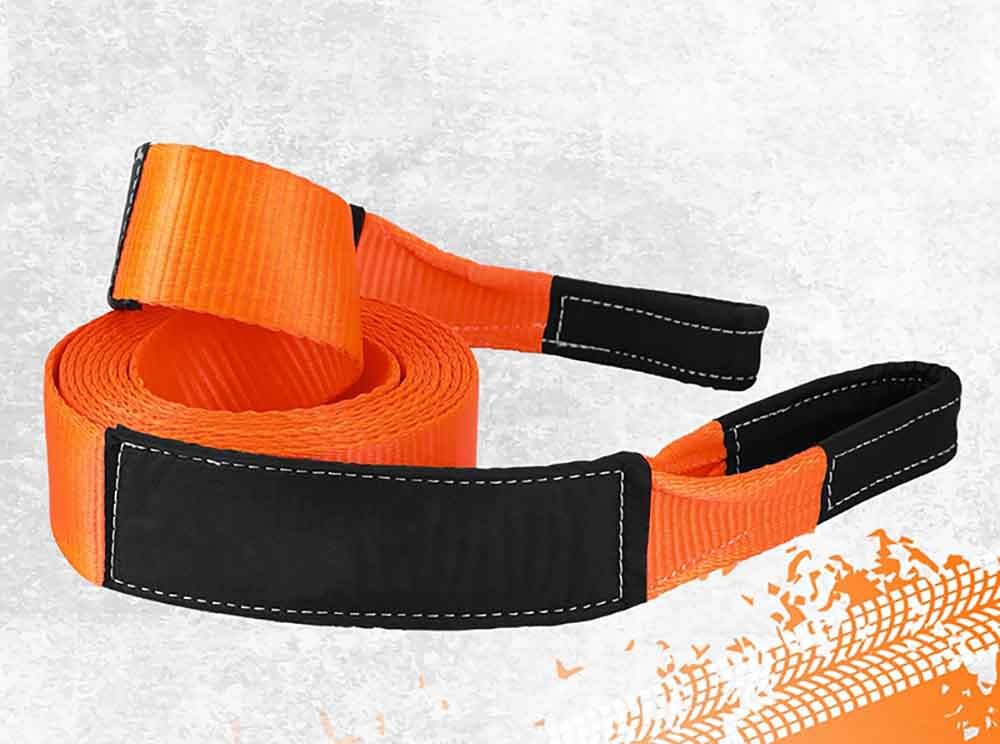
When the mud’s so thick that your truck feels glued to the earth, the last thing you want is a recovery strap that’s either too short to reach solid ground or so long that it turns into a tangled mess. The right strap length not only ensures a smooth, safe pull but also gives you the confidence to tackle rough terrain head-on.
The ideal recovery strap length strikes a balance between reach and control—typically between 20 ft (6 m) and 30 ft (9 m) for most off-road vehicles. This range offers enough slack to absorb shock loads during pulling without compromising safety or maneuverability.
Picture this: You’re stranded at golden hour, sun dipping low, feet in cold swamp water, and your buddy’s Jeep is the only lifeline. That’s exactly when a well-chosen strap length feels like a superhero’s cape—saving the day in style.
A recovery strap is a heavy-duty, elastic towing line designed to stretch under load and recoil, absorbing shock and cushioning the jerk between two vehicles during winching or pulling-outs. Length matters because it affects how much energy the strap can absorb, how easily it reaches a good anchor point, and how safely it handles dynamic loads. Too short risks sudden snatch forces; too long can tangle and reduce pulling power.
A recovery strap—sometimes called a kinetic tow strap—differs from a traditional tow rope in its ability to stretch. Made of high-strength woven webbing with built-in elasticity, it elongates under load (usually up to 20 %). This stretching action stores kinetic energy, which is gradually released to assist the stuck vehicle.
Shock Absorption & Energy Storage
When two vehicles are involved in a snatch recovery, the initial jolt can generate massive forces—often many times greater than the vehicle’s weight. The elastic strap stretches, converting kinetic energy into elastic potential energy, then gradually releases it. This results in a smoother pull that reduces stress on both vehicles’ hitch points, frames, and shackle attachments.
Reach & Anchor Point Selection
Length determines how far apart two vehicles can stand safely during recovery. A strap that’s too short might force the towing vehicle into mud or danger, while an excessively long strap may sag in deep ruts, risking snagging on rocks or vegetation. Finding the sweet spot ensures the pulling vehicle stays on firm ground and the strap remains clear of obstacles.
Safety Considerations
Kinetic energy isn’t the only variable. Longer straps may store more energy, but they also require careful management to prevent recoil hazards. If the strap breaks or disconnects, it can lash out violently. Thus, working within recommended lengths helps predict how the strap behaves under load, making the rescue safer for everyone involved.
Recovery straps typically come in lengths of 10 ft (3 m), 20 ft (6 m), 30 ft (9 m), and 40 ft (12 m). For most light- to mid-sized SUVs and trucks, 20 ft and 30 ft models hit the sweet spot between reach and control. Extended lengths (40 ft+) cater to large rigs or deep-pit recoveries but demand extra caution. Compact straps (10 ft) suit tight trails where vehicles stay close together.
Length Options & Use Cases
| Strap Length | Metric Equivalent | Common Use Cases |
|---|---|---|
| 10 ft | 3 m | Tight trails, snatch blocks, urban recoveries |
| 20 ft | 6 m | General off-road, light SUVs, side-by-side |
| 30 ft | 9 m | Medium trucks, deep mud/sand pits |
| 40 ft | 12 m | Large trucks, remote deep-pit recoveries |
Kinetic Stretch Considerations
While length is critical, so is material stretch. Most straps stretch about 15–20 %. A 30 ft strap at 20 % stretch yields an additional 6 ft of elongation, giving a total stretch length of 36 ft. That extra give helps cushion the load but also requires more space to avoid collisions.
Material & Construction
Standard recovery straps are made of polyester webbing, sometimes blended with nylon for extra flexibility. The denser the weave and higher the tensile rating, the less prone the strap is to abrasion and heat buildup during repeated snatch recoveries.
Heavier vehicles and extreme terrains usually demand longer, higher-rated straps. For a compact SUV on sandy trails, 20 ft suffices. For a full-size truck in deep mud or rocky ruts, a 30 ft strap provides safer standoff distance and energy absorption. Steep inclines may need even more length to avoid boxer-cable effects. Always match strap length and capacity to both vehicle mass and the challenge of terrain.
Vehicle Weight & Dynamics
A 2,000 lb side-by-side ATV accelerates rapidly, storing less kinetic energy at a given speed than a 6,000 lb pickup truck. Therefore:
Terrain Types & Challenges
Environmental Factors
Extreme temperatures affect material properties. In freezing conditions, polyester webbing stiffens, reducing stretch; slightly longer straps can compensate. In scorching heat, webbing softens and may creep under load—monitor strap condition and consider rotating straps periodically during long sessions.
Not necessarily. While longer straps offer extra reach and energy absorption, they also introduce more recoil distance, increase tangling risk, and demand greater management space. Too much length can snag on obstacles or create unpredictable “boomerang” effects if the strap fails. The key is selecting the shortest strap that still provides safe standoff distance and shock absorption for your specific vehicle and terrain.
Pros of Longer Straps
Cons of Longer Straps
Balancing Act
Good practice: choose the minimum strap length that accomplishes the task safely. In most off-road communities, 20–30 ft is the consensus “sweet spot.” Only venture beyond 30 ft for specialized recoveries, and always use proper rigging techniques to anchor and coil the unused strap.
Match strap length to vehicle weight and recovery scenario. As a rule of thumb: up to 3,500 lb vehicles—20 ft; 3,500–6,000 lb vehicles—20–30 ft; over 6,000 lb—30 ft or longer with higher-rated webbing. Verify strap’s working load limit (WLL) is at least twice your vehicle’s gross weight. Always inspect manufacturer specs and pair length with capacity.
Vehicle Class & Strap Recommendations
| Vehicle Gross Weight | Recommended Length | Typical WLL Rating |
|---|---|---|
| < 3,500 lb | 20 ft (6 m) | 10,000–15,000 lb |
| 3,500–6,000 lb | 20–30 ft (6–9 m) | 15,000–20,000 lb |
| > 6,000 lb | 30–40 ft (9–12 m) | 20,000–30,000 lb+ |
Practical Example
A 5,500 lb mid-size pickup in deep mud:
Inspection & Maintenance
Longer, heavier-rated straps are thicker and more prone to ground contact. Always inspect for fraying, chemical damage, or heat spots (from snatch recoveries)—these degrade both stretch and strength.
Yes. Polyester straps stretch around 15 % under load, while nylon blends can reach 20 % or more. Higher-stretch materials absorb energy more smoothly, allowing slightly shorter straps to perform like longer ones. Low-stretch straps require more length to achieve the same shock absorption. Always check manufacturer stretch specs—matching length to stretch profile ensures predictable pull dynamics and safer recoveries.
Polyester vs. Nylon Webbing
How Stretch Influences Length Choice
Imagine two 20 ft straps:
The nylon blend’s extra foot of stretch cushions the pull more, making a 20 ft nylon strap behave somewhat like a 22 ft polyester strap. Conversely, if you prefer polyester’s durability, you might choose a slightly longer length to match the kinetic performance of a shorter nylon strap.
Weave Density & Coatings
Straps with tighter weave patterns can handle higher loads but may stretch less. Some straps feature protective coatings—such as polyurethane—to reduce abrasion. Thicker coatings slightly reduce stretch, so consider length compensation if using heavily coated straps.
Temperature & Aging Effects
Always inspect straps before each use, anchor to rated points, use soft shackles or bow shackles, maintain a clear recovery zone, and never exceed the strap’s Working Load Limit. For longer straps, coil excess neatly off the ground, use warning flags, and keep bystanders at least twice the strap’s extended length away. Proper rigging and communication between drivers are critical to prevent accidents.
Pre-Use Inspection
Anchor Points & Hardware
Managing Excess Length
Communication & Zone Control
Stuck between strap lengths, capacities, and materials? At Szoneier, we’ve been crafting bespoke webbing solutions for over 18 years—custom lengths, stretch profiles, and strength ratings tailored to your exact needs. Whether you’re a weekend warrior or a professional recovery crew, we’ve got you covered with free design consultation, low-MOQ options, rapid prototyping, and 100 % quality assurance.
Ready to Gear Up? Contact our team at Szoneier today for a free quote and get the perfect recovery strap that keeps you moving forward—no tangled mess, no wasted pulls.
Table: Quick-Reference Strap Selector
| Vehicle Class | Terrain Type | Recommended Length | Material | WLL Rating |
|---|---|---|---|---|
| ATV/UTV (< 3,500 lb) | Sand/Mud | 20 ft (6 m) | Nylon blend | 10,000 lb |
| Mid-Size SUV | Mixed Trails | 20–30 ft (6–9 m) | Polyester | 15,000–20,000 lb |
| Full-Size Truck | Deep Mud/Rut | 30 ft (9 m) | Nylon blend | 20,000–25,000 lb |
| Commercial Rig | Remote Recoveries | 40 ft (12 m) | Polyester | 30,000–40,000 lb |
With these insights, you’re now equipped to pick a recovery strap that’s just the right length, strength, and material for your vehicle and environment. Safe journeys and happy trails!


No worries, please contact us and we will answer all the questions you have during the whole process of webbing customization.
If you have your own artwork, logo design files, or just an idea,please provide details about your project requirements, including preferred fabric, color, and customization options,we’re excited to assist you in bringing your bespoke bag designs to life through our sample production process.

Copyright ©2021 Szoneier , All rights reserved.
Looking for premium custom webbing? Contact us now for competitive pricing, free samples, and expert consultation. Fill out the form below, and our team will get back to you within 24 hours!
 Optimized by Seraphinite Accelerator