
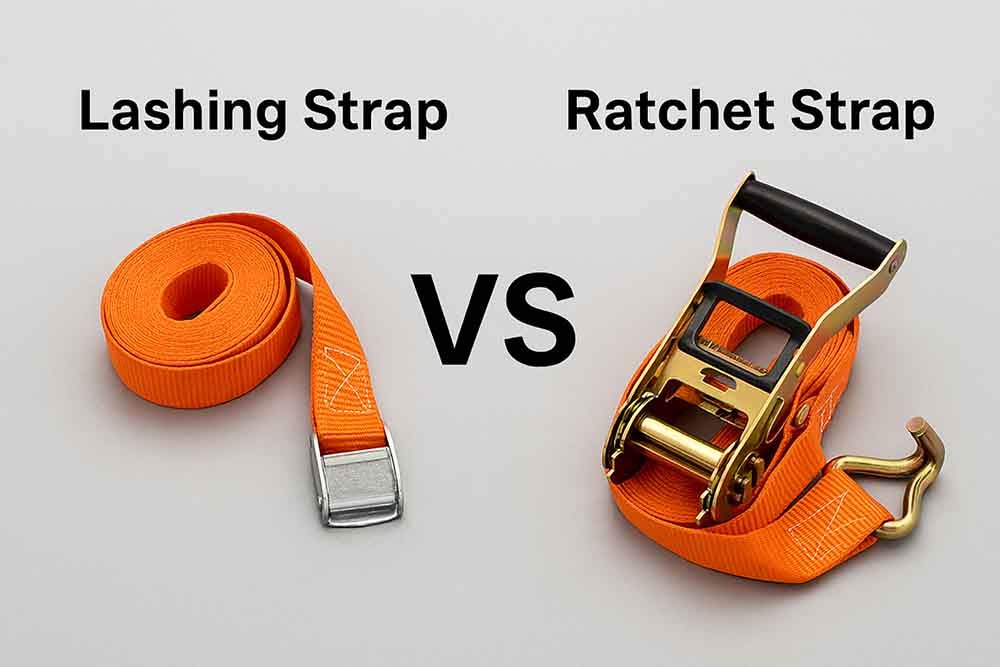
In the world of cargo transport, outdoor equipment, and industrial safety, strapping equipment is far more than an accessory—it’s a necessity. Among the most commonly used tie-down tools are lashing straps and ratchet straps. But what truly separates these two? Are they interchangeable? Which one is more secure? And most importantly, which one should you use?
Lashing straps and ratchet straps differ in tensioning method, load capacity, and usage scenario. Ratchet straps provide a mechanical tensioning advantage, making them ideal for heavy-duty cargo, while lashing straps are better suited for lightweight and delicate items.
You might be loading up your trailer, securing a kayak to your SUV, or shipping boxes across the globe. Whatever the case, choosing the wrong type of strap could lead to cargo damage, safety hazards, or costly delays. Imagine tightening a ratchet strap around a fragile item, only to hear a crack. Or trusting a lashing strap on a bumpy highway—only to find your equipment scattered behind you.
In this guide, we’ll break down the details in plain English, including materials, safety, capacity, and use cases. We’ll also share insider insights from professional strap manufacturers like Szoneier, who provide custom OEM and private-label solutions for international clients. Stick around to find out which strap works best for you—and how to get it made right.
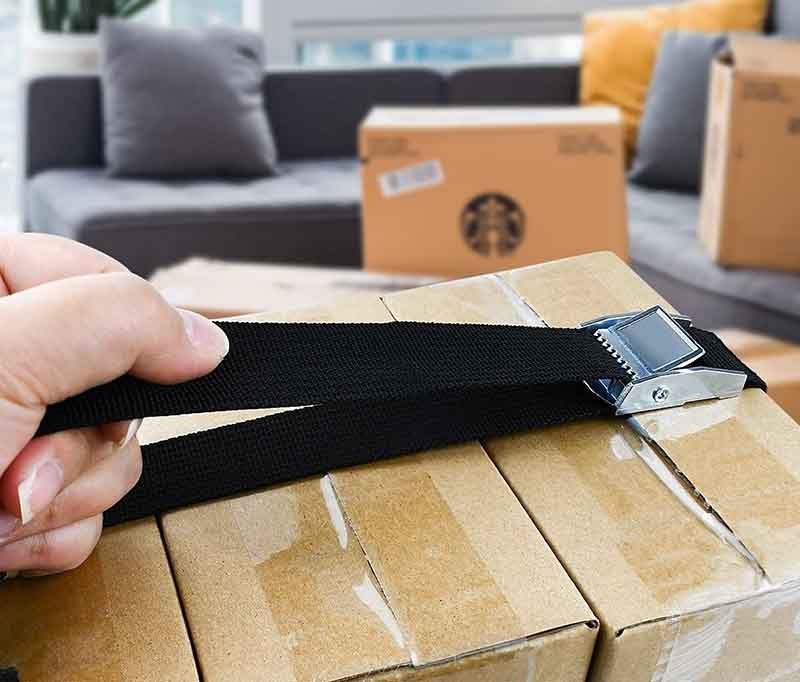
Lashing straps and ratchet straps differ in their tensioning mechanism, load strength, and intended usage. Lashing straps are manually tightened using a cam buckle, while ratchet straps use a ratcheting handle to generate higher tension for heavier loads.
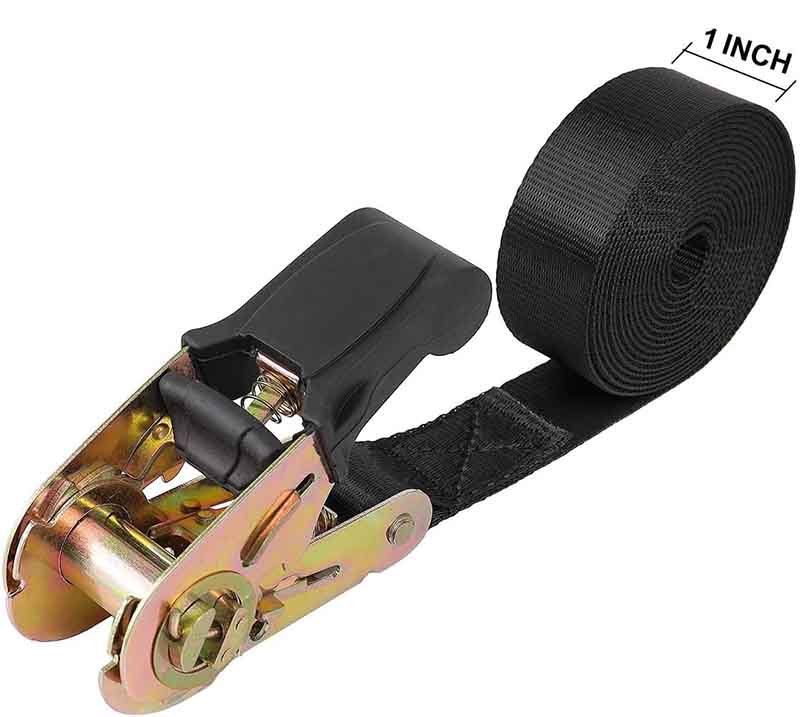
Lashing straps, also known as cam buckle straps, rely on the user’s physical strength to pull the strap through a cam lock, holding tension through friction. Ratchet straps, on the other hand, use a metal ratcheting handle and gear system to tighten the strap incrementally with mechanical advantage.
The ratcheting system allows users to apply far more tension without excessive physical effort, making it more effective for stabilizing large or heavy objects.
A 25mm lashing strap might handle up to 250kg, while a similarly sized ratchet strap can easily handle 800kg or more.
Ratchet straps use a gear-and-pawl system that allows the user to apply incremental tension with minimal effort, whereas lashing straps depend on friction and the user’s strength to hold tension.
Ratchet straps feature a central spindle and handle connected to a series of gears. When cranked, the gears rotate the spindle, winding the webbing tighter with each motion. A locking pawl prevents backward motion, maintaining the tension.
Lashing straps are threaded through a cam buckle and pulled tight by hand. Once tight, the buckle holds the strap in place using spring-loaded teeth. No gears, no crank—just friction and grip.
Use ratchet straps when:
They offer consistency in tension and are less likely to loosen during transport.
Ratchet straps offer better load security due to their ability to apply greater and more consistent tension. This minimizes shifting, especially during long-haul transportation or over rough terrain.
Ratchet straps include a double-locking gear mechanism and usually metal hooks or end fittings. Lashing straps may lack these and rely more on strap friction.
Yes, but only within rated capacities. For light-duty tasks (under 250kg), lashing straps are effective. However, using them beyond limits increases risk of slippage or breakage.
Lashing straps work well for indoor storage, short trips, or bundling. Ratchet straps excel in weather-exposed, high-speed, or long-distance logistics.
Yes. Lashing straps apply lower tension and are less likely to crush or damage fragile items, making them ideal for sensitive loads.
Typical lashing straps range from 100kg to 500kg in breaking strength. Always verify the label or certification (e.g., EN12195-2 standard).
Unlike ratchet straps, lashing straps reduce the risk of overtightening. This is crucial for cargo like furniture, plastic bins, or electronics.
Most straps are made from high-tensile polyester webbing due to its excellent abrasion resistance, minimal stretch, and UV stability.
| Material | Strength | Water Resistance | Stretch | Cost |
|---|---|---|---|---|
| Polyester | High | Excellent | Low | $$ |
| Nylon | Medium | Good | High | $$$ |
| Polypropylene | Low | Fair | Medium | $ |
Polyester stands out for outdoor use. It maintains integrity under sun exposure, resists mildew, and performs well in temperature fluctuations.
For ratchet straps, durability is critical. Webbing must resist fraying, and metal components must be rust-resistant. Szoneier provides webbing rated for over 10,000 tension cycles.
The best strap depends on your cargo weight, surface sensitivity, transportation conditions, and how frequently you’ll reuse the strap.
Szoneier offers:
Ratchet straps have higher upfront costs but greater longevity. Lashing straps are budget-friendly for one-time or lightweight tasks.
Yes. Ratchet straps typically offer 800kg to 5,000kg load ratings, while lashing straps range from 100kg to 500kg.
Szoneier’s heavy-duty ratchet straps:
Lashing straps are cheaper per unit, but ratchet straps deliver better long-term value for frequent users and heavy-duty needs.
| Strap Type | Avg Unit Cost | Reusability | Ideal Buyer |
|---|---|---|---|
| Lashing Strap | Low (~$1-2) | Medium | E-commerce, DIY movers |
| Ratchet Strap | Medium (~$5-8) | High | Logistics, OEM transport |
Ratchet components may require lubrication. Polyester webbing should be kept dry and clean to avoid mildew. Szoneier provides 1-year quality warranty on ratchet systems.
Szoneier supports:
Whether you need 500 heavy-duty ratchet straps for shipping containers or 5,000 custom lashing straps with your logo, Szoneier has the infrastructure and experience to deliver.
With over 18 years in webbing R&D and manufacturing, we specialize in:
Let’s strap down your success—securely, efficiently, and professionally.