
From Inquiry to Delivery
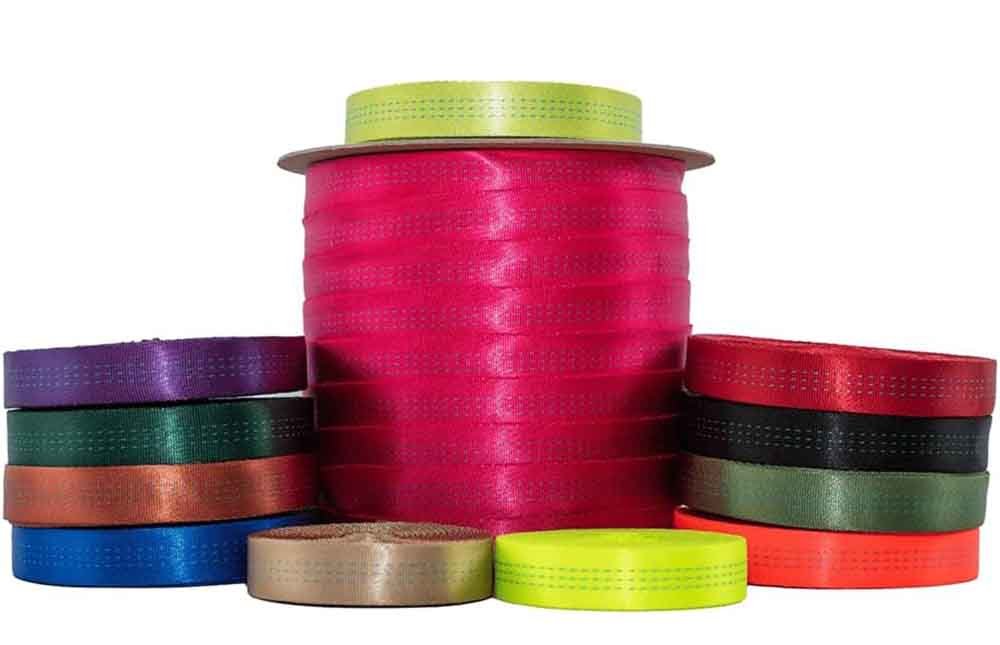
When you’re hauling heavy loads day in and day out, the last thing you want is a sling that gives out mid-lift. Whether you’re lifting steel girders, delicate glass panels, or awkwardly shaped machinery parts, understanding tubular webbing strength can mean the difference between a smooth operation and a costly downtime—or worse, an accident.
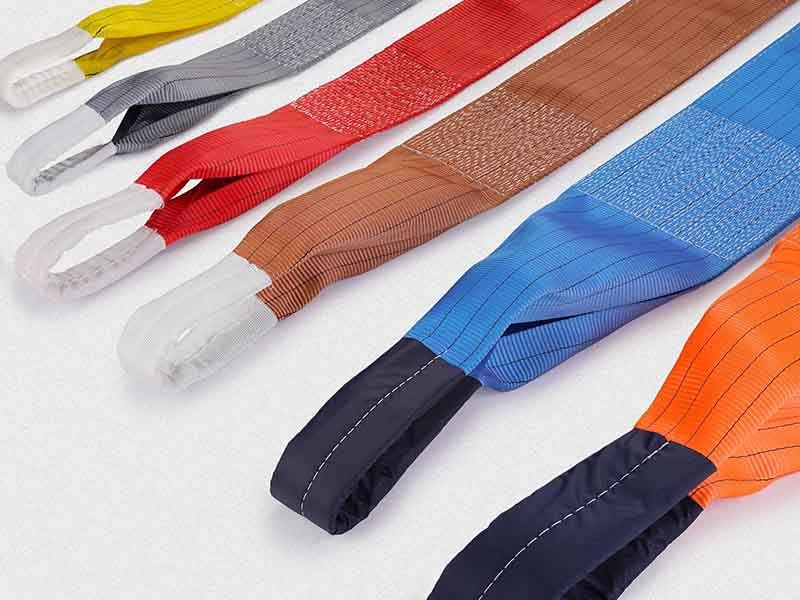
Tubular webbing is built by braiding high-strength synthetic fibers into a continuous core and enclosing it in a seamless protective sheath. Its load capacity hinges on fiber type, yarn count, stitching pattern, and safety factor. Unlike flat webbing, tubular webbing offers 360° protection of load-bearing fibers, better abrasion resistance, and more uniform stress distribution. As a result, it’s a top choice in rigorous lifting applications requiring durability, flexibility, and consistent performance.
Picture this: on a busy dock, a crane operator hooks up a tubular sling to a steel coil. The operator breathes easy—because that sling’s strength has been tested, certified, and proven in environments just like this. Stick around, and I’ll share the insider details that’ll help you pick, inspect, and customize the perfect tubular webbing for your toughest lifts.
Tubular webbing starts with high-tensile yarns—usually nylon or polyester—braided into a continuous core. That core is then encased in a seamless, needle-loomed sheath of matching or complementary fiber. The result is a tube where the fibers are protected from abrasion, UV exposure, and chemicals. Typical diameters range from 20 mm to 50 mm, while lengths can be customized from half a meter to over 100 m. Construction quality directly dictates strength, flexibility, and durability.
When you examine a length of tubular webbing, you’re really looking at two distinct elements working in unison:
Braided Core:
Protective Sheath:
Sealing Methods:
Dimensional Ranges:
| Parameter | Typical Range | Impact on Performance |
|---|---|---|
| Core Ply Count | 24–72 ply | Higher ply → greater tensile strength |
| Sheath Thickness | 1–3 mm | Thicker sheath → more abrasion life |
| Diameter | Ø20–50 mm | Larger Ø → higher WLL |
| Length | 0.5–100+ m (custom) | Customizable for any rigging need |
By understanding each component—core fibers, braiding quality, sheath construction, and end-sealing—you can gauge why some tubular webbings handle 5 t loads, while others are rated for 50 t.
Tubular webbing strength is a product of fiber type, yarn count, braid density, sheath thickness, and stitching quality. Higher-modulus fibers and more plies boost tensile capacity. A dense braid prevents yarn slippage, while a robust sheath resists cuts and abrasion. End-fitting stitches add a modest 5–10% strength variance. Finally, safety factors (typically 5:1 to 7:1) dictate the Working Load Limit (WLL), ensuring your sling carries only a fraction of its actual breaking strength.
Let’s unpack the main variables that decide whether your sling breaks at 30 t or 45 t:
Fiber Type & Yarn Count
Braid Density & Core Integrity
Sheath Thickness & Material
Stitch Patterns & End Fittings
Safety Factor & WLL Calculation
| Safety Factor | Breaking Strength (BS) | Working Load Limit (WLL) = BS ÷ SF |
|---|---|---|
| 5:1 | 50 t | 10 t |
| 6:1 | 60 t | 10 t |
| 7:1 | 70 t | 10 t |
Industry best practice is to select a sling whose WLL exceeds your heaviest lift by at least 20%—giving you extra peace of mind.
Strength varies widely by fiber choice: high-modulus polyethylene (HMPE) webbings top the charts with tensile strengths up to 120 cN/dtex and minimal stretch; aramid fibers (e.g., Kevlar®) follow with ~100 cN/dtex. Nylon and polyester range from 60–80 cN/dtex. Trade-offs include stretch (nylon’s shock absorption), UV resistance (polyester’s advantage), and cost (HMPE and aramid are pricier). Matching fiber properties to your lift profile is key to optimal performance.
Here’s a quick look at how common and specialty fibers stack up:
| Fiber Type | Tensile Strength (cN/dtex) | Elongation @ Break | UV Resistance | Cost Factor |
|---|---|---|---|---|
| Nylon (PA6) | 75 | 15–25% | Low–Medium | 1× |
| Polyester (PET) | 65 | 5–15% | High | 1× |
| Aramid (Kevlar) | 100 | 2–4% | Excellent | 2–3× |
| HMPE (Dyneema®) | 120 | 2–5% | Good | 3–4× |
Nylon:
Polyester:
Aramid:
HMPE:
Choosing the right material depends on your priorities: if you need maximum strength and minimal stretch—even at premium cost—go aramid or HMPE. If your budget is tight and occasional shock loads occur, nylon may be your best bet. Polyester strikes a balance for outdoor, everyday lifting.
Manufacturing precision makes or breaks tubular webbing performance. Braiding quality ensures uniform yarn tension and density. Needle-loomed sheaths create seamless covers free of weak spots. Thermal sealing and reinforced stitching at end fittings prevent fraying and core slippage. Rigorous in-process tensile testing and pull-through trials catch defects early. Factories with ISO 9001 certification and real-time monitoring typically produce more consistent, higher-strength webbing than those cutting corners on machinery calibration and QC.
Let’s walk through a typical production line and see where strength gains—or losses—can occur:
Fiber Preparation & Yarn Spinning
Braiding Core Yarns
Sheath Application
End-Fitting Integration
Quality Control & Testing
| Test Type | Purpose | Typical Frequency |
|---|---|---|
| Tensile Break Test | Verify core BS vs. spec | 1 per batch |
| Pull-Through Test | Simulate end-fitting load | 1 per 100 m produced |
| Elongation Measurement | Confirm elasticity within tolerances | 1 per batch |
Factories that invest in automated QC—like in-line tensile sensors and sheath thickness gauges—catch anomalies before they become weak slings at the jobsite.
Tubular webbings undergo rigorous lab tests under EN 1492-1, ISO 2307, and ASME B30.9 standards. Break tests pull slings at a constant rate until failure. Elongation tests measure stretch at WLL. Sheath abrasion tests quantify cycles to failure under standardized rubs. Certified webbings carry tags listing manufacturer, batch number, WLL, safety factor, and test date. Regular re-testing and traceability ensure your sling performs as promised—even years after purchase.
Here’s a closer look at the international standards and testing protocols:
EN 1492-1 (Textile Slings – Safety)
ISO 2307 (Wire, Fiber Rope & Webbing Test Methods)
ASME B30.9 (Slings – Inspection & Use)
Lab Test Protocols
| Test | Methodology | Pass Criteria |
|---|---|---|
| Tensile Break | Pull to failure at specified speed | BS ≥ spec × 1.05 |
| Elongation @ WLL | Load at WLL, hold 2 min, measure permanent set | ≤ 10% for nylon, ≤5% for polyester |
| Abrasion (Sheath) | Rub sample under load for 10,000 cycles | No core exposure |
Traceability is key: every batch gets a unique ID, linked to test records. That way, if an issue arises, you can pinpoint exactly which production run to review.
UV, heat, moisture, and chemicals all chip away at webbing strength over time. UV exposure can reduce nylon’s tensile strength by 30–40% after 1,000 hours of sunlight. Temperature extremes may stiffen fibers in cold or soften them in heat. Chemical exposure—acids, alkalis, solvents—can cut strength by 20–50% within minutes. Proper sheath selection, regular inspections, and early retirement when degradation hits 25% loss are your best defenses.
Let’s break down common environmental culprits and their typical effects:
UV Radiation
Test Data:
| Fiber | Strength Retention @1,000 h UV |
|---|---|
| Nylon | 60–65% |
| Polyester | 80–90% |
| Aramid | 85–95% (with UV-stabilized cover) |
Mitigation: Use UV-resistant sheaths, store slings away from direct sun.
Temperature Extremes
Moisture & Chemicals
Abrasion & Dirt
Inspection & Retirement:
| Condition | Action |
|---|---|
| ≥25% tensile loss (test) | Immediate retirement |
| Core fiber exposure | Retire sling |
| Cover thinning >25% | Replace sheath or retire sling |
Anywhere you need strong, flexible, and protected slings, tubular webbing shines. Construction cranes use 20–50 mm Ø slings for steel beams; marine sectors deploy UV-stabilized webbings for load transfer on decks; rescue teams rely on aramid-blend webbings for low-stretch, heat-tolerant performance. Outdoor gear brands even use tubular webbings in harnesses and tie-downs. Its versatility, coupled with custom lengths and fittings, makes tubular webbing the workhorse of lifting across industries.
Here’s how different sectors harness tubular webbing’s strengths:
| Industry | Typical Fiber & Diameter | Key Benefit |
|---|---|---|
| Construction | Nylon, Ø30–50 mm | Shock absorption, surface protection |
| Marine & Offshore | Polyester UV, Ø25–40 mm | Corrosion & UV resistance |
| Rescue & Firefighting | Aramid blend, Ø20–30 mm | Heat tolerance, low stretch |
| Entertainment Rigging | HMPE, Ø20–25 mm | Lightweight, high strength |
| Outdoor & Adventure Gear | Nylon/poly blend, Ø10–20 mm | Flexibility, low bulk |
Construction & Heavy Lifts:
Marine & Offshore:
Rescue Operations:
Theatrical & Stage Rigging:
Absolutely. Length and diameter must match lift geometry and WLL. End fittings—spliced eyes, galvanized hooks, stainless-steel shackles—affect ease of use and joint strength. Protective sleeves (PU, aramid) extend abrasion life. Color coding aids quick WLL checks. Low-MOQ services let you prototype 1–5 pieces, then scale to 1,000+. The right customization balances performance, lead time, and budget—ensuring your tubular webbing performs exactly as you need it to.
Customization transforms an off-the-shelf sling into a purpose-built tool:
Length & Diameter Variations
End Fittings & Integration
Protective Sleeves & Coatings
Branding, Color Coding & Labeling
MOQ & Lead Times
| Order Size | Lead Time (Design to Delivery) |
|---|---|
| 1–5 pcs | 1–2 weeks |
| 6–100 pcs | 2–4 weeks |
| 100+ pcs | 4–6 weeks |
By partnering with a factory specializing in OEM/ODM—like Szoneier—you get expert design advice, free samples, and rapid prototyping, all at low MOQs.
Now that you’re armed with the low-down on tubular webbing construction, strength drivers, material choices, manufacturing impacts, testing standards, environmental factors, and customization options, you can confidently specify the perfect sling for any lifting challenge.
Ready to get slings tailored to your exact needs? Contact Szoneier today for free design consultation, rapid samples, and competitive OEM/ODM pricing. With 18+ years of webbing expertise, 100% quality assurance, and global shipping, we’ll help you lift safer, smarter, and more efficiently.
Request your custom tubular webbing quote now and experience the Szoneier difference!


No worries, please contact us and we will answer all the questions you have during the whole process of webbing customization.
If you have your own artwork, logo design files, or just an idea,please provide details about your project requirements, including preferred fabric, color, and customization options,we’re excited to assist you in bringing your bespoke bag designs to life through our sample production process.

Copyright ©2021 Szoneier , All rights reserved.
Looking for premium custom webbing? Contact us now for competitive pricing, free samples, and expert consultation. Fill out the form below, and our team will get back to you within 24 hours!
