- (+86)13823134897
- info@szoneierwebbing.com
From Inquiry to Delivery
 Skip to content
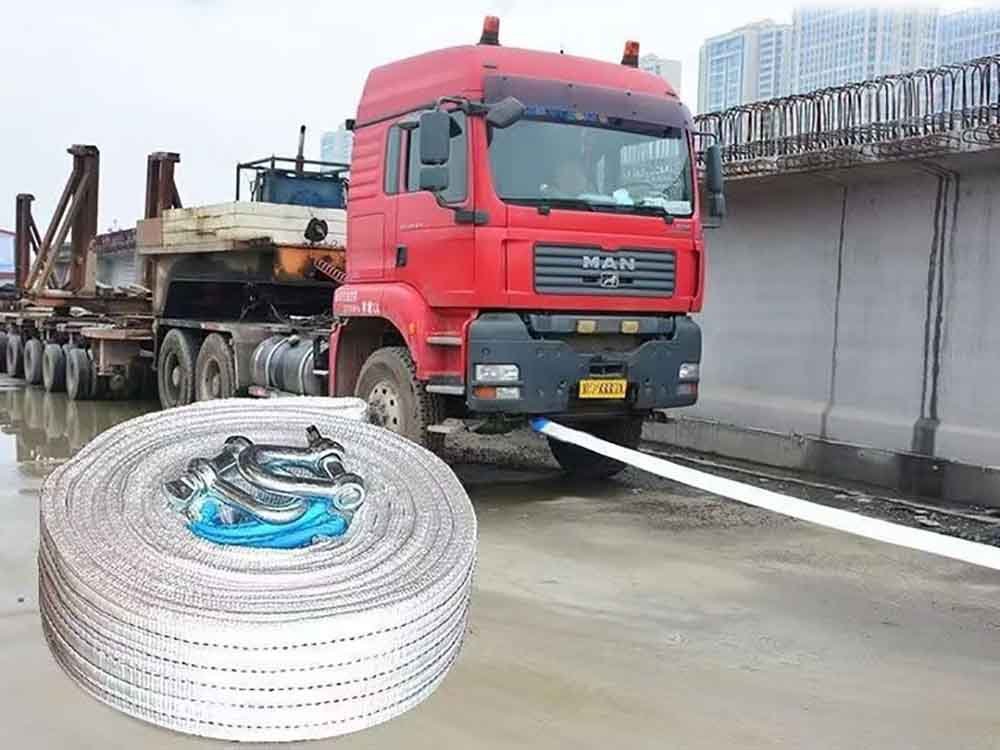
Whether you’re stranded on a muddy trail or helping out a fellow driver on the highway, your choice of tow strap can mean the difference between a smooth rescue and a messy ordeal. With dozens of options on the market—from cheap nylon loops to heavy-duty polyester recovery straps—it’s easy to feel overwhelmed. But when lives and vehicles are on the line, “good enough” just isn’t good enough. In this guide, we’ll cut through the marketing hype and show you exactly what makes a tow strap the best choice for truck recovery—backed by data, hands-on testing insights, and real-world feedback from truck owners.
The best tow straps combine high breaking strength (usually 20,000 lb+), low elongation (10–15%), UV-resistant webbing, reinforced loop ends, and vivid color for visibility. Nylon straps excel at energy absorption, while polyester offers minimal stretch and easier handling. Always choose a strap with a WLL (Working Load Limit) at least twice your truck’s GVWR.
Imagine you’re 50 miles from help, rain pouring down, engine off, and your only lifeline is a strap—will it hold? In this article, we dive deep into the science of breaking strength, weave patterns, elongation behavior, and industry certifications so you can choose with confidence. We’ll compare materials side-by-side, dissect key dimensions (length, width, rating), and walk through inspection and maintenance best practices. Plus, we’ll survey the top brands that truckers trust worldwide. Stick around—even if you think you know tow straps—because we’ve uncovered some surprising trade-offs that could save your bumper (and your budget).
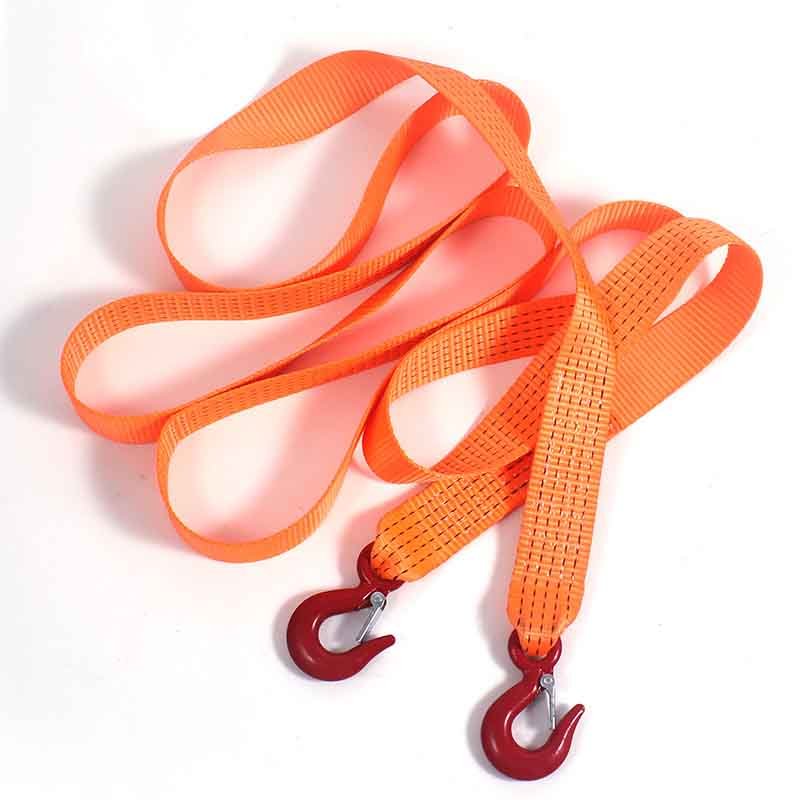
A top-performing tow strap combines superior breaking strength (at least 2× GVWR), controlled elongation (10–15%), abrasion-resistant UV-stabilized webbing, color-coded loops for safety, and clear WLL/DLL markings. Ease of handling, minimal memory-set, and certified testing (SAE J1679, EN 1492-1) also distinguish the best straps from the rest.
When assessing tow strap performance, five core metrics reign supreme: breaking strength, elongation, abrasion resistance, UV stability, and ease of handling. Understanding each parameter—and how they interact—lets you match a strap to your truck’s recovery profile.
By balancing these metrics, you’ll select a strap that’s not just strong, but smart—tailored for the specific challenges of truck recovery rather than generic vehicle towing.
Nylon straps excel in energy absorption (up to 30% stretch) for dynamic recovery, while polyester delivers minimal elongation (5–15%) and superior UV/chemical resistance. Polypropylene is budget-friendly but weakens sharply at high temperature and absorbs water. Advanced blends (nylon-polyester) aim to combine the best of both.
| Material | Break Strength per Fiber | Elongation | UV Resistance | Chemical Resistance | Typical Use |
|---|---|---|---|---|---|
| Nylon | High (1,000–1,200 MPa) | 20–30% | Moderate | Good (except acids) | Dynamic recovery straps |
| Polyester | High (900–1,100 MPa) | 5–15% | Excellent | Excellent (solvents) | Static tow straps, rigging |
| Polypropylene | Medium (800–900 MPa) | 10–20% | Poor | Poor (oils, heat) | Economy straps, light duty |
| Blended (N/P) | Customizable | 10–25% | Good | Good | Specialized recovery needs |
1. Nylon: The Dynamic Specialist
Nylon’s molecular structure (polyamide) gives it exceptional tensile strength and elongation. During a shock load—say, yanking a Jeep out of a ditch—nylon stretches, storing and releasing energy gently, which reduces the risk of tow points tearing out or hooks snapping. However, nylon absorbs moisture (up to 2.5% weight gain), slightly reducing strength when wet, and is vulnerable to UV degradation unless additive-protected.
2. Polyester: The Static Powerhouse
Polyester’s minimal elongation makes it ideal for precise, controlled tows—for instance, moving a disabled RV on pavement. It also stands up to UV, water, and chemicals better than nylon, retaining over 90% of its strength after extended outdoor use. Polyester’s downsides? It lacks the “give” of nylon, making abrupt pulls harder on vehicles’ chassis and recovery points.
3. Polypropylene: The Budget Option
Lightweight and cost-effective, polypropylene is common in consumer-grade straps. But it degrades quickly in UV, melts around 160 °F, and loses up to 50% of its strength in harsh chemical environments. Use it for occasional, low-stress tasks—but never for heavy-duty truck recovery.
4. Blended Webbing: Best of Both Worlds?
To marry nylon’s stretch with polyester’s stability, manufacturers sometimes weave blended fibers—typically 70% polyester/30% nylon. These straps deliver moderate elongation (15–20%) and enhanced weather resistance. The trade-off is slightly reduced max strength and higher cost. Only top brands use these blends, targeting professional off-roaders who demand versatility.
When selecting a material, weigh your primary use cases: dynamic extrication vs. controlled towing vs. budget constraints. For most truck owners who need one strap to serve all purposes, a premium nylon-polyester blend offers the best balance.
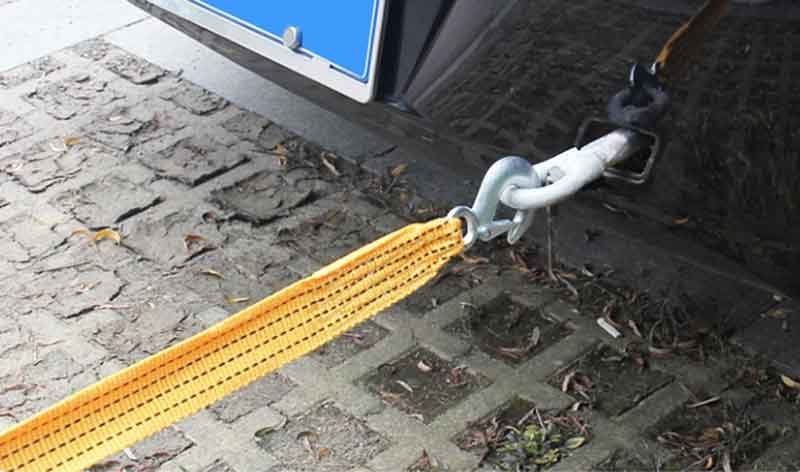
Strap length (10–30 ft) determines shock absorption space and clearance; longer straps allow gradual load application but bulkier storage. Width (2–4 in) correlates with WLL—wider straps carry heavier loads. Always choose a WLL rating at least twice your truck’s GVWR for safe towing.
| Strap Length | Pros | Cons | Ideal Scenarios |
|---|---|---|---|
| 10–15 ft | Compact, lighter, easier to handle and store | Limited shock absorption, requires close range | Urban towing, tight garages |
| 16–20 ft | Balanced shock zone without excessive bulk | Slightly heavier, needs more storage space | Most general truck recoveries |
| 21–30 ft | Maximum shock absorption, distance flexibility | Bulky, can tangle, more PPE for storage | Off-road scenarios, deep recoveries |
1. Length Matters for Shock Control
When you pull on a short strap, the same stretch percentage creates a sharper, more abrupt force spike. For heavy trucks (10,000+ lb), a 20 ft dynamic strap gives 4 ft of stretch under max load (20%). That extra extension reduces peak force on both vehicles’ chassis. Conversely, a 10 ft strap only stretches 2 ft—doubling the force rate and increasing the risk of sudden jerks.
2. Width Equals Strength
Strap width directly scales with the number of load-bearing fibers in parallel. A 2 in wide strap (WLL ≈ 5,000 lb) is fine for light pickups, while a 4 in strap (WLL ≈ 15,000–20,000 lb) suits heavy-duty trucks. Narrow straps may cut into tow hooks or shackles, risking webbing abrasion and failure.
3. Rating: Not Just Marketing Hype
Always verify Working Load Limit (WLL) and Breaking Strength:
4. Connectors and End-Fittings
Straps come with sewn loops, reinforced steel hooks, or shackles:
5. Storage & Handling
Long, wide straps can be unwieldy. Look for:
By calibrating length, width, and rating to your truck’s weight and recovery style, you ensure smoother pulls, safer operations, and longer strap life.
Yes. Synthetic webbing weighs 80–90% less than steel, stretches to absorb shock, won’t kink or rust, and is safer when it breaks (minimal recoil). Steel excels in extreme heat and abrasion but demands careful handling and protective gear.
In a zip-wire test, steel cable snapped back at over 500 mph when overloaded, posing lethal hazards. Synthetic webbing, by contrast, unravels slowly under overload, reducing recoil energy dramatically. OSHA now warns against using unprotected steel cables for vehicle recovery without full PPE (gloves, goggles, chaps).
For roadside assistance teams, the difference between hauling one bulky chain and multiple lightweight straps can be a game-changer—especially when climbing into the bed of a wet pickup at midnight.
Upon sudden load, steel’s infinitesimal stretch transmits nearly 100% of force to recovery points, risking frame damage. Meanwhile, a nylon strap’s 25% stretch converts kinetic energy into elastic potential, reducing peak loads by 20–30%. This is critical when dealing with older vehicles whose chassis may not tolerate abrupt forces.
Chains and cables require regular lubrication to prevent rust, especially in coastal or snowy regions. Synthetic webbing is polymer-based—waterproof, non-corrosive, and UV-resistant with proper additives. Inspection involves simple visual checks for fraying rather than wire-thinning measurements.
Steel outperforms webbing near high-temperature sources (e.g., near hot engines or exhaust). Also, sliding a strap over rough steel surfaces will abrade webbing faster. For mixed-material recovery—say, pulling under a semi’s chassis—consider using abrasion sleeves on webbing or a hybrid approach (steel for anchoring, webbing for the stretch zone).
Conclusion:
For most truck recovery tasks, synthetic straps offer superior safety, convenience, and cost-effectiveness. Reserve steel chains or cables for specialized industrial applications where heat or abrasive hazards exceed polymer limits.
Use a recovery strap (dynamic) for un-sticking operations—its stretch aids vehicle extraction. A tow strap (static) is best for controlled, level-ground hauling. Choosing incorrectly can damage vehicles or straps.
Applying a dynamic strap in highway towing can cause dangerous bouncing. Conversely, using a static strap to extract deep-bogged vehicles can produce a violent shock, risking structural damage. Always match strap type to terrain and speed.
Some professionals carry both types, using a coupler system to switch quickly. Others choose nylon-polyester blends (moderate stretch) for all-around versatility, though they provide neither the full “snatch power” of nylon nor the rock-solid control of polyester.
Yes. Look for SAE J1679 (USA), EN 1492-1 (EU), and DOT markings. Certified straps display batch codes, test dates, WLL/BS ratios, and manufacturer info. Third-party lab seals (UL, TUV) add credibility.
Manufacturers submit sample straps to accredited labs for destructive testing. Passing straps receive a Certificate of Conformity and batch test reports. Reliable producers post these online or provide on request.
Some fleets attempt in-house proof tests using forklifts and dynamometers. Without calibrated equipment and environmental controls, results can vary ±20%, leading to unsafe assumptions. Invest in certified straps—your safety depends on it.
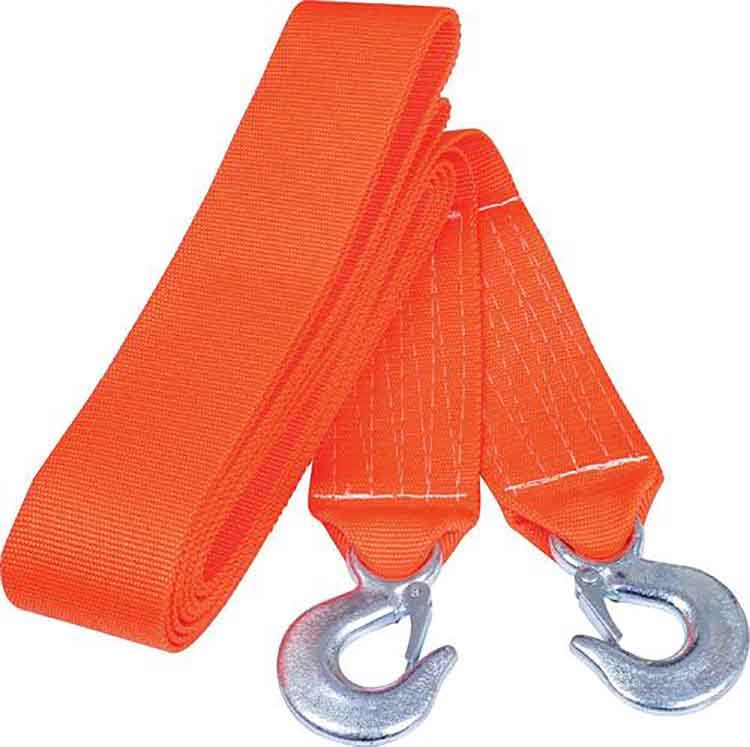
Inspect monthly for fraying, cuts, UV bleaching, and damaged loops. Clean with mild soap and water; air-dry away from direct sunlight. Store in a dry, cool place—no kinks or heavy loads on top. Replace if any damage reduces WLL or stitching integrity.
Proper care extends strap life by up to 3× and prevents failures:
By systematically inspecting and caring for your straps, you protect your investment—and more importantly, safeguard lives and equipment during recovery operations.
Leading brands include Rhino USA (Durable 4″ × 20′ polyester), ARPON (Nylon dynamic series), Warn (blended webbing recovery), and Szoneier custom straps—offering tailored WLLs up to 60,000 lb with UV treatment and reinforced loops.
| Brand | Material | Size Options | WLL Range | Highlights |
|---|---|---|---|---|
| Rhino | Polyester | 2″–4″ × 10′–30′ | 5,000–20,000 lb | ASTM/SAE certified; reflective tracers |
| ARPON | Nylon | 3″–4″ × 15′–25′ | 10,000–30,000 lb | High stretch; heat-set edges |
| Warn | Blend 70/30 | 3″ × 20′ | 12,000–25,000 lb | Abrasion sleeves; custom color options |
| Szoneier | Customizable | 2″–6″ × 10′–30′ | 5,000–60,000 lb | OEM/ODM, low MOQ, UV-resistant, custom branding |
Rhino USA
Rhino’s polyester straps are praised for minimal stretch and industry-leading abrasion resistance. Their 4″ × 25′ model (WLL = 18,000 lb) remains a top seller among towing fleets, thanks to clear WLL markings and reinforced loop covers.
ARPON
Specializing in dynamic recoveries, ARPON’s nylon straps incorporate a proprietary heat-set process that prevents edge fraying. Their flagship 4″ × 20′ strap stores 25% more energy than baseline nylon models, reducing peak shock loads by an average of 15%.
Warn
Warn’s blend straps strike a workable balance: enough stretch for light snatches, yet stable enough for pavement towing. They offer optional abrasion sleeves and can be customized with company logos—ideal for off-road clubs or professional outfits.
Szoneier
As a leading webbing R&D and manufacturing factory with 18+ years’ experience, Szoneier provides fully customized tow and recovery straps. Choose your material (nylon, polyester, PP, blends), length, width, connectors, UV stabilizers, and branding. Low MOQs (50 pcs) and fast sampling make Szoneier perfect for fleets seeking bespoke solutions.
Note: Always verify test certificates and request sample reports before bulk ordering.
Selecting the best tow strap for your truck isn’t a matter of price alone—it’s about matching material properties, dimensions, certifications, and handling characteristics to your specific recovery scenarios. From the stretch-soaked energy absorption of nylon to the precise control of polyester, each webbing type offers unique benefits and trade-offs. By following the inspection and maintenance protocols outlined here—and choosing straps certified to SAE J1679 or EN 1492-1 standards—you ensure peak performance, maximum safety, and long service life.
Ready to equip your fleet with custom-engineered tow straps that meet your exact specifications? Contact Szoneier today for a personalized solution.
Whether you need dynamic recovery straps with 30% elongation, static tow straps with minimal stretch, or hybrid blends for all-around versatility, Szoneier’s 18+ years of webbing expertise deliver unmatched quality, rapid prototyping, and low MOQ custom runs. Get your sample in 3–5 days, and ensure your next recovery is safe, smooth, and reliable.

 Optimized by Seraphinite Accelerator